


South Africa is ramping up preparations to recover its former dominance in vehicle manufacture, with a slew of initiatives scheduled to be announced by the end of February.
With policy reviews focusing on luxury taxes on imported automobiles, potential tariff adjustments, and broader measures to encourage local assembly, the government is indicating a strategy shift aimed at revitalizing one of the country’s most important economic sectors.
For decades, South Africa went unchallenged as Africa’s leader in the automobile sector.
It has historically produced more than half of the continent’s total automobiles, thanks to strong manufacturing clusters, worldwide original equipment manufacturers (OEMs), and a well-established export network.
How South Africa’s car manufacturing differs from Europe
At a glance, a car rolling off an assembly line in South Africa can look identical to one built in Germany, Spain, or France. Same badge, same model, same quality checks. But beneath the surface, the manufacturing philosophy, technical architecture, and production logic of these plants are strikingly different.
The contrast is not about competence. It is about how engineering decisions are shaped by scale, markets, infrastructure, and cost realities.
European car plants operate at the highest automation density in the world.
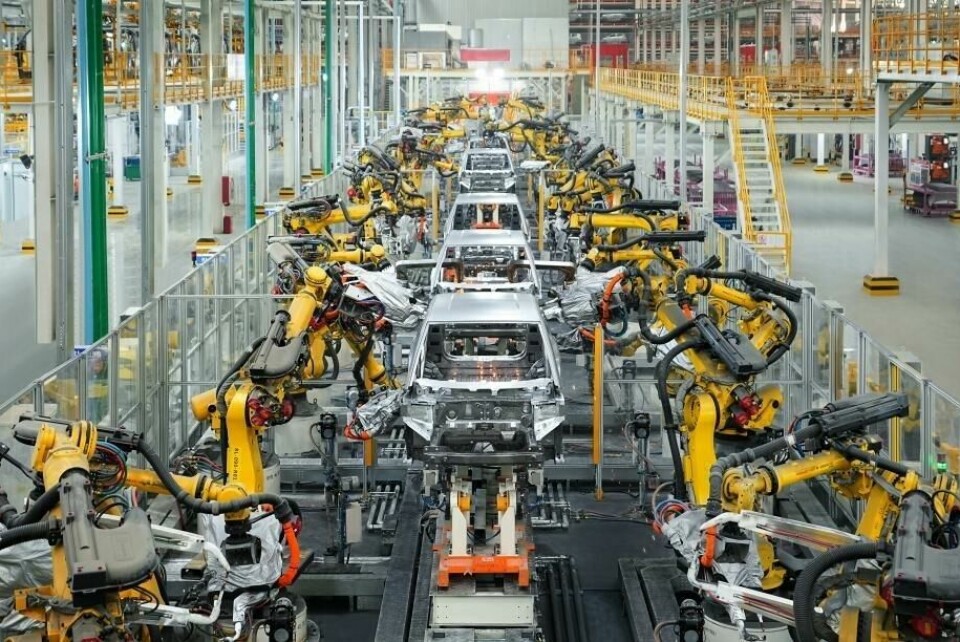
Robots dominate facilities such as Volkswagen’s Wolfsburg plant or BMW’s Dingolfing factory: fully automated body-in-white welding lines, robotic seam sealing, and adhesive bonding.
Automated guided vehicles (AGVs) deliver components in real time, and AI-assisted vision systems inspect welds and paint finishes.
See here: One of Africa’s largest car manufacturer, Al-Mansour, introduces 2 new Electric Vehicles
In several European facilities, robots perform 80-90% of the body shop procedures.
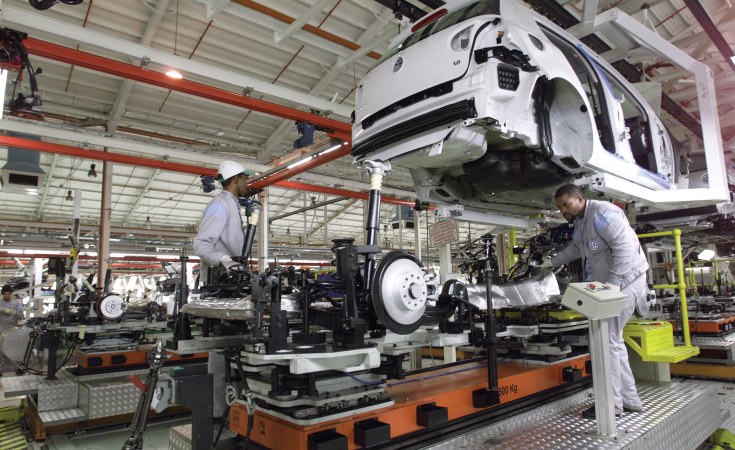
South African facilities, on the other hand, use a hybrid automation model: robotic welding is standard in body shops, final assembly is heavily reliant on skilled human labor, and automation is only used where it offers the greatest value.
Per InvestSA, twenty-two businesses that produce automobiles and commercial vehicles make up the South African automotive sector.
These include several assemblers of medium and heavy commercial vehicles (MCV, HCV, and buses) and seven significant vehicle manufacturers/assemblers (car and LCV).
Twenty-one businesses are also engaged in the nation’s importing and distribution of new automobiles. There are over 500 suppliers of automotive components, 180 of which are first-tier suppliers.
The value chain is principally driven by the seven OEMs: BMW, Ford, Isuzu, Mercedes-Benz, Nissan, Toyota, and Volkswagen.
The economies of KwaZulu-Natal, Gauteng, and the Eastern Cape are significantly impacted by these businesses. These OEMs, along with their suppliers, form the core of the three regional clusters and
South Africa’s automobile manufacturing output
In 2024, South Africa and Morocco combined for more than 90% of Africa’s automobile output, with South Africa producing about 600,000 vehicles that year.
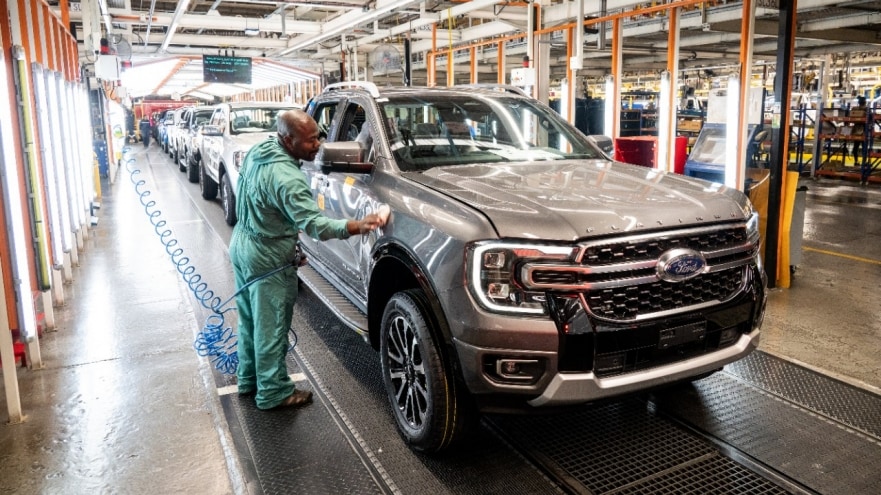
As a result, it became one of Africa’s largest contributors to global automotive supply chains, as well as a driving force behind job creation, exports, and the development of industrial value.
Beyond mere scale, South Africa’s automotive business has a significant economic impact: it accounts for 4.9-5.2% of national GDP, supports well over 100,000 direct manufacturing jobs, and employs hundreds of thousands more through supply chains and retail services.
However, South Africa, earlier in January, reportedly lost its position as Africa’s largest vehicle manufacturer, with Morocco emerging as the continent’s new automotive production leader after reaching a major output milestone in 2025.
Against the backdrop of global industry transformation, Morocco produced around 1 million vehicles in 2025, outpacing South Africa’s output of about 554,000 units through November of that year.
The shift reflects both production volume and strategic positioning.
Morocco’s automotive model is heavily export-oriented, with generous incentives, integrated supplier networks, and proximity to major European markets.
Its success demonstrates how competitive dynamics are rapidly changing across the continent.
South Africa’s industrial rethinking is centred on a comprehensive evaluation of its automotive policy framework.
Officials are considering methods to alter the ad valorem (luxury) tax and evaluate taxes on imported vehicles, to make locally produced vehicles more competitive against cheaper imports, mainly from China and India.
Deputy Minister Zuko Godlimpi confirmed that discussions with the National Treasury on these tax reforms will begin soon, to increase local production and reverse the decline in domestic manufacturing share.
South Africa’s 2018 Automotive Master Plan set lofty goals, including achieving 1% of global vehicle output (1.4 million units) and increasing local content in vehicles to 60% from under 40%.
However, manufacturing in 2025 reached more than 602,000 units.
