


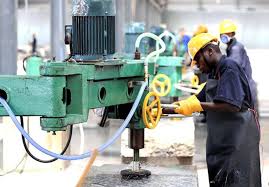
The Africa Industrialization Week 2025 was held last week at Speke Resort Munyonyo, Uganda with ministers, business leaders, and development partners from across Africa’s 55 member states calling for sustainable manufacturing, stronger regional value chains, and innovation-led growth.
The five-day gathering, running from November 17-21, was convened under the theme “Transforming Africa’s Economy through Sustainable Industrialization, Regional Integration and Innovation.”
The event focused on sectors including agro-processing, pharmaceuticals, green building materials, and electric-mobility components, targeting industries critical to Africa’s economic transformation and job creation sector.
The week’s agenda featured high-level discussions marking Africa Industrialization Day on November 20, expert panels on emerging industrial priorities, and exhibitions showcasing value-added products and new technologies.
Regional markets essential for Manufacturing scale
Denis Ainebyona, Commissioner for Industry and Technology at Uganda’s Ministry of Trade, Industry, and Cooperatives, emphasized that regional integration remains crucial for Africa’s industrialization, noting the need to create larger markets and increase competitiveness to attract investments while reducing the cost of doing business.
The African Continental Free Trade Area framework took center stage in discussions, with participants examining how the agreement can support continent-wide supplier networks.
Mrs. Ron Osman Omar, Director of Industry, Minerals, Entrepreneurship and Tourism at the African Union Commission, stated that Africa Industrialization Week serves as a crucial platform for discussing industrial policy, facilitating networking, and highlighting progress and challenges in Africa’s industrial development, with the success of Agenda 2063 hinging on the continent’s industrial transformation.
Manufacturing Sectors and Value Addition Priorities
The week’s sessions targeted four strategic manufacturing sectors identified as essential for Africa’s industrial transformation: agro-processing, pharmaceuticals, green building materials, and electric-mobility components.
These industries were selected for their potential to leverage Africa’s natural resources while addressing critical needs in food security, healthcare access, and sustainable infrastructure.
UN agencies and the African Union highlighted the link between industrial policy and Agenda 2063 targets, arguing that Africa cannot rely on raw commodity exports if it wants inclusive, resilient growth, and urging governments to align tax, trade, and education reforms with long-term industrial strategies.
In agro-processing, discussions centered on how countries can add value to agricultural commodities including cocoa, coffee, cashews, and palm oil before export, moving from simple cultivation to building complete processing and packaging capabilities.
At a time when Africa supplies over 70 percent of the world’s mined cobalt from Central African nations, the AU emphasized moving beyond raw extraction to build the technology value chains that cobalt powers, illustrating the broader push to capture more value from natural resources through domestic manufacturing.
AIW 2025 is expected to generate key outcomes including stronger intra-African trade, actionable policy guidance for expanding industrial parks and production hubs, and renewed commitments under the Action Plan for Accelerated Industrial Development of Africa (AIDA) and IDDA III.
If Kampala commitments translate into action, small manufacturers from textiles to machinery could find it easier to scale within AfCFTA and beyond, moving Africa closer to industrial growth.
