


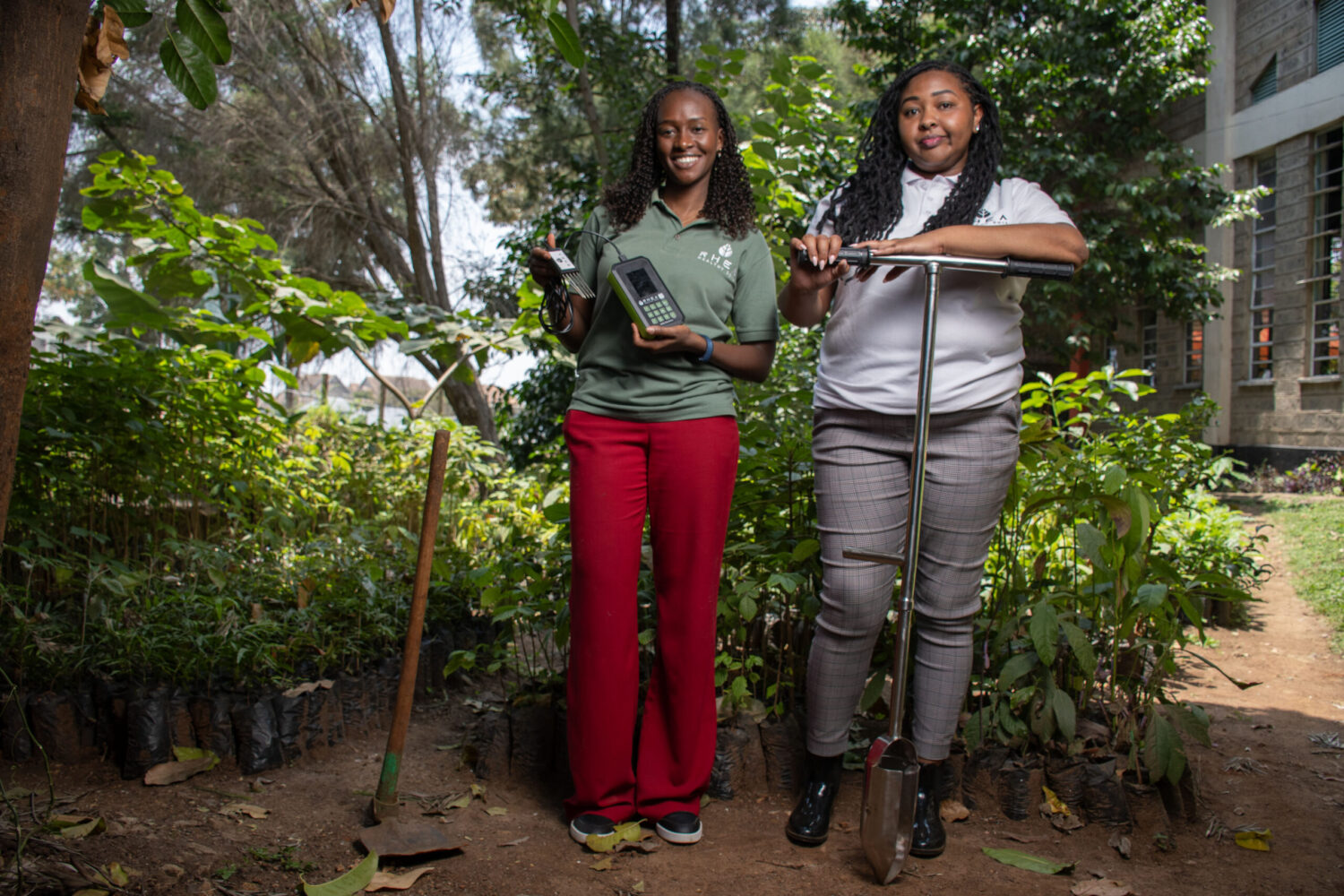
Agritech startup Rhea Soil Health Management has secured $100,000 in convertible note financing from Obudu Capital to fund an expansion of its RHEA AgriPad programme. The investment will support Rhea’s expansion into Tanzania, where the company aims to deploy its soil-testing technology.
The funding marks a shift for Rhea, co-founded by Priscilla Wakarera and Soinato Leboo, from research and development towards broader commercial deployment. The funding will support the deployment of 100 AgriPad devices and the provision of soil-testing services to 5,000 farmers.
Rhea AgriPad expansion targets East African agricultural productivity
The investment comes as precision agriculture technologies are being developed to address challenges around agricultural productivity and resource use in East Africa. Smallholder farmers can face challenges including degraded soils and limited access to field-level data, which can affect fertiliser management and crop yields. Technologies such as the AgriPad are intended to provide field-level soil information that can support these decisions.
Rhea says its technology addresses these challenges by providing field-level soil data to support decisions about soil health and nutrient management. The company says the approach is intended to support farm productivity and more efficient agricultural practices in areas reliant on rainfed farming.
Enhancing soil health and optimising fertiliser application are fundamental to sustainable food production, especially as climate change intensifies. Rhea’s expansion will provide an opportunity to assess how localised, data-driven soil information performs in a new market.
The RHEA AgriPad: Field-Level Soil Analysis
At the centre of Rhea’s offering is the RHEA AgriPad, a portable device that uses sensors and machine-learning algorithms to analyse soil conditions in the field. The device is designed to provide rapid assessments of nutrient levels, pH and other soil parameters.
The AgriPad is designed for portability and ease of use, providing field-based soil analysis for farmers who may have limited access to laboratory testing. Its software converts the soil data into fertiliser recommendations that can be delivered to farmers through digital channels such as WhatsApp.
A patent application filed in 2025 describes a handheld soil-testing kit that combines GPS data with a web-based fertiliser recommendation platform. The system is designed to provide site-specific recommendations based on the conditions of individual fields.
Beyond immediate recommendations, the AgriPad generates agricultural datasets that could support further analysis. Rhea says these datasets could eventually be used in areas such as agricultural finance, crop insurance, and carbon-market participation.
Transforming raw field data into tangible agricultural value creates new economic opportunities for farmers, much like how industrial data fuels engineering intelligence in other sectors.
Funding and Commercial Deployment Targets
The $100,000 convertible note from Obudu Capital will support Rhea’s commercial expansion and deployment targets.
Rhea’s immediate targets include deploying 100 RHEA AgriPad devices in the field to gather operational data and expand farmer engagement. Simultaneously, the company aims to reach 5,000 farmers, significantly broadening its user base and impact.
The expansion into Tanzania represents a deliberate move to test and validate Rhea’s soil-intelligence technology in a new East African market. The expansion will also allow Rhea to assess how its model performs beyond Kenya.
This latest funding round builds on previous successes, including $75,000 secured through a Village Capital programme, which received backing from Standard Chartered’s Women in Tech initiative. The funding adds to Rhea’s previous financing and supports its plans to expand its technology and services.
Rhea’s Operations in Kenya and Tanzania
Rhea’s strategy for commercial scaling involves a multi-pronged approach to field operations and digital platform development. During the first half of 2026, the company recruited and trained 135 agronomist agents. The agents operate in agricultural regions including Makueni, Taita Taveta, and Kajiado, supporting farmer engagement and AgriPad deployment.
Complementing its field agents, Rhea has also developed a suite of digital tools. The Rhea Agent App is designed to support data collection and farmer engagement by the agronomist team. For larger agricultural enterprises, Rhea introduced Rhea Optima, a service designed for medium- and large-scale farmers, agronomists, and local laboratories, offering more comprehensive soil management solutions.
The combination of field agents and digital tools supports Rhea’s plans to expand its operations. The company combines its hardware with field agents and digital services rather than relying solely on device sales.
Such efforts highlight the importance of integrated solutions in modern agriculture. Here, technology and human intervention combine for optimal results, mirroring the drive for efficiency seen in modern factory technology and other data-driven production environments.
Long-Term Vision for Data-Driven Agriculture
Rhea’s ambitions stretch beyond immediate soil testing and fertiliser recommendations. The company aims to construct a comprehensive agricultural dataset, built from the aggregated field-level information collected by its AgriPads. The objective could give Rhea a growing role in agricultural data collection if the platform scales as planned.
Soil performance data could support financial products and services that depend on more detailed agricultural risk assessments. More detailed data could support agricultural risk assessment and help financial institutions develop loans or insurance products tailored to farmers’ circumstances. This could improve access to financing for farming inputs and other investments.
Moreover, the detailed soil health data could facilitate farmer participation in emerging carbon markets. If the data can support verification of land-management practices and carbon-related outcomes, the platform could eventually contribute to carbon-market participation.
This approach could expand the uses of soil data beyond agronomic recommendations. It could create additional opportunities for agricultural financing and other data-enabled services.
If scaled successfully, the model could contribute to wider use of data-driven agricultural services in Africa. It demonstrates the power of technological innovation to drive economic progress.
Implications for East Africa’s Agritech Landscape
Rhea’s funding and planned expansion into Tanzania form part of wider activity in East Africa’s agritech sector. The funding provides one example of a Kenyan agritech company securing capital to support expansion beyond its home market.
The expansion may provide another example of how agritech companies can use external financing to support regional deployment. Wider adoption of agricultural technologies could expand access to tools for soil management, productivity, and resource efficiency, although outcomes will depend on deployment and farmer adoption.
The AgriPad also illustrates the use of portable hardware to bring soil-analysis capabilities closer to farms. The model combines physical soil-testing equipment with software and field-based support.
Rhea’s expansion illustrates how investment can support the deployment of locally developed agricultural technologies. The company’s focus on building a field-level agricultural dataset could support wider adoption of precision-agriculture services if the technology and operating model scale successfully.
