


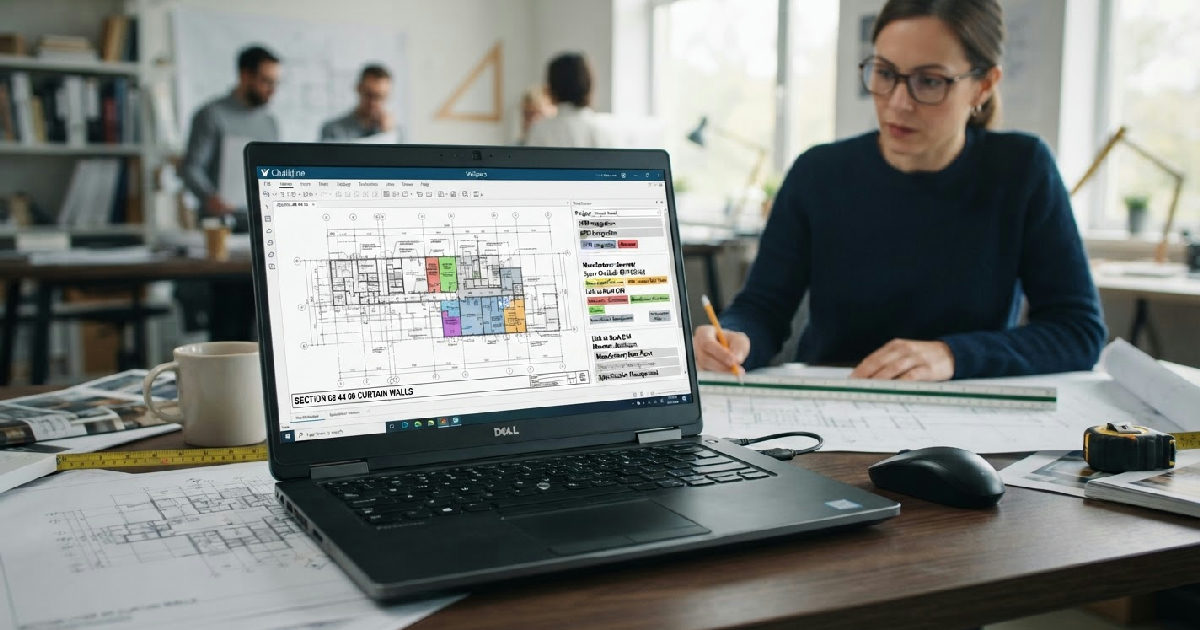
Chalkline, Inc. expanded manufacturer participation in its Building Product Manufacturer (BPM) Program with a major update to Chalkline VisiSpecs released on 29 October 2025.
The initiative is intended to integrate building product manufacturers more directly into the specification process and support collaboration with architects, engineers and specifiers during project development. It is intended to improve access to product information throughout the design and construction lifecycle.
Improving Collaboration with Chalkline VisiSpecs
The VisiSpecs BPM programme is designed to improve communication between manufacturers and design teams. Architects, engineers and specifiers (AES) may spend significant time researching product information across sources such as search engines and individual manufacturer websites.
Architects, engineers and specifiers (AES) may spend significant time researching product information across sources such as search engines and individual manufacturer websites. t can also add time to the specification and project-development process. Chalkline aims to address this by centralising access to product and specification information.
The platform centralises this information. Manufacturers can create detailed profiles within VisiSpecs, giving AES professionals access to company, product and specification data. These profiles can include cut sheets, catalogues, and test results, as well as links to Building Information Modelling (BIM) models.
How the BPM Programme Works
The VisiSpecs BPM programme provides a structured framework for direct engagement between manufacturers and design professionals. The VisiSpecs BPM programme provides a structured framework for direct engagement between manufacturers and design professionals.
The centralised repository gives design professionals access to manufacturers’ published product information in one location. It can reduce the need to check multiple sources when researching product information.
Manufacturer and Designer Feedback on VisiSpecs
The VisiSpecs BPM programme has received positive feedback from participating manufacturers and design professionals, who have highlighted its accessibility and workflow benefits. Paul Marquez of Excel Dryer commented on the program’s visibility among leading firms, saying, “Seeing how many leading firms use and trust VisiSpecs, we knew joining the BPM program was the right move.”
Marquez added that setting up the company’s profile and uploading specifications was quick and straightforward. His comments suggest that the onboarding process was straightforward for the company. The experience may also reduce the administrative work involved in uploading and maintaining specifications.
Isaac Sorensen of W. R. Meadows similarly highlighted the platform’s role in RFI collaboration. He highlighted how the program offers a streamlined and efficient platform for RFI collaboration, ultimately enhancing communication and project workflows. Digital specification platforms may also become more relevant as manufacturers expand their use of digital technologies.
Melissa Finch of Randall-Paulson Architects underlined the time-saving benefits for design professionals. “We encourage all our manufacturer reps to list their profile and specs in VisiSpecs, as that is the first place we look for product information, and it saves us time having to do online searches,” Finch noted.
The platform currently hosts more than 2,500 manufacturer profiles, according to Chalkline. The profiles provide architects and engineers with access to a broad range of product information. Chalkline said the number of profiles continues to grow.
Chalkline’s Vision for Digital Specification Management
Established in 2014, Chalkline, Inc. develops digital tools for the Architecture, Engineering, Construction and Owner/developer (AECO) market. The company is based in Portland, Maine, where it develops specialised solutions for the AECO sector.
The company says its products are intended to support document management, collaboration, coordination and construction documentation. The company says the approach is intended to reduce errors and improve coordination on complex projects.
VisiSpecs, launched in 2016, is Chalkline’s primary specification-management platform. Chalkline describes VisiSpecs as “The Visual Specification System”, reflecting its integration of Building Information Modelling (BIM) with construction specifications.
The integration is designed to support coordination between BIM models and project specifications throughout the project lifecycle. The platform provides a central environment for managing project information.
VisiSpecs Platform and Integrations
The VisiSpecs suite comprises several applications, including VisiWord, VisiRevit, and VisiWeb. VisiWord integrates with Microsoft Word and provides tools for specification writing, editing and document control, including features for headers, footers, tables of contents and manual publishing.
These features are intended to support consistent document formatting and control across different project requirements. The tools are designed to support documentation that follows required standards and formats.
VisiRevit, on the other hand, integrates directly with Autodesk Revit. The integration allows users to coordinate BIM models and specifications while linking specification information to the model without requiring changes to existing modelling practices.
The integration is intended to improve alignment between visual BIM information and textual specifications. The platform also includes free access to the Wile Engineering Specifications Library through the VisiSpecs Community Masters Program, providing users with access to additional specification resources.
Recent Platform Developments
Chalkline regularly updates its VisiSpecs platform with new features and functionality. A major update, VisiSpecs v26.0, was released on March 25, 2026, focusing on collaboration and keynote management upgrades.
Chalkline regularly updates its VisiSpecs platform with new features and functionality. It also introduced changes to keynote management, including tools for organising and applying project notes.
The v26.0 update also introduced enterprise-level control and reporting features for larger organisations. The updates expand the platform’s functionality for construction documentation and specification management.
Before the introduction of the BPM Program, Chalkline had already made strides in expanding its content offerings. In October 2024, the company announced the availability of the full-length TRC Master Guide Specifications within VisiSpecs. The developments expanded the range of specification content available through VisiSpecs.
Potential Impact on Specification and Project Workflows
The expansion of the VisiSpecs BPM programme adds another digital tool for managing building product specifications and manufacturer information. By centralising product information and providing a channel for communication between manufacturers and design professionals, the programme may reduce some of the manual work involved in specification research.
The platform is intended to reduce the time required to research product information and verify specifications, potentially reducing administrative work for design teams. This could give design teams more time to focus on project design and coordination.
For building product manufacturers, participation provides another channel through which their product and specification information can be accessed by design professionals. It provides manufacturers with direct visibility within a specification platform used by design professionals. The platform also has implications for information management and communication between project stakeholders.
Centralised product information may also support greater consistency and transparency in project documentation and procurement processes. The platform is intended to support more integrated information management across construction projects, although its broader impact will depend on adoption by manufacturers and design professionals.
