


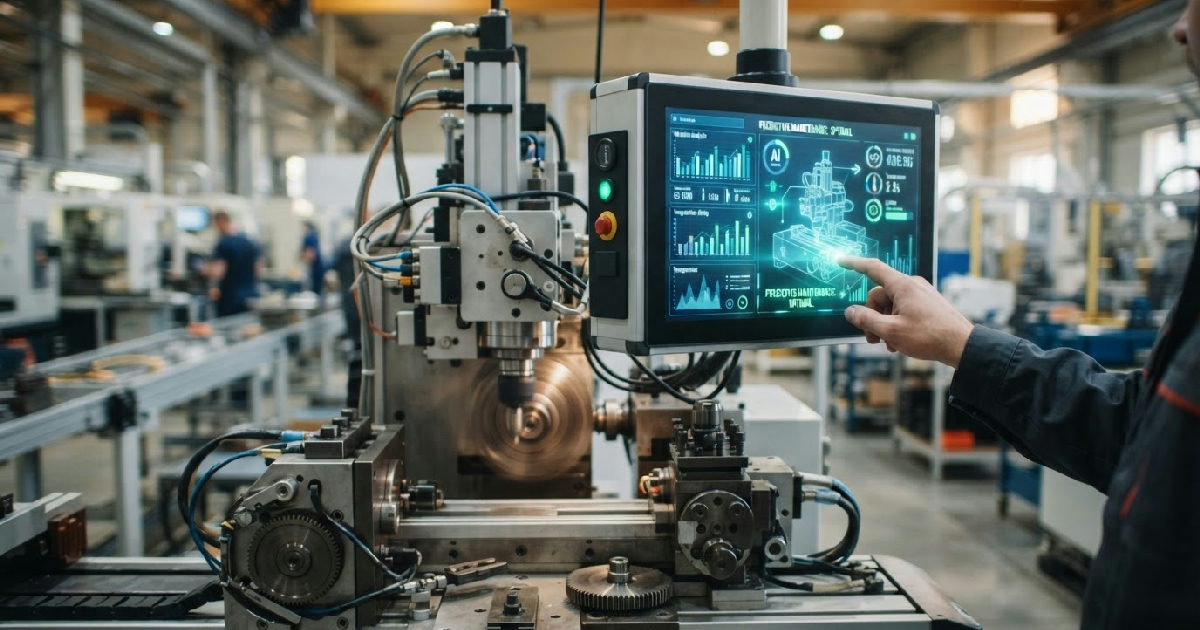
In September 2025, The Manufacturer magazine, a prominent UK industry publication, released its dedicated Digital Maintenance Supplement. This specialised publication spotlights the critical shift occurring within industrial operations: the widespread move from traditional reactive maintenance to sophisticated predictive strategies.
Driven by advancements in artificial intelligence (AI) and comprehensive digital transformation efforts, this strategic pivot aims to mitigate the substantial financial burden of unplanned downtime. UK manufacturing alone faces an estimated annual cost of £80 billion due to unexpected equipment failures, making this proactive approach a necessity for operational stability and growth.
Manufacturer magazine spotlights proactive maintenance
The core message within The Manufacturer Maintenance Supplement advocates for leveraging digital tools to pre-empt equipment failures before they materialise. This editorial stance reflects an industry-wide recognition that relying on reactive repairs is both costly and inefficient in modern production environments.
Factories across sectors are increasingly integrating smart technologies to forecast potential issues. The economic incentives are clear: proactive maintenance approaches can cut overall maintenance costs by as much as 25% and drastically reduce equipment breakdowns by up to 70%.
This transformation is underpinned by the intelligent application of AI and the Industrial Internet of Things (IIoT). Sensors embedded within machinery now collect vast amounts of real-time data, which AI algorithms then analyse to detect subtle anomalies indicating impending failure. This continuous monitoring enables engineers to schedule interventions precisely when needed, rather than following rigid, often wasteful, time-based schedules.
The embrace of such forward-thinking methodologies is not merely about cost savings; it’s about sustaining operational rhythm. Manufacturers understand that consistent production output hinges on equipment reliability. For many, integrating advanced diagnostics has become as fundamental as the production process itself, shaping how they manage their entire asset lifecycle.
Technological Pillars of Modern Industrial Maintenance
Modern maintenance engineering relies heavily on a suite of interconnected technologies. These digital tools form the backbone of what industry experts refer to as Maintenance 4.0, moving beyond basic automation into truly intelligent operational oversight. Key technologies include the Internet of Things (IoT), artificial intelligence and machine learning (AI/ML), big data analytics, and digital twins.
IoT sensors, strategically placed on manufacturing equipment, continuously stream operational data—temperature, vibration, pressure, and energy consumption. This raw data then feeds into sophisticated AI and machine learning models. These models learn normal operating parameters and identify deviations, allowing them to predict when a component might fail.
AI and Data Analytics for Enhanced Uptime
The analytical power of AI transforms raw sensor data into actionable insights. Machine learning algorithms can detect degradation patterns that human observation might miss, signalling potential issues long before they escalate into costly breakdowns. This capability not only reduces unplanned downtime but also extends the useful life of machinery, providing a substantial return on investment.
Furthermore, big data analytics processes these enormous volumes of information, extracting valuable trends about equipment health and overall plant performance. Engineers can use these insights to optimise maintenance schedules, manage spare parts inventory more efficiently, and make informed decisions about asset replacement. Such data-driven decisions are a hallmark of the modern engineering approach.
Digital twins, virtual replicas of physical assets, offer another layer of insight. They allow engineers to simulate various scenarios, test maintenance strategies, and predict the impact of changes in a virtual environment before implementing them on the actual equipment. This significantly reduces risks and refines maintenance protocols, leading to more robust manufacturing processes.
The Evolution of Industrial Maintenance Strategies
Industrial maintenance has evolved dramatically over the decades, moving from rudimentary approaches to highly sophisticated, data-driven systems. Early manufacturing relied almost entirely on reactive maintenance, where equipment was repaired only after it broke down. This approach inevitably led to unpredictable downtime and escalating repair costs.
The introduction of preventive maintenance marked a significant improvement. Here, maintenance tasks and parts replacements were scheduled at fixed intervals, aiming to prevent failures before they occurred. While reducing some unplanned stoppages, this method often resulted in “over-maintenance,” replacing components prematurely and incurring unnecessary expense.
From Reactive to Predictive Paradigms
Condition-based maintenance followed, where interventions were based on indicators of declining performance, often through visual inspections or simple sensor readings. However, it is predictive maintenance (PdM) that truly harnesses the capabilities of Industry 4.0, using real-time condition monitoring and AI to forecast failures accurately.
The U.S. Department of Energy reports that predictive maintenance can yield an impressive return on investment of up to 10 times its initial cost. This is achieved through fewer emergency repairs, optimised spare parts inventories, and a prolonged asset lifespan. Many manufacturers report a 15-25% ROI within the first year of implementation.
Computerised Maintenance Management Systems (CMMS) have played a pivotal role in this evolution. Originating from punch-card systems in the 1960s, CMMS platforms have advanced to become cloud-based, mobile-accessible, and integrated with AI. Modern CMMS solutions automate maintenance schedules and connect seamlessly with IoT sensors, providing the real-time monitoring critical for effective predictive strategies.
Overcoming Implementation Hurdles in Digital Maintenance
While the benefits of digital transformation in maintenance are undeniable, implementing these advanced systems presents its own set of challenges. One significant barrier is the high initial investment required for new technologies. Deploying AI platforms, IIoT devices, and advanced sensors can be prohibitively expensive, especially for smaller manufacturing firms navigating tight budgets.
Another pressing issue is the substantial skill gaps within the workforce. Reports indicate that nearly 60% of today
