


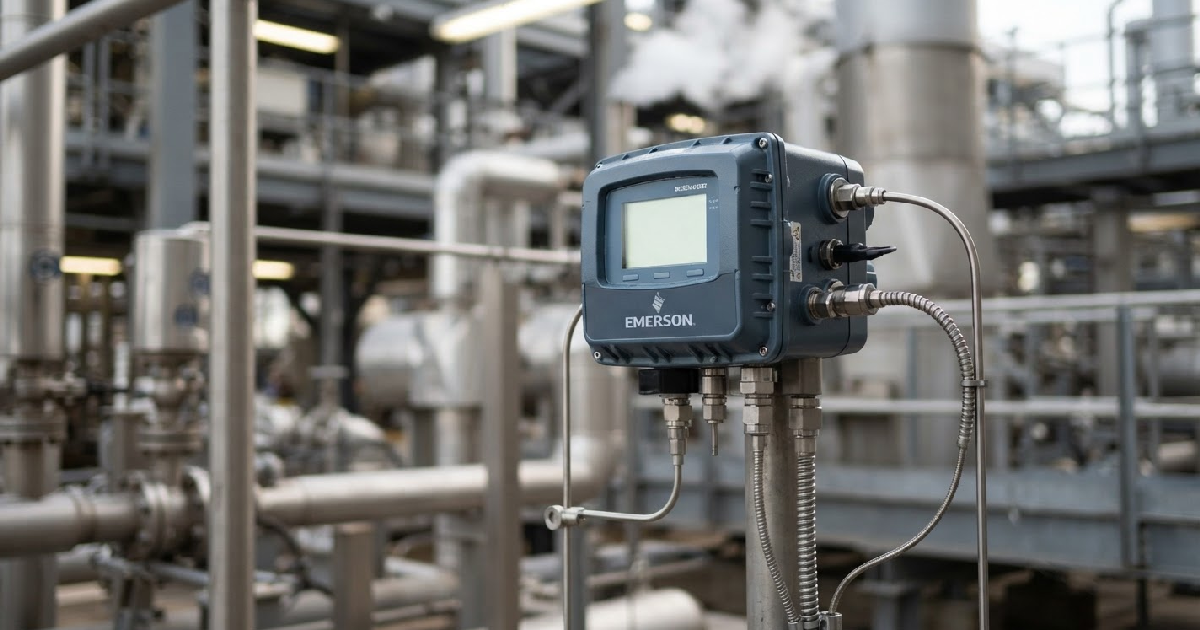
The Emerson Rosemount QX1000 is a new generation gas analyzer technology that is reshaping how industrial facilities monitor emissions, promising greater accuracy and simplified operations.
Companies like Gasera Ltd. and KNESTEL are also contributing to this shift by introducing advanced systems that provide highly selective and precise measurements of various pollutants. This move marks a significant departure from the fragmented, maintenance-heavy approaches that have long burdened plant operators striving for environmental compliance.
Advancing continuous emissions monitoring systems
Industrial combustion processes are under constant scrutiny for flue gas emissions. Regulations from bodies like the European Commission on Energy, Climate Change, and Environment and the U.S. Environmental Protection Agency (EPA) mandate continuous monitoring, requiring CEMS to operate independently and reliably for data reporting.
Historically, these systems were a patchwork of single-purpose analyzers, each designed for a specific pollutant. This meant supporting diverse technologies with distinct maintenance needs, calibration schedules, and consumable lists. It was a complex, resource-intensive undertaking.
Addressing operational burdens
The sheer variety of fuels and processes, from coal-fired boilers to natural gas turbines, dictates a specific mix of pollutants that must be measured, including nitrogen oxides, sulfur dioxide, carbon monoxide, and unburned hydrocarbons. Traditional systems often struggled with gas interference, like CO₂ masking CO, or water vapour reducing the accuracy for NO₂ and SO₂.
Furthermore, maintaining these disparate CEMS setups demanded a pool of skilled personnel for each specific analyzer type. A failure in any part of this intricate system could lead to substantial regulatory fines, or even a forced shutdown, incurring significant revenue losses for the facility.
Multi-technology integration powers new solutions
The aspiration for plant operators has always been a single analyzer capable of measuring every pollutant simultaneously. While a truly universal analyzer remains elusive, the latest generation of devices combines multiple measurement technologies within one unit, often sharing a single extraction mechanism. This modular approach delivers a considerable leap forward.
Emerson’s Rosemount QX1000 Continuous Gas Analyzer exemplifies this integration, combining quantum cascade laser direct absorption spectroscopy for gases like CO, CO₂, NO, NO₂, and SO₂, with paramagnetic detection for oxygen (O₂). Launched this year, it’s the first in the world to blend these methods, making it a critical tool for modern CEMS.
As environmental regulations evolve, engineers continue to redesign power systems to improve efficiency while reducing emissions.
Laser absorption spectroscopy, a core technology in the QX1000, functions by sending an infrared laser through a gas sample to a detector. The attenuation of specific wavelengths, linked to the absorption characteristics of target analytes, allows for precise calculation of pollutant concentrations. This method offers high selectivity and accuracy for critical CEMS applications.
Other manufacturers are also pushing boundaries. Gasera Ltd., a Finnish firm, offers its GASERA ONE GHG Greenhouse Gas Analyzer, providing highly accurate, simultaneous measurement of methane (CH₄) and nitrous oxide (N₂O) down to low-ppb detection limits. KNESTEL, for its part, introduced MultiLAS in September 2025, using Tunable Diode Laser Absorption Spectroscopy (TDLAS) for flexible, modular gas analysis with minimal drift.
Operational efficiencies and cost reduction
These advanced gas analyzer technologies deliver tangible operational efficiencies beyond just better readings. The Rosemount QX1000, for instance, boasts a simple design with no moving parts and few consumables, allowing for extended operation between calibrations. This translates directly into lower maintenance overheads and increased uptime for industrial facilities.
Dr. Beth Livingstone, Global Product Manager, Process Gas, at Emerson, highlighted that the QX1000’s integration of multiple advanced technologies within a single device provides the “best-fit solution for each measurement need.” This modular approach simplifies in-field service, further reducing lifecycle costs and helping prevent costly CEMS outages that could halt production. Addressing industrial environmental challenges often requires significant investment in advanced monitoring technologies, making integrated systems such as the Rosemount QX1000 increasingly valuable.
Modern CEMS also incorporate user-friendly interfaces and web server capabilities. This allows personnel to access real-time data, analyze trends, and generate reports remotely from any web-enabled device, streamlining data collection and regulatory reporting. Such remote access enhances operational flexibility and response times significantly.
The cold/dry sample conditioning system, widely used with these new laser absorption spectroscopy units, cools the gas stream to around 4°C (39°F) and dehydrates it. This process eliminates water vapour, which can interfere with readings and form corrosive acids, thereby protecting the analyzer and ensuring the integrity of the data.
Real-world applications show clear gains
The practical benefits of these integrated gas analyzer technologies are already evident across diverse industrial settings. Consider a European electric utility’s research and development facility, which uses a gas turbine to test efficiency improvements. Its original CEMS, built from individual analyzers, proved inadequate for continuous, grid-connected operation.
Emerson engineers reconfigured the facility’s monitoring system with a Rosemount QX1000. The single unit now continuously monitors four gases: carbon monoxide (CO), nitrogen oxide (NO), nitrogen dioxide (NO₂), and oxygen (O₂), covering specific ranges like CO from 0-60 to 0-400 ppm. This consolidation allowed for reliable, sustained operation when the turbine contributes to the grid.
Another example comes from a UK energy-from-waste (EfW) incinerator, a challenging environment due to the unpredictable mix of materials burned. These facilities produce complex flue gas streams with varying amounts of heavy metals, dioxins, and acid gases, alongside more common pollutants. Accurate, continuous monitoring is critical here to avoid non-compliance.
Faced with an aging CO analyzer, the EfW facility opted for a basic Rosemount QX1000 configuration. This unit, with a single laser absorption spectroscopy module for CO and a paramagnetic sensor for O₂, handles CO levels ranging from 0-300 to 0-2000 ppm. It demonstrates how adaptable these new systems are, even for the most demanding applications.
Implications for African industrial growth
The advancements in gas analyzer technologies carry particular significance for industrial sectors across Africa. As nations increasingly focus on environmental stewardship and sustainable development, stringent emissions regulations are becoming more common. These sophisticated, yet simplified, monitoring systems can help African manufacturers meet evolving compliance standards efficiently.
For power generation, manufacturing, and oil and gas operations across the continent, reducing operational complexity and maintenance costs is paramount. The modularity and high availability offered by solutions like the Rosemount QX1000 mean fewer resources are tied up in CEMS upkeep, allowing greater focus on core production and efficiency improvements. Sustained investment in manufacturing capacity and industrial infrastructure will also be essential for these technologies to achieve widespread adoption across Africa
Moreover, the enhanced accuracy and real-time data capabilities can provide African industries with better insights into their processes. This data allows for precise adjustments to combustion and other operations, optimizing fuel use, reducing waste, and mitigating environmental impact, aligning with both local regulations and global sustainability goals.
As industrialization accelerates across Africa, the adoption of these advanced emissions monitoring systems will be crucial. They offer a pathway to cleaner industrial practices, ensuring that growth is balanced with environmental responsibility. This technology will be key for industries seeking to compete globally while complying with increasingly stringent environmental standards.
