
Close Menu
Makers

    Subscribe to Updates

    Get the latest creative news from FooBar about art, design and business.

    What's Hot

    FANUC Corporation and Google announce “Physical AI” collaboration for industrial robots

    May 30, 2026

    Tallgrass Energy confirms first turbine allocations for $7 billion Cheyenne Power Hub

    May 29, 2026

    GE Appliances announces 800 AI agents at Cloud Next ’26

    May 29, 2026
    Facebook X (Twitter) Instagram
    Makers Saturday, May 30
    • Send us an email
    Facebook X (Twitter) Instagram LinkedIn
    • Homepage
    • About us
    • News

      Nigeria just unveiled West Africa’s largest AI-ready data centre

      May 28, 2026

      NASA sets sights on Moon base while one of the world’s biggest billionaires steps into the mission

      May 28, 2026

      $34 million-backed Nigerian defense company set to launch Africa’s largest drone factory with 50,000-unit target

      May 26, 2026

      Moroccan cement conglomerate CIMAF invests $45M to turn Gabon into a cement hub

      May 26, 2026

      China plans a $2 billion textile mega-city in Egypt to boost regional manufacturing

      May 22, 2026
    • Features
    • Contact
    Makers
    Email us
    Home»News»Asia’s manufacturing sector feels the heat as middle east tensions disrupt trade
    News

    Asia’s manufacturing sector feels the heat as middle east tensions disrupt trade

    Asia manufacturing disruption
    Adeyemi MuseBy Adeyemi MuseMay 11, 2026No Comments3 Mins Read5 Views
    Facebook Twitter Pinterest Telegram LinkedIn Tumblr Copy Link Email
    Follow Us
    Google News Flipboard
    Share
    Facebook Twitter LinkedIn Pinterest Email Copy Link

    The renewed pressure on manufacturers throughout Asia is due to the escalating tensions in the Middle East reverberating throughout the global supply chains, causing costs to go up and business confidence to act as a damper.

    With escalating costs of energy, shipping delays, the war is being experienced well beyond the immediate area. The ripple effect is turning into increased costs of production and increased uncertainty about the months to come, particularly in the economies of many Asian nations (which are highly dependent on imported fuel and are closely integrated into the global trading systems).

    Energy is at the heart of the interruption. A number of Asian manufacturing centers use the oil and gas supplies which pass through major Middle East routes. Any instability in the region is likely to cause price volatility forcing factories to either absorb the increased input cost or to pass the cost to consumers.

    See here: Transcorp Plc Shareholders Approve Dividend Payout at 20th AGM

    This has resurrected the fears on how geopolitical tensions in energy-producing regions can readily be converted into a global inflationary pressure.

    Another area of pressure is shipping. There has been increased transit time and high freight costs, especially in the freight movement between Asia and Europe due to heightened security risks along critical maritime corridors.

    Players in the industry already have to rethink logistics approaches, with some already rerouting shipments, a problem that is directly linked to the ongoing reports of disruptions along key global shipping routes and the resultant effects on trade flows.

    What this translates to is a twofold burden; increased operational expenses and a deteriorated sentiment.

    According to recent business surveys in some areas of Asia, the manufacturers are proving to be more cautious and scaling down expansion plans in the face of uncertainty. Economies which are export-driven, especially, are experiencing the squeeze as the global demand becomes tepid and the supply chain becomes unpredictable.

    This is in line with general issues regarding the continuity of the manufacturing-based model of growth in Asia in view of the current external shocks.

    Especially vulnerable are such countries as China, Japan and South Korea (key industrial exporters). Their industries are not just relying on the stability of energy supplies but also the efficient shipping routes to ensure that their industries remain competitive in the global markets.

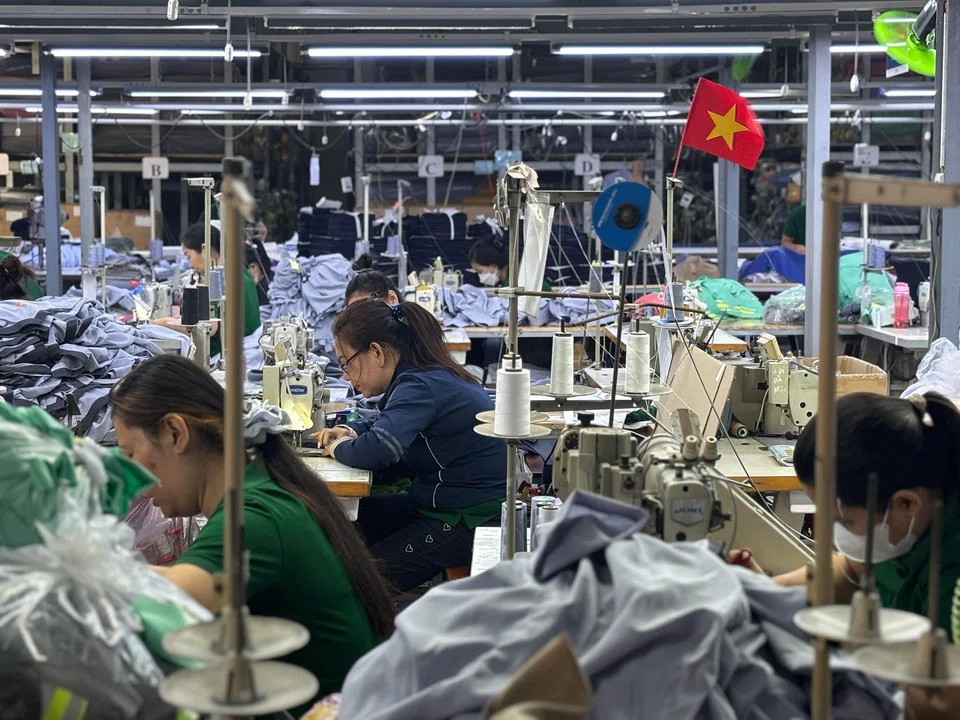
    To smaller economies of manufacturing in Southeast Asia, the effect is equally dramatic. Countries like Vietnam and Thailand, which have over the last few years become alternative production hubs, now have the challenge of being able to maintain cost advantages in a more volatile environment.

    The headwinds notwithstanding, some analysts see a possible silver lining. The shocks can hasten the diversification of supply chains by companies, energy efficiency investments and reliance on single trade routes by companies. This may, in the long term, enhance resilience, but the move might not be smooth or instant. In the meantime, however, the spirits are chary.

    With the situation of geopolitical tension and conflict still playing out, the manufacturing sector in Asia has found itself in a complex confluence of escalating costs, logistical issues, and lack of certainty in demand.

    The scenario highlights a common truth in the modern globalized economy: any shock in one part of the world can spread very rapidly in the complex web of global industrialization, challenging even the most resilient industrial systems.

    Asia Middle east manufactureres Missle east
    Follow on Google News Follow on Flipboard
    Share. Facebook Twitter Pinterest LinkedIn Telegram Email Copy Link
    Adeyemi Muse

    Related Posts

    Nigeria just unveiled West Africa’s largest AI-ready data centre

    May 28, 2026

    NASA sets sights on Moon base while one of the world’s biggest billionaires steps into the mission

    May 28, 2026

    $34 million-backed Nigerian defense company set to launch Africa’s largest drone factory with 50,000-unit target

    May 26, 2026
    Leave A Reply Cancel Reply


    The reCAPTCHA verification period has expired. Please reload the page.

    Recent Posts

    • FANUC Corporation and Google announce “Physical AI” collaboration for industrial robots
    • Tallgrass Energy confirms first turbine allocations for $7 billion Cheyenne Power Hub
    • GE Appliances announces 800 AI agents at Cloud Next ’26
    • Solstice secures $21 million Series A funding to scale AI platform
    • Nigeria just unveiled West Africa’s largest AI-ready data centre
    Stay In Touch
    • Facebook
    • Twitter
    • Pinterest
    • Instagram
    • YouTube
    • Vimeo

    Subscribe to Updates

    Get the latest creative news from SmartMag about art & design.

    About Us
    About Us

    Makers is Nigeria’s premier digital platform dedicated to manufacturing related news and content across Africa.

    Facebook X (Twitter) Instagram LinkedIn
    News

    Nigeria just unveiled West Africa’s largest AI-ready data centre

    May 28, 2026

    NASA sets sights on Moon base while one of the world’s biggest billionaires steps into the mission

    May 28, 2026

    $34 million-backed Nigerian defense company set to launch Africa’s largest drone factory with 50,000-unit target

    May 26, 2026
    Features

    How Dakar’s advanced lab manufacturing systems helped decode a deadly virus in 24 hours

    May 23, 20263 Views

    Africa in sight as Ukraine looks for new manufacturing partners to help with its weapons system

    May 16, 20262 Views

    Angola’s $470 million Cabinda refinery begins fuel production and supply to the local market after years of planning

    May 13, 20266 Views
    • Homepage
    • News
    • Features
    • Get In Touch
    • Privacy Policy
    • Cookie Policy
    Makers © 2026. All right reserved.

    Type above and press Enter to search. Press Esc to cancel.