


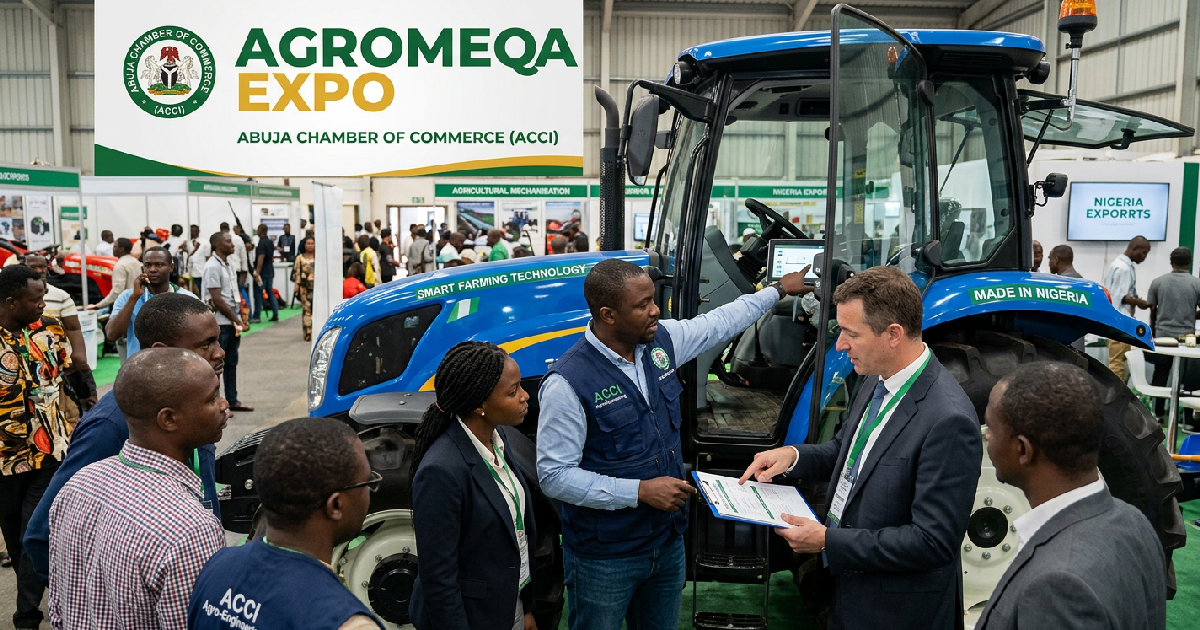
The Abuja Chamber of Commerce and Industry (ACCI) has positioned its upcoming Agromeqa Expo as a pivotal platform for accelerating agricultural mechanisation and boosting the nation’s export capacity. Emphasising a shift from subsistence methods to industrial-scale operations, the chamber intends for this event to bridge the gap between local producers and international markets while addressing systemic inefficiencies in the agricultural value chain.
According to initial reports from the ACCI, the expo is expected to serve as a technical hub where engineering firms, agro-processors, and foreign investors can converge. The primary objective remains the modernisation of farming techniques through the deployment of advanced machinery and software. As Nigeria looks to diversify its foreign exchange earnings, the chamber views the integration of smart technology as a viable path to meeting global phytosanitary standards and high-volume demand.
The emphasis on infrastructure is timely. Improving the technical backbone of the primary sector is essential for sustainable growth. Similar efforts to modernize fundamental services can be seen in how the federal government upgrades power infrastructure to support industrial zones across the country, providing the energy needed to run the very machinery the expo seeks to promote.
Engineering a Shift Toward High-Tech Agriculture
A core theme of the scheduled programming is the replacement of manual labor with automated systems. ACCI representatives have indicated that the current reliance on traditional tools limits the scalability of Nigerian farms. By showcasing developments in tractor technology, automated irrigation systems, and drone-based crop monitoring, the event aims to convince medium-to-large-scale farmers that capital investment in engineering solutions yields long-term profitability.
Engineering firm participation is expected to reach high levels during the upcoming sessions. These companies are not just selling hardware; they are offering integrated solutions that include maintenance, training, and data analytics. This holistic approach ensures that the equipment remains operational in harsh tropical climates and provides farmers with actionable insights into soil health and yield projections.
Building Local Capacity for Equipment Maintenance
One of the historical hurdles for mechanisation in the region has been the accumulation of imported machinery that falls into disrepair due to a lack of spare parts or technical expertise. Organizers reportedly plan to address this by hosting workshops focused on domestic engineering talent. The goal is to establish a network of local technicians capable of servicing high-tech imports, thereby reducing downtime for commercial operations.
This focus on local technical capability mirrors broader trends in the digital economy. The necessity of maintaining complex systems is a recurring theme in various sectors, much like the way infrastructure reliability is critical for digital payment systems to function across the continent. Without a solid technical foundation, even the most advanced tools fail to deliver their promised value.
Driving Non-Oil Exports Through Quality Control
Exporting agricultural goods requires more than just high yields; it requires consistency and compliance with international regulations. The ACCI believes that by adopting mechanised processing and packaging at the source, exporters can better manage post-harvest losses and improve the quality of goods such as cocoa, cashew, and ginger. This engineering-led approach to the value chain is designed to make regional products more competitive on the global stage.
The expo is also expected to feature segments on logistics and cold-chain engineering. For perishable items, the window for export is narrow, and the lack of specialized storage often results in rejected shipments at international ports. By introducing solar-powered cooling systems and automated grading machines, organizers hope to provide exporters with the tools needed to maintain product integrity from the farm gate to the shipping container.
Integrating Smart Technology and IoT
The intersection of agriculture and the Internet of Things (IoT) will be a major highlight of the planned programming. Sensors that monitor moisture levels or automated feeders for livestock are becoming essential for cost-efficiency. As the African IoT sector expands through industrial connectivity, the agricultural sector stands to benefit from robust sensors that can operate in remote areas with limited cellular coverage.
These smart systems allow for precision farming, which reduces the waste of fertilizers and water. In an era of increasing climate volatility, the ability to manage resources with precision is becoming an economic necessity. The ACCI expects that the partnerships formed during the event will lead to more pilot programs for “smart farms” across the northern and middle-belt regions.
Future Outlook for Industrialised Farming
Looking ahead, the success of the initiative will likely be measured by the volume of deals closed between engineering providers and agricultural cooperatives. The ACCI has indicated that it will work with financial institutions to create credit facilities specifically for the purchase of equipment showcased at the expo. This linkage between finance, engineering, and trade is viewed as a critical piece of the puzzle for many local entrepreneurs.
The trajectory for Nigerian agriculture is moving toward a more structured, industrialised model. While smallholder farmers remain the backbone of the industry, the shift toward large-scale, mechanised operations is accelerating. Through initiatives like the Agromeqa platform, the chamber of commerce is setting the stage for a future where technology is at the heart of the nation’s food security and export strategy.
