


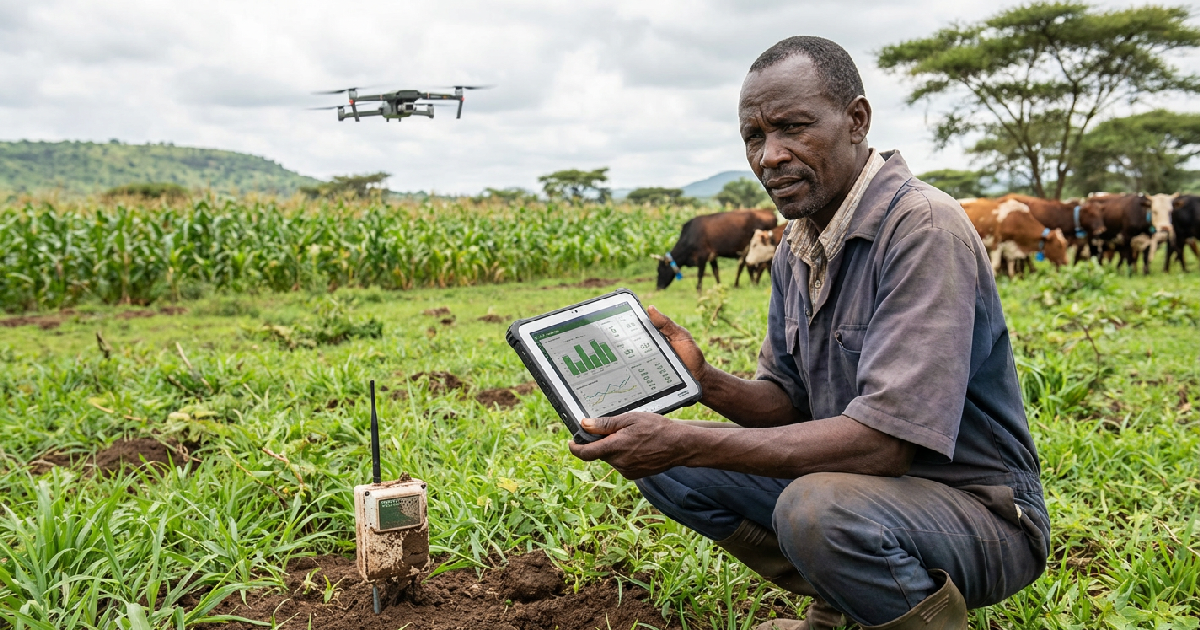
The acceleration of IoT adoption across Africa is no longer just a trend discussed at tech conferences; it is becoming the backbone of industrial and urban development from Lagos to Nairobi. As regional startups increasingly pivot toward hardware and integrated networking solutions, the focus has shifted from simple connectivity to solving deep-seated logistical and agricultural challenges. This evolution is transforming how the continent approaches everything from resource management to public safety.
Recent developments in the sector indicate that the Internet of Things is moving past its experimental phase. Local innovators are now deploying sensor-based networks to monitor water quality in rural areas and optimize supply chains in cities where traditional infrastructure often falls short. These localized solutions are proving that while the global IoT market might be driven by smart home gadgets, the African context is firmly rooted in utility and economic efficiency.
Piramal and Ajinomoto partner on ADC manufacturing reach
Infrastructure Growth Fuels Regional IoT Connectivity
The surge in IoT capabilities is directly linked to the improvement of networking infrastructure across key hubs like South Africa, Kenya, and Nigeria. Telecommunications companies have spent the last few years laying the groundwork by expanding 4G and 5G coverage, which provides the low-latency environment necessary for real-time data transmission. This bandwidth allows for more complex sensor arrays that can manage traffic flow in dense urban environments or monitor soil moisture levels across vast agricultural holdings.
But connectivity alone isn’t enough. The rise of “Edge Computing” is playing a vital role. By processing data closer to where it is collected rather than sending it to distant servers, African tech firms are overcoming the high costs and occasional instability of international data gateways. This shift is particularly crucial for industries like mining and manufacturing, where a delay of even a few seconds in data processing can have significant safety or financial consequences.
Agriculture and Smart Farming Leads the Way
If there is one sector where IoT is making its most visible impact, it is agriculture. Startups are currently deploying low-cost sensors that provide farmers with precise data on rainfall, soil nutrients, and crop health. These tools allow for “precision farming,” a method that was once the exclusive domain of large-scale industrial operations in the West. Now, smallholder cooperatives are beginning to see the benefits of data-driven decisions.
In countries like Ghana and Ethiopia, these systems are reportedly being used to reduce water waste and predict harvest cycles more accurately. By integrating IoT with mobile payment platforms, farmers can also access insurance and credit based on the data their farms produce, creating a new financial ecosystem built entirely on connected hardware.
Startup Ecosystem and Investment Trends
The investment landscape is reflecting this shift toward the “Internet of Everything.” While fintech has traditionally dominated African venture capital, there is a growing appetite for startups that bridge the gap between software and hardware. Investors are increasingly looking for companies that offer tangible solutions to physical problems, such as energy management through smart meters or cold-chain logistics for the healthcare sector.
This interest is fostering a specialized talent pool of engineers and data scientists. Educational initiatives and tech hubs are focusing on embedded systems and hardware design, ensuring that the next generation of devices is built with local conditions in mind—such as the ability to withstand extreme heat or function on low-power solar grids. The focus on efficient manufacturing partnerships is becoming a recurring theme as these startups scale their production beyond initial prototypes.
Security Challenges in a Connected Ecosystem
As the number of connected devices grows, so do the risks. Cybersecurity is becoming a primary concern for IoT developers across the continent. Many early-stage IoT devices lack the robust security protocols found in traditional personal computers or smartphones, making them potential targets for large-scale disruptions. Regional regulators and tech associations are now beginning to discuss standardized security frameworks to protect both public infrastructure and private consumer data.
The challenge lies in balancing high security with low costs. For many African consumers and small businesses, price remains the most significant barrier to entry. Developing secure, reliable, yet affordable sensors is the “holy grail” for hardware entrepreneurs in the region. Success in this area will likely determine how quickly IoT can penetrate the mass market versus remaining a specialized tool for big industry.
Future Outlook for African Digital Integration
Looking ahead, the integration of Artificial Intelligence (AI) with IoT networks is set to be the next frontier. So-called “AIoT” will move beyond mere data collection to predictive analytics. Instead of just notifying a technician that a water pump has broken, these systems will be able to predict a failure weeks in advance, allowing for preemptive maintenance that keeps vital services running without interruption.
The expansion of the African Continental Free Trade Area (AfCFTA) is also expected to play a role. By harmonizing trade rules, it may become easier for IoT startups to ship hardware across borders and deploy cross-border tracking solutions for the transport industry. This connectivity between nations will be essential for creating a truly integrated digital economy that utilizes the full potential of Internet of Things technology.
