


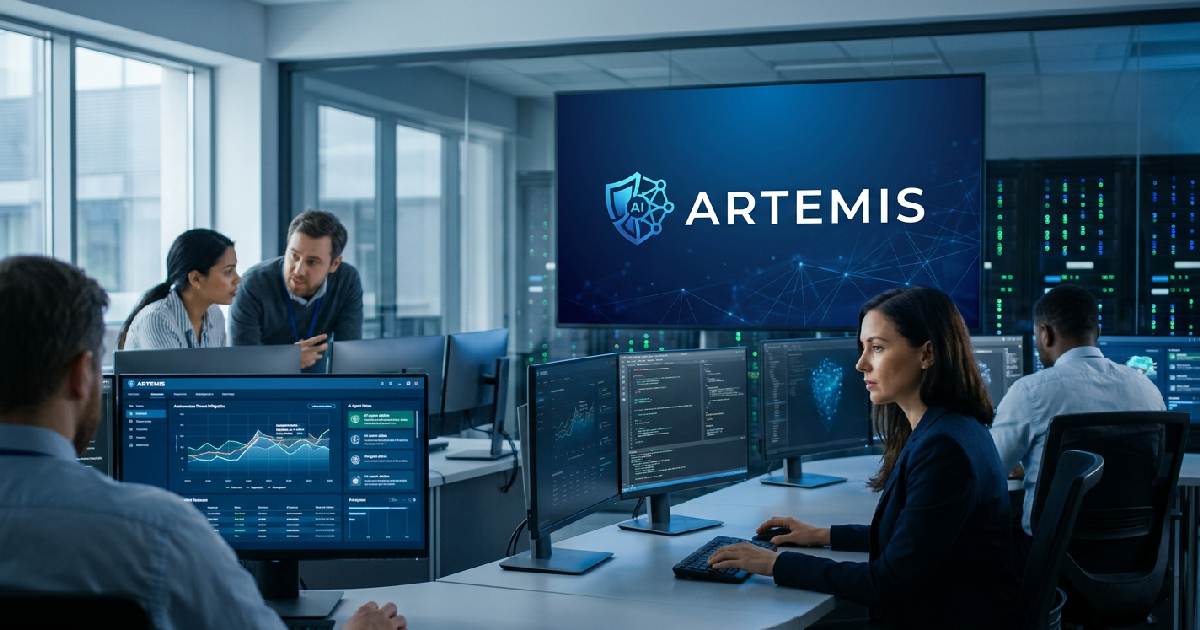
The defensive landscape of enterprise cybersecurity is undergoing a fundamental shift as organizations grapple with attacks that now move at the speed of software. While human analysts have long been the backbone of the Security Operations Center, the volume of telemetry data in modern cloud environments has surpassed what any manual team can reasonably parse. Artemis, a startup founded by veteran security engineers, is reportedly securing substantial venture backing to address this imbalance through an autonomous artificial intelligence platform.
The company has reportedly closed a significant funding round involving both seed and Series A capital. The investment was led by Felicis, with participation from firms including 1st Round Capital and Brightmind. Perhaps more telling than the institutional interest is the involvement of individual industry heavyweights. Reports indicate that the founders of several major security firms and former executives from companies like CrowdStrike and Palo Alto Networks have joined the round, signaling a professional consensus that the industry must move beyond human-dependent response times.
Traditional security tools, often categorized as Security Information and Event Management systems, have historically relied on static, rule-based logic. These systems effectively look for known signatures of bad behavior. However, as generative AI allows attackers to automate the creation of unique malware and sophisticated phishing campaigns, these fixed rules have become increasingly easy to circumvent.
H2: Creating an Autonomous Identity for Enterprise Security
Artemis is positioning its technology as an AI-native operating system rather than a supplemental tool. The platform is designed to act as a centralized intelligence layer that sits above an organization’s existing infrastructure. By ingesting data from cloud workloads, identity providers, and endpoints, the system builds a comprehensive map of a company’s unique digital behavior.
This approach mirrors recent trends in other highly technical sectors where automation is used to manage extreme complexity. For instance, just as specialized firms partner to streamline pharmaceutical manufacturing to ensure precision and speed, Artemis aims to consolidate fragmented security dashboards into a singular, cohesive workflow. The goal is to move beyond the “alert fatigue” that currently plagues security teams, where analysts are often buried under thousands of disconnected notifications, many of which are false positives.
H3: Moving From Observation to Active Remediation
The platform’s core innovation lies in its use of autonomous agents. Most contemporary security software is designed to notify a human when something looks suspicious. The human analyst then has to investigate the incident, determine its scope, and decide on a course of action. This manual intervention creates a window of opportunity for attackers to move laterally through a network.
Artemis’ agents are designed to perform these investigative steps independently. According to initial reports, the system can reconstruct the narrative of an attack — identifying the entry point and the targeted assets — in real-time. Crucially, the platform has the capability to take remediation steps such as isolating a server or revoking access credentials without waiting for human approval. This shift from informative alerting to active defense is expected to be a primary driver for enterprise adoption among large-scale organizations.
H2: Scaling Engineering for AI-Driven Defense
Despite being a relatively new entrant to the market, the startup has reportedly begun deployments within several large financial and technology institutions. These early adopters are using the platform to process vast amounts of security events, testing the AI’s ability to catch threats that have bypassed more conventional security layers.
The leadership team behind the project brings a high level of technical pedigree to the venture. The executive ranks include veterans who have previously held high-level roles at AWS and machine-learning-focused security firms. This expertise is particularly relevant as enterprises look to simplify their security stacks. Many organizations are currently managing dozens of disparate tools, a situation that often creates “blind spots” between different pieces of software.
The capital recently raised is expected to be used for a significant expansion of the company’s engineering and research teams. By focusing on deep integration and autonomous response, the company aims to eventually replace aging security orchestration tools. The long-term objective is a model of “self-defending” infrastructure that reduces the burden on human staff, allowing them to focus on high-level strategy rather than the constant triage of minor incidents. Passing the responsibility of routine threat hunting to specialized AI agents marks a significant transition in how modern businesses view their digital perimeters.
