


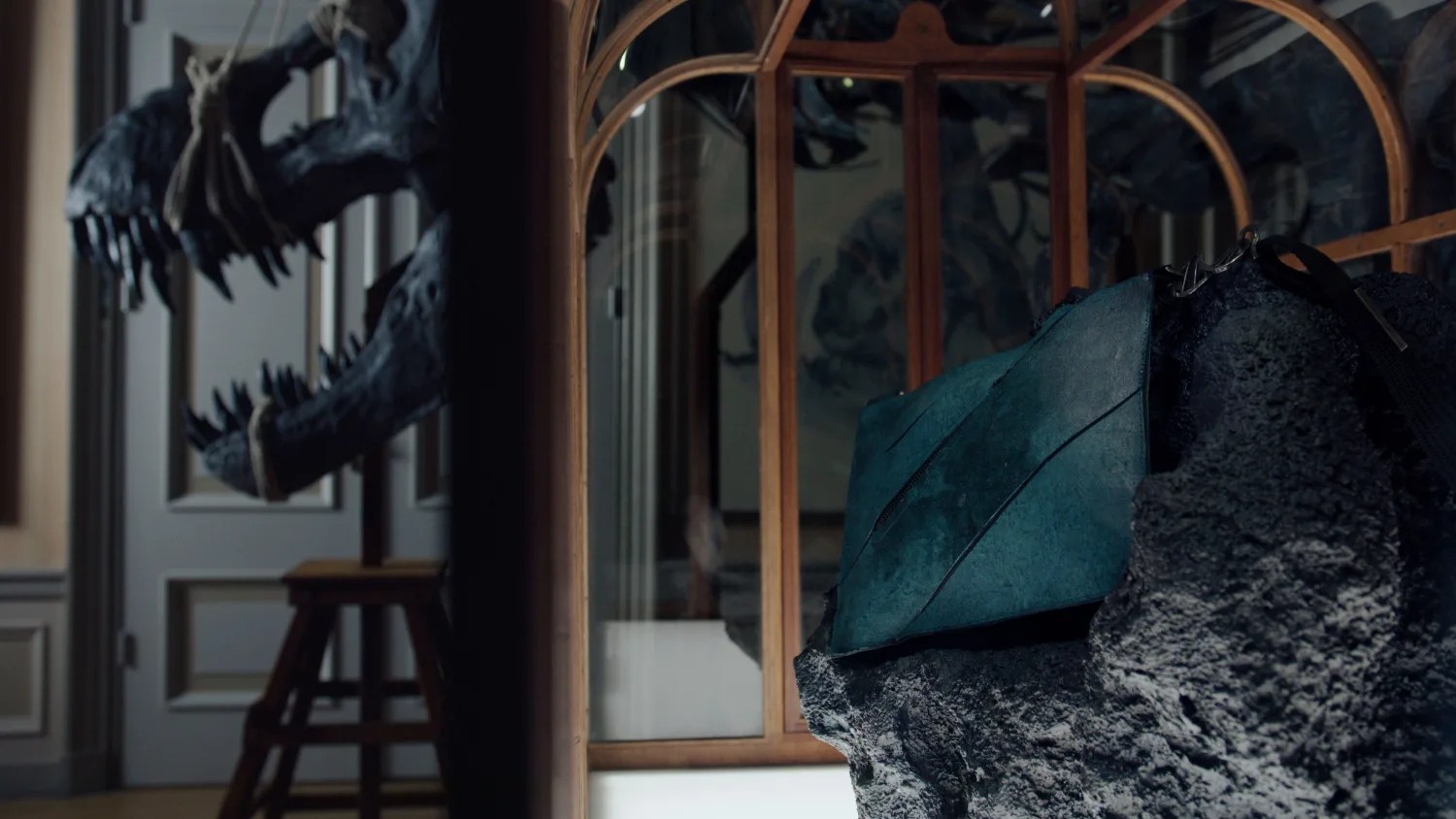
In a striking blend of ancient biology and modern technology, scientists have used fossilized collagen from Tyrannosaurus rex bones, combined with artificial intelligence, to produce the world’s first lab-grown “T-Rex leather”. The material has been turned into a luxury handbag, now on public display in Amsterdam.
The project was a collaboration between creative agency VML, lab-grown leather specialist Lab-Grown Leather Ltd., and The Organoid Company. Designers from the techwear label Enfin Levé created the handbag, which is currently exhibited at the Art Zoo Museum alongside a life-sized T. rex cast.
The process began with real collagen protein fragments extracted from actual T. rex fossils; bones that are at least 68 million years old. Because fossilization damages DNA over time, the collagen sequences were incomplete.
Researchers used advanced computational biology and AI modeling to predict and fill in the missing genetic information, creating a complete synthetic collagen blueprint for the extinct species.
This reconstructed DNA was then inserted into a carrier cell line. Billions of these engineered cells were grown and cultivated using Lab-Grown Leather’s proprietary Advanced Tissue Engineering Platform (ATEP™). The result is a bio-based leather material inspired by dinosaur biology, produced entirely without harming any living animals.
The finished handbag represents a creative experiment in biomimicry, using prehistoric proteins as inspiration for future-facing, sustainable fashion. It demonstrates how fossil records, combined with today’s AI tools, can help engineer new materials that were previously impossible to create.
See here: 2,300-Horsepower hybrid hypercar finally hits the production line
While this is a one-off luxury item designed to spark conversation, the underlying technology has broader potential. Lab-grown leather is already being explored as a more ethical and environmentally friendly alternative to traditional animal leather.
Using AI to reconstruct ancient proteins could open the door to entirely new material properties, textures, and strengths that do not exist in nature today.
For a global audience, this story highlights how science is increasingly able to bridge deep time with modern innovation.
In regions like Africa, where leather production and fashion industries are growing, such techniques could one day contribute to more sustainable manufacturing methods that reduce reliance on animal agriculture and lower environmental impact.
The T-Rex leather handbag is currently on display in Amsterdam. While it is not yet available for commercial sale, the project shows how creative industries and biotechnology are coming together in unexpected ways, turning extinct creatures into inspiration for tomorrow’s materials.
This is a developing example of how AI is helping scientists “revive” ancient biology in the laboratory, with potential applications far beyond fashion in the years ahead.
