


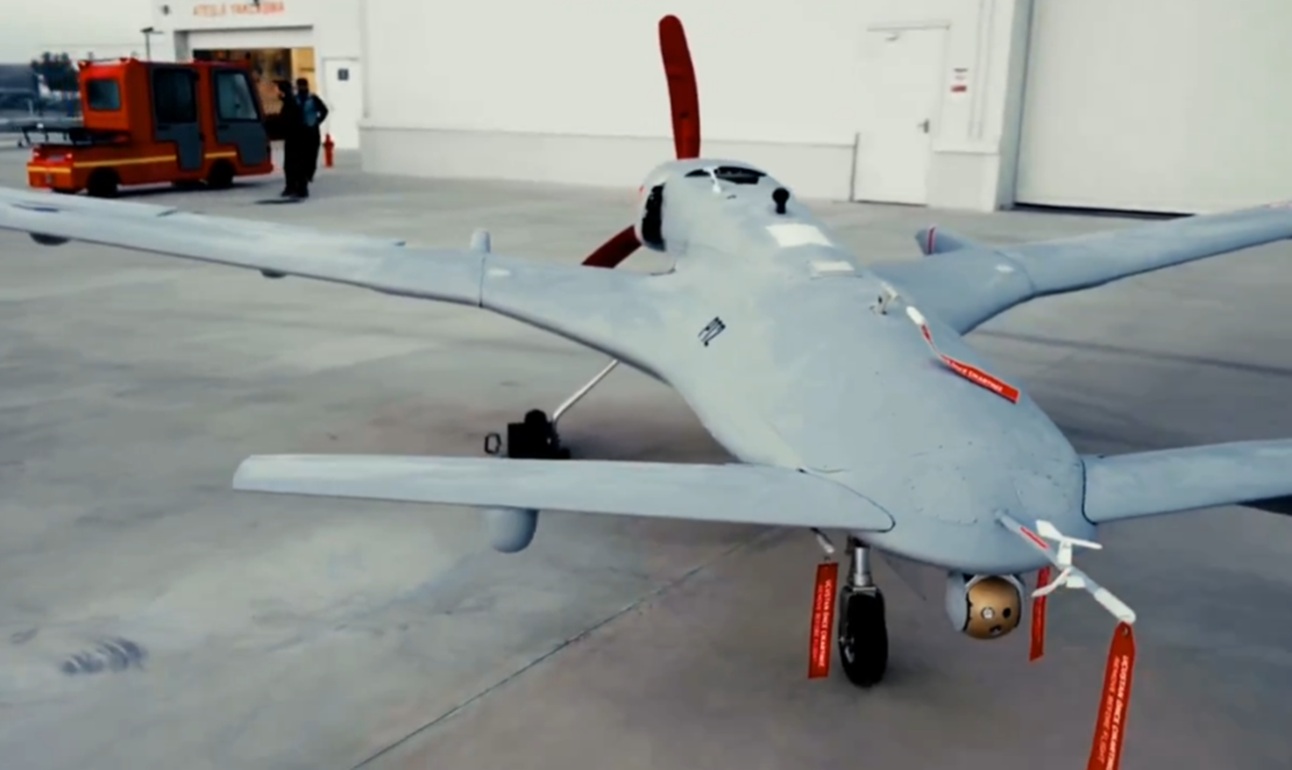
Turkish defence company Baykar has introduced its most advanced kamikaze drone yet (the K2), a long-range, AI-powered loitering munition capable of flying over 1,243 miles (2,000 km) without GPS, navigating entirely on its own, and operating in coordinated swarms with other drones.
Baykar released the first flight test footage and detailed performance data on March 14–16, 2026, showing five K2 drones flying together in perfect formation, adjusting altitude, speed, and direction autonomously using artificial intelligence.
The company described the K2 as “the largest kamikaze platform in its class,” designed for strategic deep strikes against high-value targets.
The K2 weighs 800 kg at takeoff and carries a 200 kg (440 lb) warhead. It cruises at over 200 km/h (124 mph) and can stay airborne for more than 13 hours. Its standout features include:
- GPS-denied navigation: The drone uses onboard AI, computer vision, inertial sensors, and terrain-matching software to determine its position and follow flight paths even when satellite signals are jammed or completely unavailable. This makes it extremely difficult to disrupt with electronic warfare.
- Autonomous swarm capability: Multiple K2 drones can fly as a group, maintain formation, avoid obstacles, and complete missions without constant human input. The AI allows them to adapt in real time if one drone is lost or if the mission changes.
- Stealth and flexibility: The drone can fly at low altitude in “sea-skimming” mode to stay below radar detection, and it launches from short or unprepared runways, making it suitable for forward bases or mobile operations.
Baykar, already famous for the Bayraktar TB2 (used in conflicts across Africa, the Middle East, and Ukraine) and the larger Akinci, is positioning the K2 as a cost-effective alternative to cruise missiles.
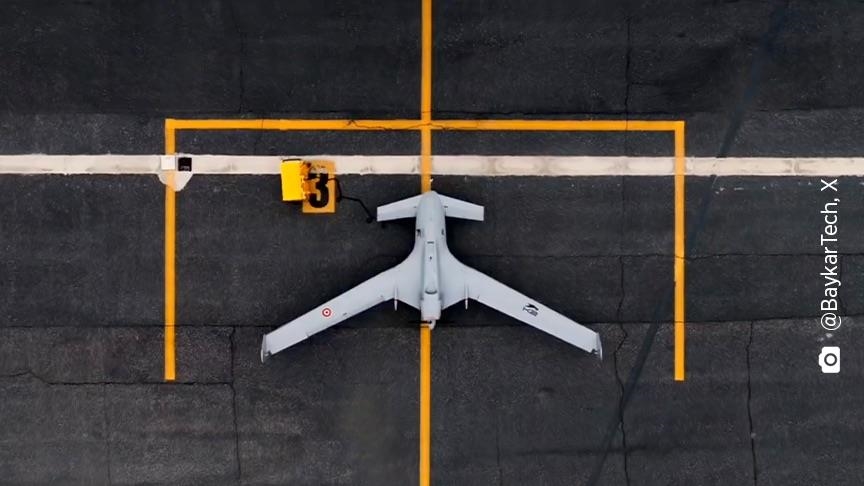
The combination of long range, heavy payload, and resistance to jamming addresses lessons learned from recent wars, where traditional drones and missiles have been countered by sophisticated air defences and electronic jamming.
See here: Terra Industries: Africa’s newest $100m startup isn’t fintech, it’s defence tech
For countries around the world that already operate Bayraktar drones, the K2 could offer a new option for precision strikes over long distances without relying on vulnerable satellite navigation.
Nations facing border security challenges, maritime patrols, or asymmetric threats may find the swarm and GPS-free capabilities particularly valuable.
Baykar has not yet released exact pricing or confirmed export customers, but the company has sold drones to more than 30 countries, including Nigeria, Ethiopia, and Libya.
The K2 is expected to enter production soon, with potential deliveries beginning in late 2026 or 2027.
This unveiling adds to Turkey’s growing reputation as a major player in affordable, high-performance unmanned systems.
The K2 is not just another drone; it is a system designed for contested environments where traditional navigation and communication can be denied, making it one of the most talked-about new military technologies of 2026.
