
Close Menu
Makers

    Subscribe to Updates

    Get the latest creative news from FooBar about art, design and business.

    What's Hot

    India now manufactures a quarter of the world’s iPhones as Apple pivots from China

    March 11, 2026

    Nvidia prepares open-source AI agent platform ‘Nemoclaw’ ahead of GTC 2026, targeting enterprise adoption

    March 11, 2026

    Mercedes’ South Africa plant may soon build Chinese vehicles

    March 11, 2026
    Facebook X (Twitter) Instagram
    Makers Friday, March 13
    • Send us an email
    Facebook X (Twitter) Instagram LinkedIn
    • Homepage
    • About us
    • News

      India now manufactures a quarter of the world’s iPhones as Apple pivots from China

      March 11, 2026

      Nvidia prepares open-source AI agent platform ‘Nemoclaw’ ahead of GTC 2026, targeting enterprise adoption

      March 11, 2026

      Mercedes’ South Africa plant may soon build Chinese vehicles

      March 11, 2026

      South Africa grapples with STEM education crisis as math pass rates plunge, prompting calls for overhaul

      March 10, 2026

      Boeing expands STEM pathways program across Africa, targeting 2,000 students in space innovation

      March 10, 2026
    • Features
    • Contact
    Makers
    Email us
    Home » Is AI-powered automated human delivery Africa’s solution to IVF scarcity?
    Features

    Is AI-powered automated human delivery Africa’s solution to IVF scarcity?

    Ned NwosuBy Ned NwosuJanuary 9, 2026No Comments3 Mins Read13 Views
    Facebook Twitter Pinterest Telegram LinkedIn Tumblr Copy Link Email
    Follow Us
    Google News Flipboard
    Share
    Facebook Twitter LinkedIn Pinterest Email Copy Link

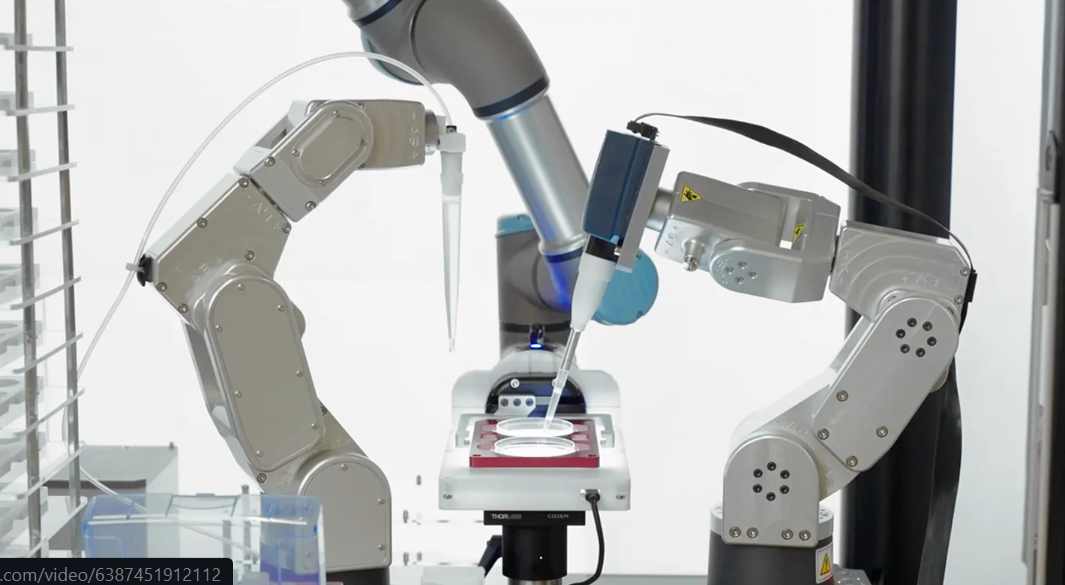
    A breakthrough in reproductive medicine is poised to revolutionize fertility therapy globally. AURA, the first fully automated, AI-powered IVF machine, can manage every laboratory stage of producing a human embryo outside the body, from choosing sperm and eggs to fertilization and early embryo development, without direct human participation.

    AURA, developed by the U.S. firm Conceivable Life Sciences, automates most of the manual work that embryologists used to do during in-vitro fertilization (IVF). 

    Using robotic arms, precise pipettes, and AI-powered imaging systems, the machine tracks and picks viable sperm, detects healthy eggs, and fertilizes them.

    See here: Science Fiction to Science: How Human Brain Cells Are Being Used to Build the First Human Computers

    If all goes well in AURA’s incubator, this zygote will develop into an embryo, then a blastocyst, which can be transplanted to a patient’s uterus and possibly grow into a kid.

    All of this happens with minimum human interaction.

    This is a significant technological development for various reasons. 

    IVF has long been costly, complicated, and heavily reliant on the expertise of individual embryologists. 

    Human handling causes uncertainty and mistakes, and the cost of keeping highly trained specialists makes fertility treatment unaffordable for millions. 

    The ramifications of such a tech, especially for Africa, are particularly profound. 

    Africa’s issues with IVF

    According to a World Health Organization (WHO) report, around 17.5 % of adults worldwide experience infertility at some point in their lives, roughly 1 in 6 people. 

    This shows infertility is a major global reproductive health issue affecting both high‑ and low‑income regions

    In Sub-Saharan Africa, this number is more prevalent, as one in every four couples suffers from infertility, but access to reproductive treatment is severely limited. 

    According to WHO, fertility care, including prevention, diagnosis, and treatment, is still a low priority in many health systems, especially in low- and middle-income countries (LMICs). 

    This includes most African countries, where infertility therapies are rarely covered by public health insurance and fertility therapy is sometimes prohibitively expensive or unavailable.

    Historically, Africa has contributed a very small share of global ART activity despite representing about 16.7 % of the world’s population, indicating a major access gap. 

    Fewer than 2 % of people in Africa currently have access to assisted reproductive technologies (ART) like IVF, meaning the vast majority of infertile couples cannot receive these treatments locally, according to PubMed Central.

    Automated systems, such as AURA, could change the equation. By lowering reliance on scarce specialists and expediting laboratory processes, such technologies may make it easier to develop and manage IVF clinics in African towns. 

    Lower costs could increase access for middle-income families, while standardized procedures could enhance outcomes in areas where fertility therapy is still developing.

    Beyond healthcare, this success demonstrates Africa’s ability to adapt cutting-edge medical innovations rather than lag behind them. 

    As AI and robotics revolutionize global care, systems like AURA show how innovation may be used to address very human issues, such as the universal desire to have a family, in a more equal and accessible manner.

    Africa AI AURA IVF IVF machine
    Follow on Google News Follow on Flipboard
    Share. Facebook Twitter Pinterest LinkedIn Telegram Email Copy Link
    Ned Nwosu

    Related Posts

    From space to your phone: MTN pioneers Starlink satellite connectivity

    March 9, 2026

    New hope against Malaria: Scientists pinpoint a protein the parasite can’t survive without

    March 9, 2026

    Broadcom eyes $100B+ AI chip revenue in 2027, challenging Nvidia’s dominance

    March 9, 2026
    Leave A Reply Cancel Reply


    The reCAPTCHA verification period has expired. Please reload the page.

    Recent Posts

    • India now manufactures a quarter of the world’s iPhones as Apple pivots from China
    • Nvidia prepares open-source AI agent platform ‘Nemoclaw’ ahead of GTC 2026, targeting enterprise adoption
    • Mercedes’ South Africa plant may soon build Chinese vehicles
    • South Africa grapples with STEM education crisis as math pass rates plunge, prompting calls for overhaul
    • Boeing expands STEM pathways program across Africa, targeting 2,000 students in space innovation
    Stay In Touch
    • Facebook
    • Twitter
    • Pinterest
    • Instagram
    • YouTube
    • Vimeo

    Subscribe to Updates

    Get the latest creative news from SmartMag about art & design.

    About Us
    About Us

    Makers is Nigeria’s premier digital platform dedicated to manufacturing related news and content across Africa.

    Facebook X (Twitter) Instagram LinkedIn
    News

    India now manufactures a quarter of the world’s iPhones as Apple pivots from China

    March 11, 2026

    Nvidia prepares open-source AI agent platform ‘Nemoclaw’ ahead of GTC 2026, targeting enterprise adoption

    March 11, 2026

    Mercedes’ South Africa plant may soon build Chinese vehicles

    March 11, 2026
    Features

    Broadcom eyes $100B+ AI chip revenue in 2027, challenging Nvidia’s dominance

    March 9, 20263 Views

    E-4B: The American doomsday nuclear plane that has everyone talking

    March 6, 202615 Views

    Not just a drillship: Turkey’s first deep-sea drilling outside national waters lands in Somalia

    February 17, 20267 Views
    • Homepage
    • News
    • Features
    • Get In Touch
    • Privacy Policy
    • Cookie Policy
    Makers © 2026. All right reserved.

    Type above and press Enter to search. Press Esc to cancel.