


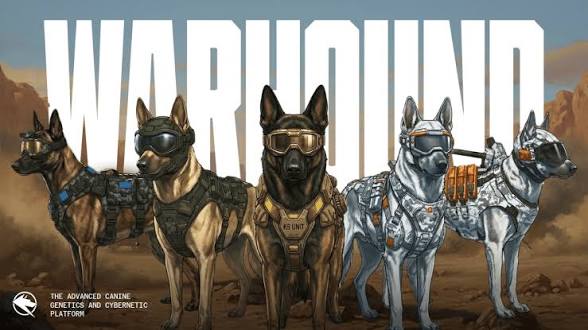
Warhound, a defence technology company associated with entrepreneurs Ben Lamm and Palmer Luckey, has emerged from stealth with $200 million in seed funding. The company plans to combine canine breeding, biotechnology and protective technology to develop working dogs for military and law enforcement use.
The company aims to reduce US reliance on overseas suppliers of working dogs while improving canine health and performance through breeding and biotechnology. David Spirk, a Marine Corps veteran and former senior counselor at Palantir Technologies, will lead Warhound as its chief executive officer.
Warhound secures 200m for domestic supply
The United States reportedly sources more than 80% of its military working dogs from Europe, creating a potential supply-chain vulnerability for defence and security agencies. The reliance on overseas suppliers has raised concerns about supply-chain resilience. A further challenge is the proportion of dogs that do not complete training successfully, a process commonly described as a “washout”.
Warhound plans to develop a domestic supply of working dogs for US military and law enforcement agencies. Ben Lamm, chief executive of Colossal Biosciences, told TechCrunch that inherited health conditions can affect the suitability of some dogs for working roles. Conditions cited in the discussion included hip dysplasia and certain eye disorders. Warhound is exploring whether genetic engineering could reduce the risk of selected inherited conditions, although the effectiveness and practical limits of such interventions remain to be established.
Biotechnology for Enhanced Canine Performance
Warhound plans to use biotechnology licensed from Colossal Biosciences, including genetic-engineering tools and biobanking technology. One proposed focus is reducing the risk of inherited conditions such as hip dysplasia, which can affect some working dog breeds. The goal is healthier, longer-serving animals.
Lamm said the team had studied working dog breeds such as the Belgian Malinois and German Shepherd Dog. According to Lamm, the team has collected and stored cell lines from selected working dogs. These samples could support research into genetic changes associated with particular health or performance traits, although the feasibility and safety of specific edits will need to be demonstrated.
Integrating Advanced Anduril Hardware
Alongside its biotechnology programme, Warhound plans to explore hardware and software capabilities from Anduril Industries, the defence technology company founded by Palmer Luckey. The proposed systems are intended to improve situational awareness and coordination between working dogs and their handlers. Anduril’s contributions will include advanced cybernetic augments, software, and protective gear such as vests and goggles.
The proposed equipment could include wearable sensors, software, protective vests and goggles. Potential applications include protective vests fitted with sensors that relay information to handlers in real time. The proposed combination of biotechnology and wearable equipment is intended to improve canine health, protection and effectiveness in operational settings.
AI and robotics are reshaping numerous sectors, and defense applications are certainly no exception. This move represents a convergence of cutting-edge biology and defense technology, a trend increasingly visible across modern industrial landscapes.
Protecting Dogs and Handlers with Technology
Lamm described the approach as technology operating “on top of the dog, not in the dog”, referring to wearable equipment rather than implanted devices. The equipment is intended to protect working dogs and improve the information available to their handlers during operations.
ViaGen Pets & Equine, which provides animal cloning services, is expected to support Warhound’s proposed cloning programme, subject to confirmation of the agreement. ViaGen’s experience with animal cloning could support the programme. Any claims about its success rate or the number of animals cloned should be attributed to the company and supported by published figures. This established expertise provides a foundation for Warhound’s ambitious breeding programme.
Addressing National Security Gaps and Cost Efficiency
US agencies face challenges in sourcing and training enough working dogs to meet operational requirements. The article’s source estimates that US federal agencies acquire more than 1,200 working dogs annually, with the Department of Defense and Department of Homeland Security accounting for approximately 90% of demand. The federal government reportedly spends more than $10 million annually to procure working dogs, although the figure should be checked to establish which costs it includes.
Training attrition adds to these costs. If approximately half of the dogs entering training fail to qualify, agencies must source and train around 200 dogs to produce 100 that meet the required standards. Training one working dog can exceed $60,000. Warhound argues that cloning selected dogs could help reproduce desirable inherited traits. However, whether this would reduce training attrition and overall costs remains to be demonstrated.
Warhound’s disclosed investors include In-Q-Tel, a strategic investment organisation that works with the US intelligence and national security communities. The reported investor group also includes Sequoia Capital, ARK Invest, Franklin Templeton and 8VC.
Ethical Frameworks and Animal Welfare Commitments
Using genetically engineered dogs in military and law enforcement roles raises ethical and animal-welfare questions. The proposal raises questions about animal welfare, genetic modification and the use of animals in military and law enforcement operations. Warhound is navigating these considerations proactively.
The company has publicly stated its commitment to operating under the guidance of the American Humane Society. Under the reported arrangement, the animal-welfare organisation would oversee or certify specified training practices and support care standards covering the dogs’ lives, including retirement. The programme is also expected to address retirement arrangements, including the possibility of placing dogs with former handlers or suitable adoptive homes.
Domestic industrial growth, particularly in advanced sectors, is a recurring theme in strategic investments. These discussions underscore the complex ethical terrain associated with advanced biotechnology applications when they intersect with defense and animal welfare.
Expert Perspectives on Bioethics
Bioethicist Alta Charo, professor emerita at the University of Wisconsin–Madison, offered a perspective on the proposal’s potential benefits and ethical implications. Charo reportedly said the approach could offer opportunities to improve working dogs’ health and welfare while supporting their operational roles. This perspective acknowledges the dual nature of such technological advancements.
The proposal is also likely to attract ethical debate and regulatory scrutiny because it involves genetic modification for military and law enforcement applications. Warhound says it has briefed government groups on its business model and ethical approach. These discussions should not be taken as evidence of regulatory approval unless the company or relevant agencies confirm that status.
Outlook for Specialized Canine Operations
Warhound expects its first puppies to arrive in early 2027 and aims to begin deploying working dogs within approximately two years, according to the company’s stated timeline. The company plans to supply the dogs to the US Department of Defense, military branches, law enforcement agencies and emergency responders. Pricing details are still under development.
Lamm is also the co-founder and chief executive of Colossal Biosciences, which is pursuing a de-extinction programme involving mammoth-like elephants. Luckey co-founded Oculus VR, which Facebook acquired in 2014, and founded Anduril Industries in 2017. Anduril’s reported valuation reached $61 billion in May 2026, according to the relevant funding announcement or report. Their involvement connects Warhound with established ventures in biotechnology and defence technology.
Warhound’s launch brings together animal biotechnology and defence technology in a proposed new approach to working dog procurement. The company plans to combine genetic research with wearable sensors and protective equipment to develop working dogs for specialised operational roles. Whether the approach improves canine health, training outcomes and handler safety will depend on the technology’s performance, animal-welfare safeguards and results from operational testing.
