


Private investors have poured billions of dollars into fusion power, propelling more than a dozen startups past the $100 million funding mark. This significant capital injection signals a fundamental shift in perception, moving fusion from a distant scientific dream towards a tangible, albeit challenging, commercial prospect.
As of August 2026, firms such as Commonwealth Fusion Systems and Helion Energy lead the field, with each having amassed billions of dollars in private capital. This wave of funding aims to accelerate the development of technologies capable of harnessing the same nuclear reactions that power the Sun, potentially providing a virtually limitless source of clean energy.
Billions Backing Commercial Fusion Power
The total private capital committed to fusion energy ventures now stands at an unprecedented level, with Commonwealth Fusion Systems (CFS) alone accounting for nearly one-third of all investment. Its latest funding round in July added a further $1 billion, bringing its total funding raised to $3.94 billion, according to data from FusionX.
This substantial backing reflects growing confidence that fusion power plants could eventually transform trillion-dollar energy markets. Helion Energy follows closely behind CFS, having raised $3.2 billion, demonstrating the substantial financial bets being placed on diverse technological approaches.
Commonwealth Fusion Systems leads the pack
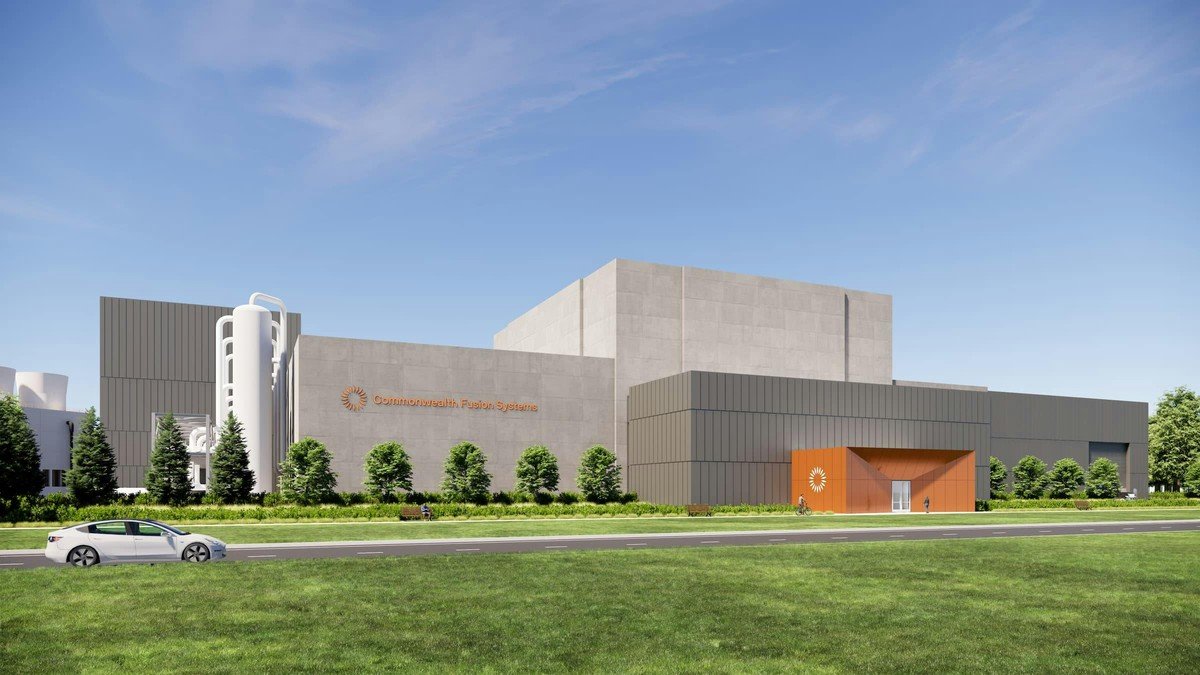
Massachusetts-based CFS has positioned itself at the forefront of private-sector fusion development. Its 2021 Series B round, which raised $1.8 billion, significantly accelerated its work on SPARC, a first-of-its-kind fusion system.
SPARC aims to achieve scientific breakeven, or a Q value greater than 1, by 2027.CFS employs a tokamak design, a doughnut-shaped reactor that uses powerful high-temperature superconducting magnets to contain and compress superheated plasma. Heat generated by the fusion reaction will ultimately be used to drive turbines and generate electricity.
The company also plans to begin construction of ARC, its commercial fusion power plant, later this decade, with the facility designed to produce 400 megawatts of electricity. This facility will be built near Richmond, Virginia, and Google has already committed to purchasing half of its output.
Helion’s aggressive timeline and direct energy conversion
Helion, based in Everett, Washington, stands out for its ambitious target of producing electricity by 2028, with Microsoft as its first customer. The company’s unique field-reversed configuration reactor uses magnetic fields to create and collide plasma formations at speeds of more than 1 million mph.
This process directly induces an electrical current in the reactor’s magnetic coils, allowing electricity to be generated without a conventional steam cycle. Helion secured an additional $465 million in June, valuing the company at $15.5 billion and bringing its total committed capital to $3.2 billion.
Diverse approaches to plasma confinement
Beyond these leading companies, several other firms are pursuing distinct approaches to fusion. TAE Technologies, founded in 1998, also uses a field-reversed configuration but enhances plasma stability with particle beams.
Pacific Fusion, which reportedly raised over $1 billion in its Series A, is developing an inertial confinement method using coordinated electromagnetic pulses. Proxima Fusion, based near Germany’s Wendelstein 7-X reactor, focuses on stellarator designs that twist plasma into stable configurations.
Technological breakthroughs fuelling investor confidence
The recent surge in fusion power investment is not simply speculative. It stems from critical technological advancements that have made commercial fusion seem more attainable. More powerful computer chips, sophisticated artificial intelligence systems, and high-temperature superconducting magnets have all contributed significantly.
These innovations enable more complex reactor designs, advanced simulations, and precise control schemes for plasma. A major scientific milestone occurred in late 2022 when a U.S. Department of Energy laboratory achieved a controlled fusion reaction that produced more energy than the energy delivered by its lasers, providing further evidence for the underlying science.
Inertial confinement and laser systems
The success of the National Ignition Facility (NIF) experiment in 2022 has invigorated the inertial confinement approach to fusion. Inertia Enterprises, co-founded by NIF chief scientist Annie Kritcher, plans to commercialise this laser-driven technique using fuel pellets. The company emerged from stealth in February with $450 million in Series A funding.
Similarly, Germany-based Focused Energy, another NIF-affiliated venture, secured an oversubscribed $240 million Series A round in June. The company aims to mass-manufacture fuel targets for laser-driven fusion at a rate of nearly 1 million per day. Marvel Fusion is also building a demonstration facility with Colorado State University, expected to be operational by 2027.
Xcimer, founded in July 2022, is developing a 10-megajoule laser system designed to deliver five times the energy of the NIF setup. In June, the Colorado-based startup activated Phoenix, its prototype system, which it claims is the world’s most powerful privately owned laser.
Stellarator designs gain traction
While tokamaks and inertial confinement dominate much of the investment, stellarator designs are also attracting considerable interest. These reactors confine plasma using powerful, twisted magnetic fields, offering potentially greater stability for sustained fusion reactions.
Proxima Fusion has raised more than $682.9 million and aims to complete its Alpha net-energy demonstrator in the early 2030s. Thea Energy, known for its pixel-inspired magnets, raised $100 million in a Series B round in May, betting on software control to create the complex magnetic fields needed for stellarators.
Varied strategies for market entry and revenue
Recognising the long development cycles associated with commercial fusion, some startups are pursuing alternative revenue streams and market-entry strategies. Shine Technologies is taking a pragmatic approach by selling neutron testing services and medical isotopes.
The company, which has raised $1 billion, is also developing methods for recycling radioactive waste. This strategy allows Shine to build essential capabilities and generate revenue long before a full-scale fusion power plant becomes commercially viable. The company secured a $240 million round in February.
Zap Energy, based in Washington, announced a partial pivot in April to include nuclear fission and hybrid fission-fusion power plants. This move, which included the appointment of CEO Zabrina Johal, is designed to generate revenue earlier. Zap Energy has raised $325 million.
Kyoto Fusioneering, which has raised $121 million, is focusing on the “balance of plant” components necessary for a successful fusion reactor. This includes gyrotrons for heating plasma and heat extraction systems. The company anticipates a significant market for suppliers once fusion technologies reach commercial viability.
Type One Energy plans to build a 350-megawatt stellarator reactor on a retired Tennessee Valley Authority (TVA) coal power plant site. Unlike some other companies, Type One Energy intends to sell its core technology to utilities, enabling them to build, own, and operate the equipment. The company has raised $174.5 million to date.
Navigating the path to commercial viability
Despite the substantial investment, the journey to commercially viable fusion power remains complex. General Fusion, now in its third decade, illustrates this challenge. It faced a cash shortage in spring 2025 while building its LM26 device, leading to a 25% reduction in staff.
A $22 million funding lifeline in August 2025 and an additional $51.1 million raised through SAFE notes helped sustain operations. The company eventually went public through a reverse merger and began trading on Nasdaq on July 13, 2026, raising $127 million in the process. This sequence highlights the demanding financial realities of developing deep technologies over the long term.
The distinction between scientific breakeven and commercial breakeven remains crucial. While experiments have demonstrated net energy gain from the fusion reaction itself, achieving a net energy gain from the entire facility, including its operational requirements, remains a far greater hurdle. This will determine the ultimate economic feasibility of fusion power.
Looking ahead: a new energy paradigm
The sheer scale of investment in fusion power technology signals a collective belief in its transformative potential. Companies such as Commonwealth Fusion Systems, Helion, and others are not simply pursuing new energy sources; they are building an entirely new industrial capability. Their advancements in high-temperature superconducting magnets and sophisticated control systems hold implications beyond energy production.
For industries in regions such as Africa, which often contend with energy deficits and infrastructure challenges, the promise of clean baseload power from fusion is particularly compelling. Should these advanced technologies and power-generation methods prove scalable and affordable, they could underpin significant industrial expansion across the continent, driving productivity and economic growth in sectors ranging from manufacturing to heavy industry.
The coming decade will be critical as these startups move from prototypes to demonstration plants and seek to prove whether fusion can be harnessed economically. Success will redefine global energy infrastructure, offering a clean solution to industrial power demands worldwide.
