


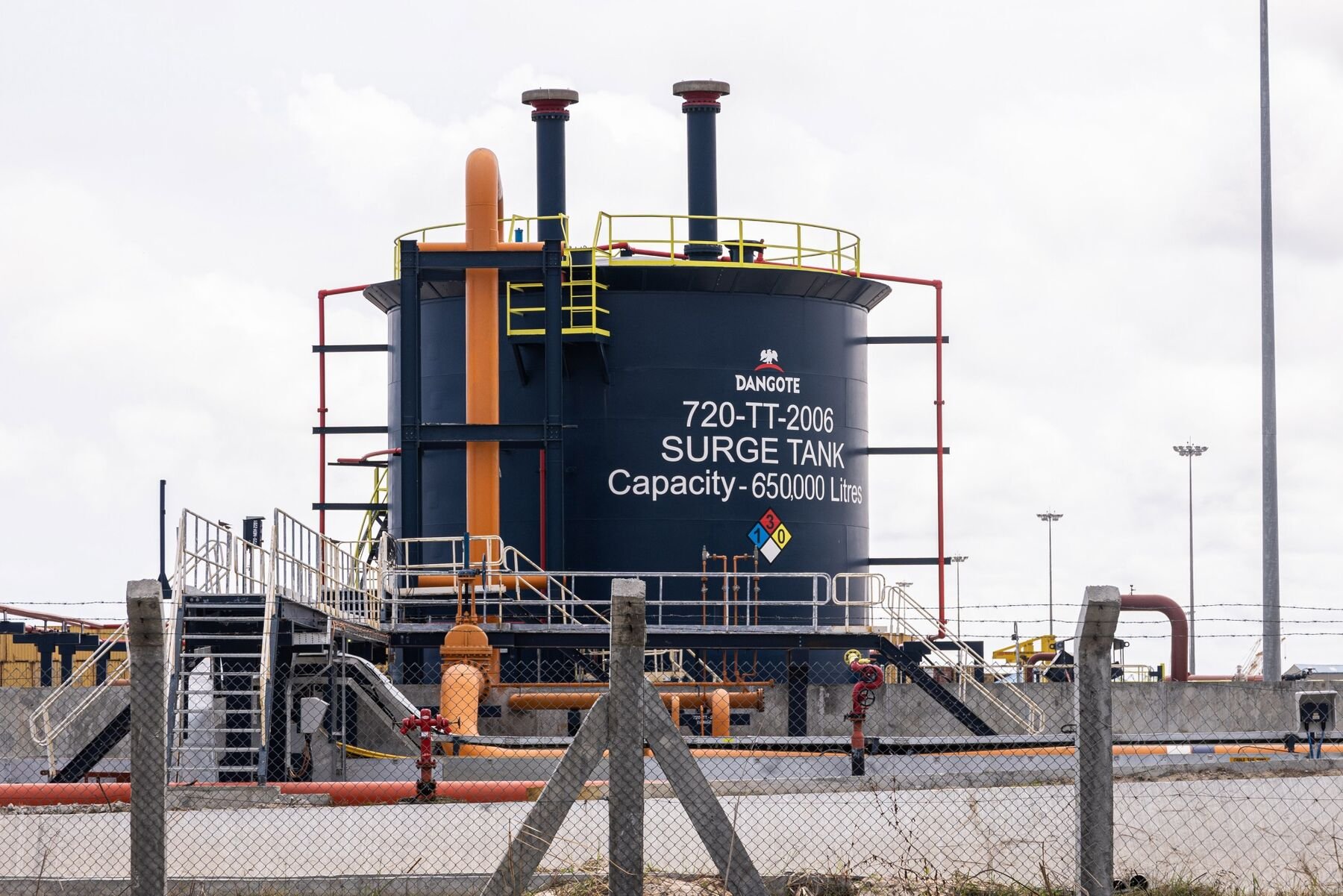
Nigeria’s efforts to expand its industrial and refining capabilities have come under scrutiny following a popular social media accusation about how the Dangote Group funded its flagship refinery project.
The group has since responded, calling the narrative inaccurate and detrimental to the integrity of large-scale manufacturing investments in the country.
The dispute erupted after a widely circulated post claimed that Aliko Dangote turned to fellow billionaires, including Tony Elumelu, Femi Otedola, Abdulsamad Rabiu, and Mike Adenuga, for financial assistance after allegedly running out of finances during construction.
The tweet further stated that the scenario had caused tension between Dangote and Elumelu.
In response, the Dangote Group flatly denied the narrative, emphasizing that the refinery, one of Africa’s most significant industrial projects, was not built through informal personal borrowing.
Instead, the group stressed its long-standing reliance on structured financing mechanisms common to large manufacturing and infrastructure undertakings, such as institutional investment and well-established capital-raising plans.
A corporate representative warned against spreading unconfirmed statements, pointing out that misinformation about significant industrial projects can affect public perception of how such operations are carried out.
The group also stated that there has been no fallout between Dangote and Elumelu, and that the two business titans continue to have a professional and courteous relationship.
See here: Dangote deepens manufacturing footprint with $4.2b gas deal for Ethiopia fertilizer plant
The rebuttal was bolstered by fellow Nigerian billionaire, Femi Otedola, who publicly denied that Dangote sought financial aid from him or other notable persons.
He labeled the viral post as a deliberate attempt to misrepresent the realities of corporate funding and cause unneeded discord in Nigeria’s private sector.
Aside from the immediate uproar, the story raises a larger issue: the difficulty of funding large-scale industrial ventures in emerging nations.
Industrial expansions, such as refineries, necessitate billions of dollars, long-term planning, and sophisticated financial structuring, far from the informal arrangements depicted in the viral tweet.
The Dangote Refinery
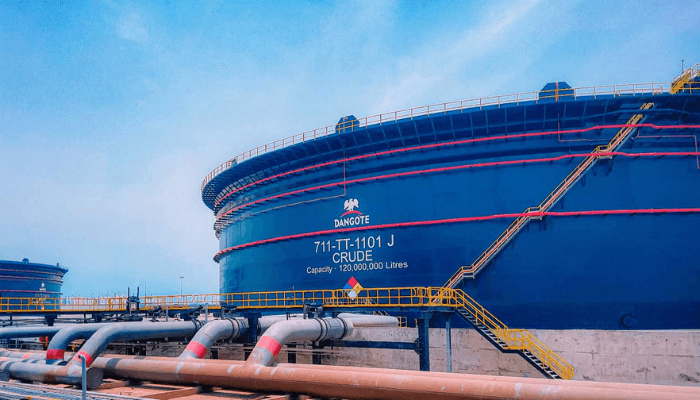
The Dangote Refinery stands as one of the most ambitious industrial projects ever undertaken in Africa.
Conceived by Aliko Dangote to reduce Nigeria’s reliance on imported petroleum products, the refinery was designed with a capacity of about 650,000 barrels per day, making it the largest single-train refinery in the world.
Built as an integrated complex, it combines refining with petrochemical production, enabling the manufacture of fuels and other petrochemicals within one ecosystem.
Its advanced configuration allows it to process a wide range of crude types, improving efficiency and resilience in volatile markets.
Beyond scale, the refinery reflects engineering ingenuity, from constructing a dedicated deep-sea port to handling logistics internally to developing extensive pipeline infrastructure.
Years in the making, it represents a strategic shift toward domestic industrialization, positioning Nigeria as a potential net exporter of refined petroleum products.
