

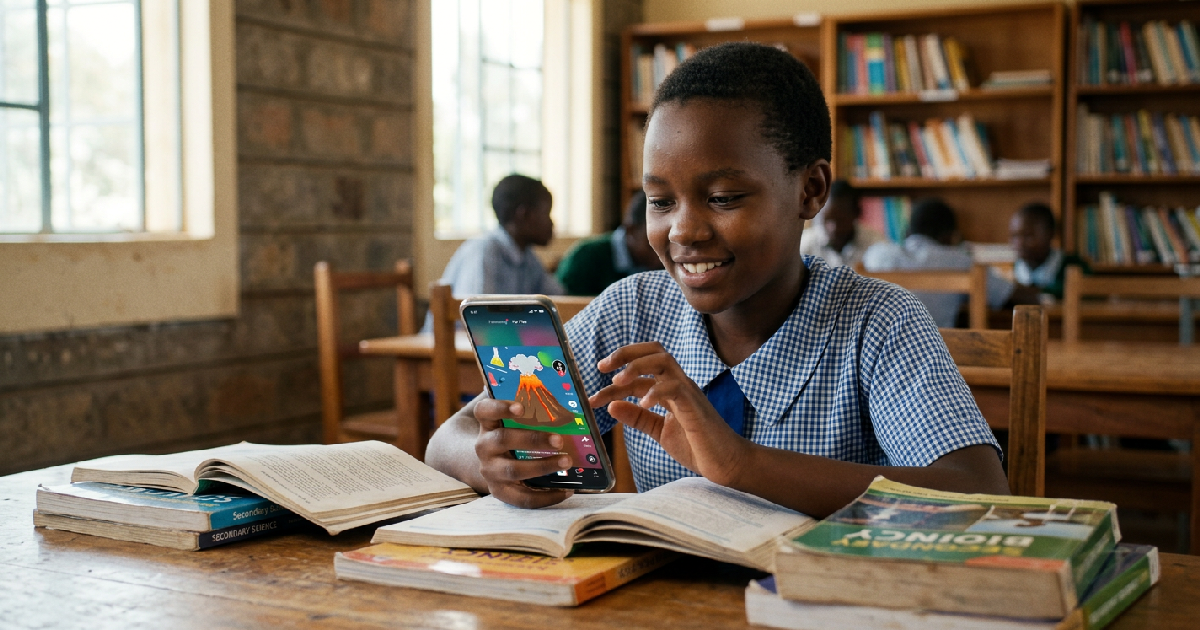
TikTok has launched a dedicated STEM feed in Kenya, introducing a specialized channel for science, technology, engineering, and mathematics content to its local user base. The initiative aims to provide Kenyan students and enthusiasts with a supervised environment to explore educational videos, effectively pivoting the platform’s reputation from purely entertainment to a viable learning tool. By bringing this feature to East Africa, the social media giant follows similar rollouts in the United States and Europe, where localized algorithmic feeds have been used to surface instructional content.
The move comes as digital platforms face increasing pressure to provide constructive value to younger audiences. In Kenya, where mobile penetration is high and a tech-savvy youth population is growing, the STEM feed serves as a bridge between social media engagement and formal education. Users can reportedly toggle between their standard feed and a curated stream of content reviewed for educational accuracy by third-party organizations. This ensures that the science and math concepts presented are both engaging and factually sound.
And while TikTok is often associated with viral dance trends, this shift reflects a broader trend in the regional technology sector. Organizations are increasingly looking at how smart schools and digital education can be integrated into daily life. By embedding these resources into an app that millions of Kenyans already use, the platform bypasses the traditional barriers to accessing high-quality tutoring and demonstrations.
Verification Standards and Localized Content
To maintain the integrity of the STEM feed, TikTok utilizes a multi-layered moderation system. Content must pass specific qualifying criteria to appear in the dedicated tab. Specifically, the platform partners with organizations such as Common Sense Networks and Poynter Institute to assess the reliability and appropriateness of the videos. If a video does not meet the educational threshold or contains misinformation, it is excluded from the STEM feed, even if it remains available on the general platform.
This curation process is particularly important for the Kenyan market, where educational curricula are evolving to emphasize technical skills. Local creators, ranging from physics teachers to software engineers, are expected to benefit from increased visibility. The algorithm is designed to prioritize clarity and instructional value, helping local experts reach students who might be looking for help with specific academic concepts or career inspiration in the sciences.
Strengthening the African Tech Talent Pipeline
The introduction of specialized feeds aligns with a wider push for industrial and technical growth across the continent. There is a growing focus on how industrial connectivity and IoT sectors depend on a workforce that is proficient in STEM subjects from an early age. By making science accessible through short-form video, the platform potentially influences the career trajectories of its youngest users.
Moreover, the launch acknowledges that learning styles are shifting. Traditional classrooms are being supplemented by digital micro-learning moments. For a student in Nairobi or Mombasa, a concise explanation of a chemical reaction or a coding logic error can be more accessible than a dense textbook chapter. This accessibility is a cornerstone of the platform’s strategy to stay relevant in an increasingly competitive social media landscape.
The Future of Social Learning in East Africa
Kenya is the latest market to receive this feature, signaling the country’s importance as a digital hub in Africa. The rollout suggests that the platform sees a long-term future in non-entertainment niches. As the demand for developer relations and engineering talent grows globally, platforms that host these conversations become essential infrastructure for the next generation of professionals.
But the success of the STEM feed will ultimately depend on local engagement. While the global feed provides a wealth of international knowledge, the inclusion of Kenyan voices will make the content more relatable. Educators are already beginning to experiment with the format, using local examples and linguistic nuances to explain complex theories, making the information more digestible for the target demographic.
Frequently Asked Questions
How do I access the STEM feed on TikTok?
In regions where the feature has launched, the STEM feed is reportedly located alongside other primary content tabs in the app interface. It is expected to appear automatically for younger users or can be enabled through the content preferences in the settings menu.
Is the content in the STEM feed safe for students?
The STEM feed undergoes a stricter level of moderation compared to the general feed. TikTok uses independent experts to verify that the information is accurate and that the content is appropriate for an educational audience, reducing the risk of encountering harmful or misleading videos.
Can Kenyan teachers upload their own lessons to this feed?
Teachers and creators in Kenya can upload educational content. To appear in the STEM feed, their videos must clearly focus on science, technology, engineering, or mathematics and pass the platform’s automated and manual quality checks for educational value.
