


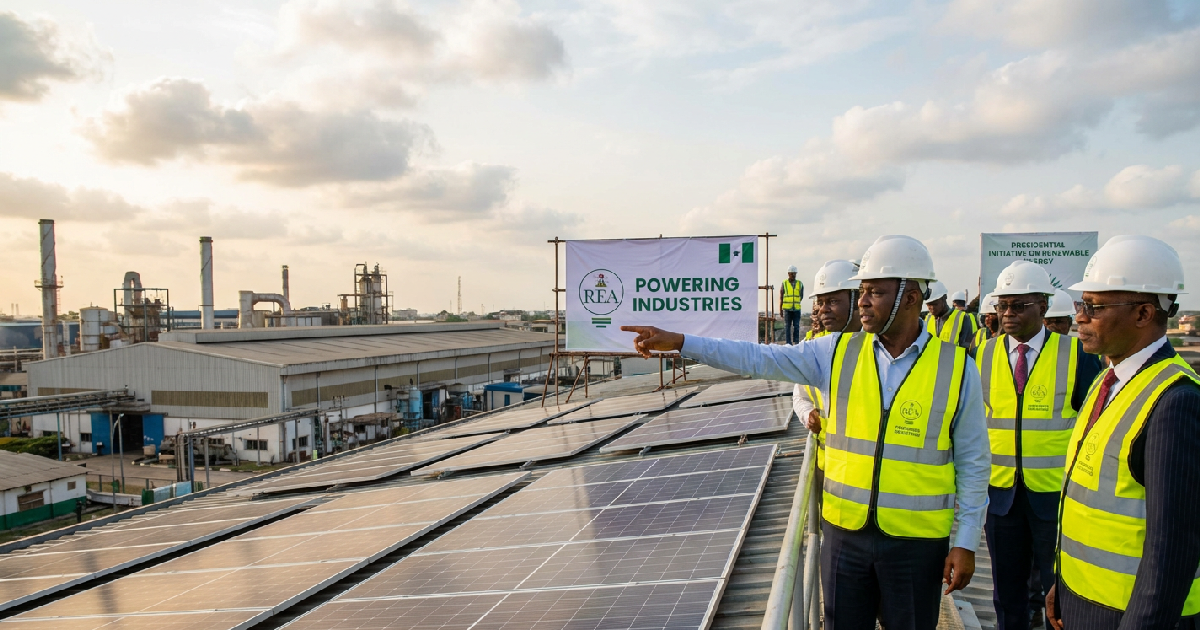
The Managing Director of the Rural Electrification Agency (REA) has reiterated President Bola Tinubu’s commitment to transforming Nigeria’s power sector, emphasizing a strategic focus on delivering stable and reliable electricity to millions of Nigerians. This Renewed Hope Agenda, as articulated by the REA leadership, centers on bridging the energy gap that has long hindered the nation’s industrial growth and domestic stability.
For decades, Nigeria has grappled with a fragile national grid and inconsistent power supply, forcing businesses to rely on expensive alternative energy sources. The REA is now positioned as a primary vehicle for decentralizing energy access, moving away from a total reliance on the centralized grid to embrace localized engineering solutions. The agency’s current mandate involves a shift toward renewable energy integration and the expansion of mini-grids in underserved areas.
Engineering a Decentralized Power Framework
The push for stable electricity is not merely a matter of policy but a complex engineering challenge. The REA is spearheading the deployment of solar hybrid mini-grids, which combine photovoltaic panels with traditional energy storage systems to ensure 24-hour supply in rural communities. This approach alleviates the load on the national grid and provides a “bottom-up” solution to energy poverty.
Engineers working under the REA’s various programs are focusing on technical sustainability. By utilizing modern power electronics and smart meter technology, the agency aims to reduce technical and commercial losses that have historically plagued the Nigerian Electricity Supply Industry (NESI). These localized systems are designed to be scalable, allowing for future expansion as community energy demands grow.
While the focus is on the power sector, the ripple effects of these engineering projects touch various industries. Just as technical collaborations in other sectors, such as how Piramal and Ajinomoto partner on ADC manufacturing reach, drive specialized industrial growth, the REA’s partnerships with private developers are expected to create a more robust local supply chain for electrical components and solar hardware.
The Role of the Rural Electrification Agency in Grid Stability
A significant portion of the REA’s strategy involves the Energizing Economies Initiative and the Energizing Education Programme. These initiatives target economic clusters and federal universities, providing them with independent power plants. From a structural engineering perspective, these plants act as “islands” of stability, ensuring that critical research and commercial activities continue even when the primary grid fails.
The Managing Director noted that the presidency is providing the necessary political will to unlock funding from international partners. These funds are being channeled into technical site assessments and the procurement of high-grade transmission equipment. By emphasizing quality engineering standards, the REA hopes to move away from the “quick-fix” mentality that has often led to the early failure of power infrastructure in Nigeria.
Overcoming Infrastructure and Logistics Hurdles
Delivering stable electricity across Nigeria’s diverse geography presents significant logistical and mechanical hurdles. In the northern regions, dust and high temperatures require solar arrays to have specialized cooling and cleaning protocols. In the south, humidity and coastal salinity necessitate the use of corrosion-resistant materials for transmission towers and distribution hardware.
The REA is reportedly streamlining its project management office to oversee these technical requirements more effectively. This involves rigorous vetting of engineering contractors and a renewed emphasis on “Made in Nigeria” equipment where feasible. The goal is to build an ecosystem where local engineers are at the forefront of maintaining the infrastructure they install, ensuring long-term operational viability.
Future Outlook for the Renewed Hope Agenda
Looking ahead, the success of President Tinubu’s power sector goals will depend on the sustained integration of the REA’s localized projects with the broader reforms being implemented by the Ministry of Power. The agency is expected to continue its aggressive rollout of solar home systems and community-scale grids throughout the fiscal year.
The REA leadership believes that once the foundational engineering is in place, the economic benefits will follow. Stable electricity is the prerequisite for modern manufacturing, digital services, and improved healthcare delivery. As the agency moves forward with its current phase of project implementation, the focus remains on ensuring that “stable electricity” becomes a tangible reality for Nigerians rather than a recurring campaign promise.
The ongoing efforts represent a pivot toward a more resilient energy architecture. By prioritizing engineering excellence and decentralized distribution, the administration signals a departure from the centralized failures of the past, aiming for a future where every Nigerian household can count on the flick of a switch.
