


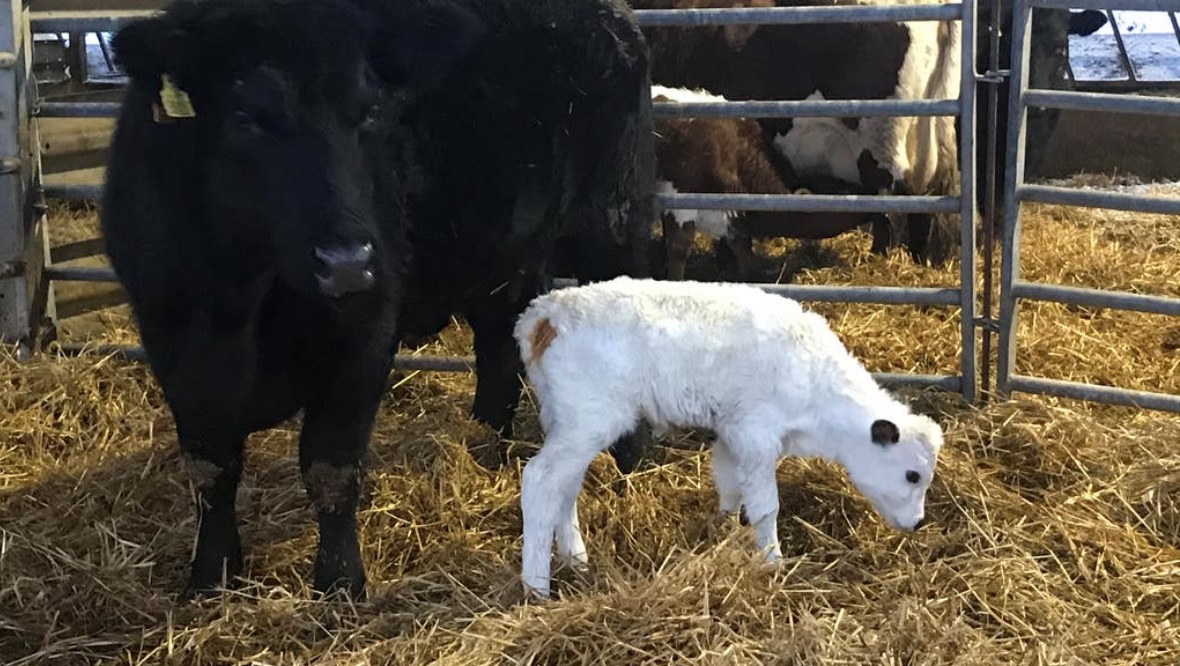
The first Embryo Transfer (ET)-born Girolando calf in Nigeria was born at the Harmony Farms facility in Odogbolu, Ogun State, according to Silagreen International Agro Development Limited, a prominent agri-biotech business.
According to Silagreen CEO Michael Akinruli, the calf’s arrival is a major turning point for Nigeria’s dairy industry and the Federal Government’s efforts to ensure food security.
He called it “a new era for dairy productivity in Nigeria,” emphasizing that the invention is anticipated to improve livelihoods by giving rural communities and agricultural families a reliable source of income.
The healthy female calf was born as part of Silagreen’s Advanced Tropical Genetic Improvement Programme, which is implemented across its embryo transfer sites.
See here: Africa’s Growing AI-Powered Agriculture Movement
Akinruli showed how the firm used Brazil’s innovative embryo transfer technology to integrate better tropical bovine genetics into Nigeria’s dairy herd.
He underlined that these calves will produce significantly more milk as they age.
“This healthy female Girolando calf represents the vanguard of a carefully managed cohort, with several more calves expected from the programme between now and March 2026,” he said.
Akinruli explained that Silagreen deployed Brazil’s cutting-edge embryo transfer technology to introduce superior tropical bovine genetics into Nigeria, adding that the calves would significantly lift milk output when they mature.
“These calves, when they reach maturity, will give 30–50 litres of milk daily,” he said.
More than just a scientific achievement, the birth was highlighted for its significance: the Girolando breed, a Holstein-Gyr hybrid, is both highly productive and resilient, making it an excellent fit for Nigeria’s climate.
According to the CEO, the embryo transfer program would speed up genetic advances in local herds, increasing milk output and profitability for producers, the Punch reports.
“The birth of this calf is not merely a scientific success; it is a tangible asset for the future of Nigerian dairy farming.
The Brazilian Girolando breed is renowned for its high milk yield, heat tolerance, and resilience — traits perfectly suited to the Nigerian climate,” he said.
Silagreen has already begun to engage stakeholders in an effort to broaden the program’s influence countrywide.
Dr. Amos Ayodele, Chairman of Silagreen International Agro Development Limited, emphasized that the breakthrough is consistent with Nigeria’s goals for food security, import substitution, and economic diversification.
“Silagreen International recognises that scaling this success requires collaborative effort. We are actively seeking to partner with Federal and State policymakers, agricultural development agencies, and financial institutions,” he said.
He added, “Together, we can develop supportive policies and regulatory frameworks for advanced reproductive technologies in livestock.
We can create innovative financing models to help more dairy farmers access these high-genetic-value animals.
We can integrate this into national breeding programmes to achieve dairy self-sufficiency.”
