


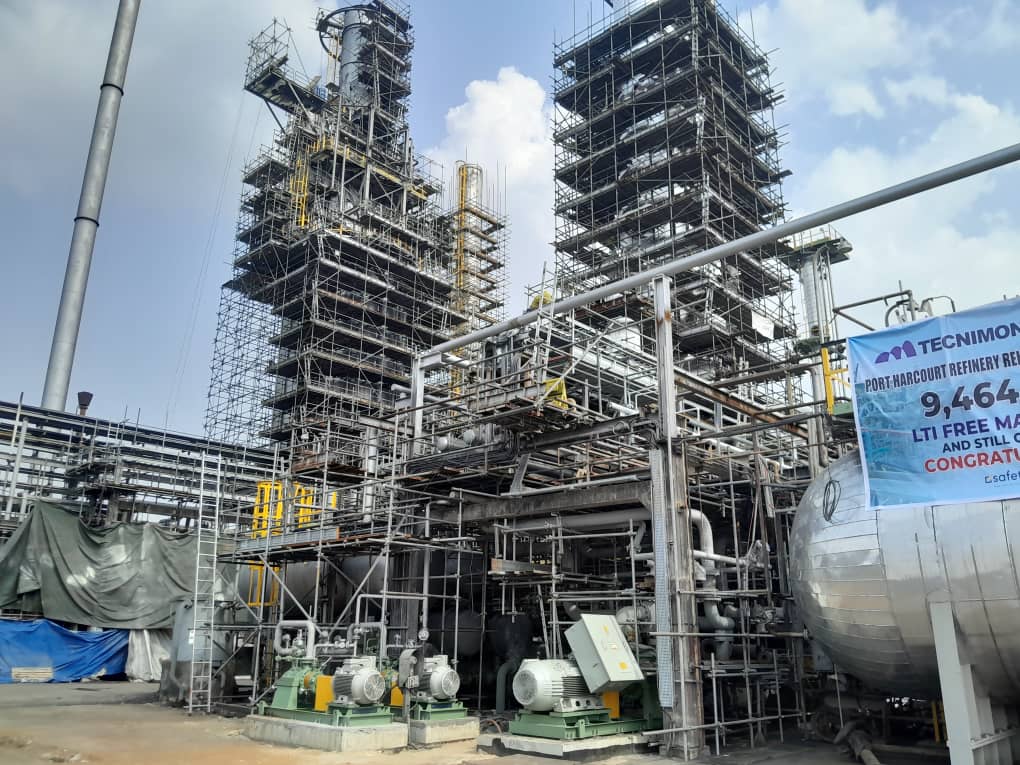
One of Nigeria’s premier oil refineries, the Port Harcourt Refining Company (PHRC), which has been out of operation for decades, is said to now be delivering 349,000 litres of diesel (automotive gas oil) into the Nigerian market daily.
This information was disclosed in a recent data published by the Nigerian Midstream and Downstream Petroleum Regulatory Authority (NMDPRA), as seen in the Punch.
Despite reports of substantial diesel production, the refinery has yet to resume operation.
This is because, while no new refining activities are ongoing, diesel produced before the shutdown continues to be evacuated.
“No production activities as the (Port Harcourt) refinery remained in shutdown mode. However, evacuation of AGO produced while the refinery was operational before 24th May 2025 continued at an average of 0.349 million litres/day,” the NMDPRA data read.
Initially scheduled for a one-month maintenance closure, the Port Harcourt refinery has remained idle for over seven months. In November 2024, the facility was declared operational by the former NNPC Group CEO, Mele Kyari, following extensive rehabilitation and modernization of its equipment.
At the time, the 60,000-barrel-capacity refinery was operating at approximately 70 per cent of its capacity, with diesel and low-pour fuel oil projected as its main outputs at daily rates of 1.5 million litres and 2.1 million litres, respectively.
Despite this rehabilitation, production halted again within six months.
See here: Nigeria signs new deal to build 500,000-barrel-per-day refinery in Ondo
What NNPC said about the refinery
The current NNPC Group CEO, Bayo Ojulari, revealed that before the suspension of rehabilitation, the refinery was operating at a loss of up to $500 million monthly, with less than 40 per cent of crude processed effectively.
“When I resumed, one of the first priorities I focused on was the refinery. I did a quick review to see if we could quickly fix it.
What I found is that we were losing between $300m and $500m on a monthly basis.
The first thing we said was, ‘Rather than continue to lose, let’s quickly stop and look for a way to put this refinery into a sustainably profitable venture,” Ojulari stated.
Calls for the privatization of Nigeria’s four state-owned refineries have been made by the Petroleum Products Retail Outlets Owners Association, citing the potential to reduce fiscal burdens, attract private investment, and improve operational efficiency.
However, Ojulari has opposed the sale, asserting that ongoing technical and commercial reviews aim to reposition the refineries as sustainable, revenue-generating assets capable of meeting Nigeria’s fuel demands and adhering to international standards.
