


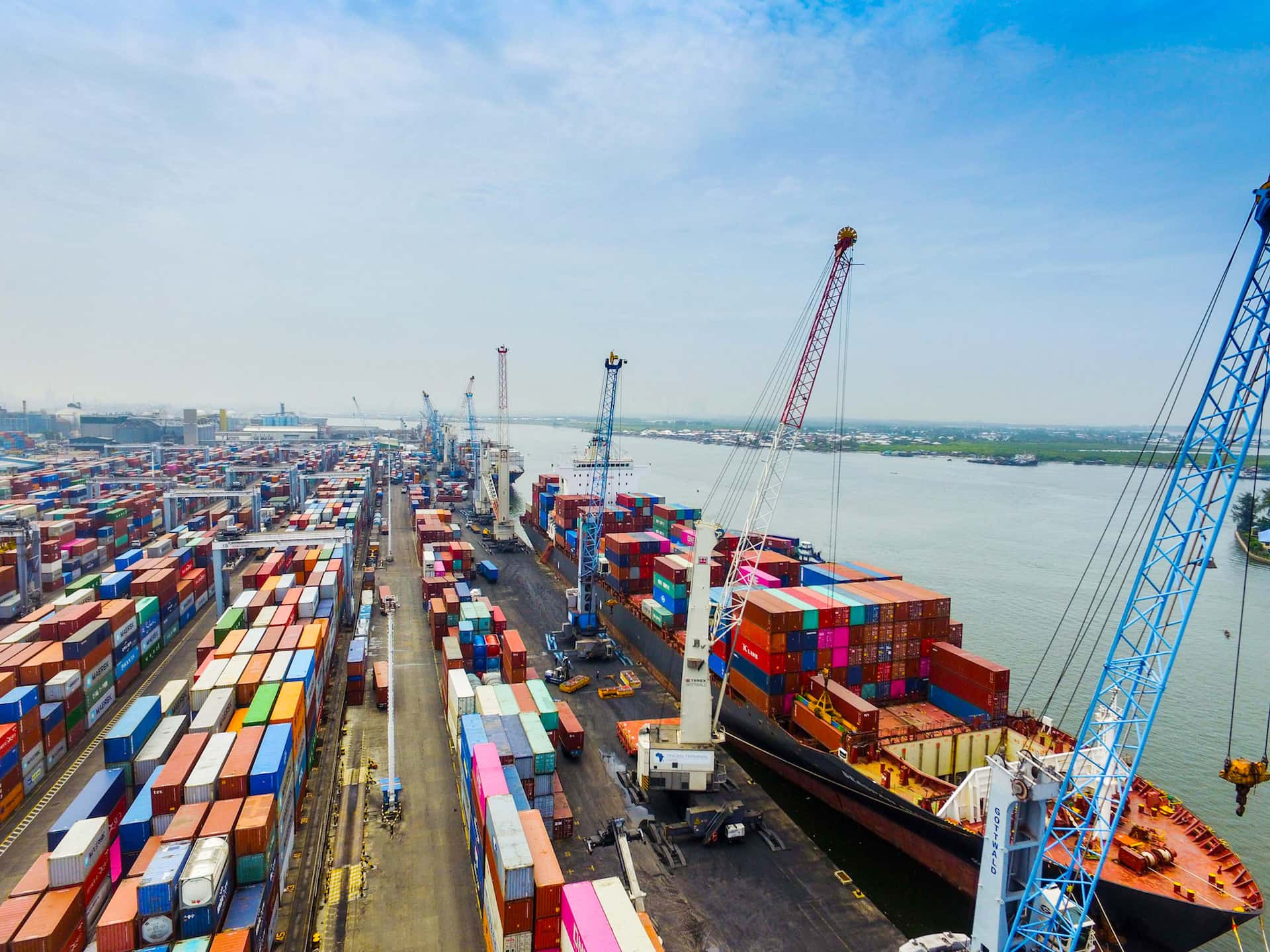
Nigeria’s federal government is set to implement the National Single Window (NSW) system across all major ports in the first quarter of 2026, a move Vice President Kashim Shettima has described as “a game changer” that could end the years of inefficiency that have cost the economy billions of dollars.
The announcement, made at the second meeting of the Ports and Customs Efficiency Committee at the Presidential Villa, sets an ambitious target of reducing cargo clearance time from the current 21 days to under seven days, positioning Nigerian ports among the top three most efficient trade gateways in Africa.
Shettima described the plan as a “game changer” for port operations.
What is the national single window?
The National Single Window is a unified digital platform designed to streamline all trade-related processes. Instead of importers and exporters navigating multiple government agencies with separate requirements, the NSW allows traders to submit all information electronically just once.
“The forthcoming implementation of the National Single Window in the first quarter of next year will be a game changer, a single platform that harmonises documentation, minimises human contact, and brings full transparency to the cargo clearance process.” Vice President Shettima stated.
Nigeria lags behind regional competitors
Nigeria’s current cargo clearance performance places it at a significant disadvantage compared to West African neighbors. Data shows that cargo dwell time in Nigeria averages between 18 and 21 days, compared to five to seven days in Ghana and just four days in Cotoou, Benin Republic.
A World Bank report described Apapa port as one of the least efficient in Africa, with average container dwell times exceeding 20 days, compared to four days in Durban, South Africa. Nigerian ports record cargo dwell times 475 percent above the global average benchmark.
Recently, Lloyd list released its “One Hundred Container Ports” for 2025, which is a list of the top 100 efficient ports in the world. The list had Nigeria missing in it.
Clearing goods in Nigeria is estimated to be 30 percent more expensive than in many regional African countries. According to the Lagos Chamber of Commerce and Industry (LCCI), these inefficiencies cost businesses an estimated $10 billion annually in lost revenue and additional expenses.
Earlier research by the African Centre for Supply Chain practitioners disclosed that Nigeria loses $14.2 billion yearly to port congestion and related challenges.
“These inefficiencies cost us investments, drive up consumer prices, and weaken our export competitiveness,” Vice President Shettima noted, highlighting the broader economic impact on millions of Nigerians.
Manufacturing sector bears heavy burden
The manufacturing sector has been particularly hard hit by port inefficiencies. Recent figures show the sector’s real contribution to GDP fell to 7.81 percent in the second quarter of 2025, down from 9.62 percent in the first quarter.
Segun Ajayi-Kadir, Director-General of the Manufacturers Association of Nigeria (MAN), attributed this decline partly to port delays, stating that manufacturers’ productivity had weakened, due to “the backlog of uncleared inputs at the ports. People are not able to clear their goods.”
Nigeria imported N15.39 trillion worth of manufactured goods in the first half of 2025, compared to exports of just N1.09 trillion, leaving a deficit of N14.3 trillion.
According to the United Nations Conference on Trade and Development, 80 percent of Nigeria’s traded goods are transported by sea, with 70 percent of total imports and exports in West and Central Africa destined for Nigeria, stating the critical importance of port efficiency.
As of 2020, Nigeria ranked 179th out of 190 countries in ease of trading across borders according to the World Bank. As the African Continental Free Trade Area (AfCFTA) gains momentum, improved port efficiency becomes critical for Nigeria’s ability to participate effectively in continental trade.
How the Single Window Will Improve Efficiency
The NSW tackles inefficiencies through three key mechanisms:
Unified Digital Submissions
Currently, importers must physically visit multiple agency offices with duplicate documentation. Under the NSW, traders submit information once to a centralized platform, which all regulatory agencies access simultaneously. This shift is expected to significantly reduce clearance times.
Reduced Corruption Opportunities
A report by the Maritime Anti-Corruption Network estimates that maritime corruption costs Nigeria about $160 million annually for bulk and food products alone, with an extra $150,000 – $180,000 cost per shipment. This represents an additional 15 percent charge on transport and logistics costs.
By minimizing face-to-face interactions and creating digital audit trails, the NSW reduces opportunities for bribery and arbitrary delays. Every transaction becomes traceable and can be accounted for.
Technology and Infrastructure Upgrades
Dr. Abubakar Dantsoho, Managing Director of the NPA, emphasized that enhanced technology deployment, infrastructure upgrades, capacity development, and modern equipment are critical to improving port operations. The NSW implementation includes investments in automated container handling systems, real-time cargo tracking, and data analytics.
Expected economic impact
Successful implementation of the NSW could unlock significant economic benefits.
Port congestion has led to the diversion of cargo originally intended for Nigerian ports to neighboring countries including Benin Republic, Togo, and Ghana. Some freight destined for Nigeria is deliberately transshipped through other African competitor countries to avoid inefficiencies.
A seven-day clearance time would place Nigeria on par with Ghana and significantly ahead of current performance, potentially making Nigerian ports attractive as transshipment hubs for West Africa.
For manufacturers, faster clearance means reduced inventory costs, improved cash flow, and enhanced market responsiveness. Exporters could compete more effectively in global markets with reliable delivery timelines.
Implementation challenges ahead
Despite the promise, significant challenges remain.
The government must ensure adequate digital infrastructure to prevent network and website failures. Also, robust cybersecurity measures must be made to protect sensitive trade data.
Change management is another hurdle, port workers, customs officials, and clearing agents must be trained on new systems. Resistance from stakeholders who benefit from the status quo could undermine progress.
Next steps
The government has committed to the first-quarter 2026 implementation date. Key agencies are currently developing operational frameworks and technical specifications for the platform.
Industry stakeholders have cautiously welcomed the announcement, though many are waiting to see concrete implementation plans.
If successful, the National Single Window could mark a turning point for Nigerian trade, ending decades of inefficiency and positioning the country as a competitive regional trade hub. For now, businesses and manufacturers are watching closely as the government moves from announcement to action.
