


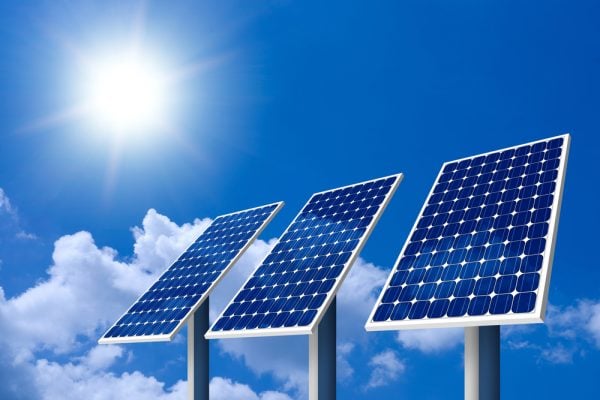
In a recent development that signals Nigeria’s determination to lead Africa’s renewable energy transition, the Federal Government, in partnership with state governors and private investors, has secured nearly $500 million to establish solar manufacturing plants across Nigeria.
The Minister of Power, Minister Adebayo Adelabu announced at the Nigeria Energy Conference held in Lagos last week.
The investment, formalized at the Nigerian Renewable Energy Innovation Forum (NREIF) organized by the Rural Electrification Agency, represents Nigeria’s bold pivot from being an importer of solar equipment to becoming one of Africa’s clean energy manufacturing hubs.
Nigeria’s renewable energy journey
Nigeria’s journey with solar energy has been largely dependent on imports.
In the early 2000s, the Nigerian government began formalizing its approach to renewable energy with the establishment of the National Electric Power Policy (NEPP) in 2001 and the Renewable Electricity Action Program (REAP) established in 2006.
By 2005, Nigeria crafted a Renewable Energy Master Plan (REMP), detailing strategies to raise the share of renewable electricity from 13% of total generation in 2015 to 23% by 2025, and further to 36% by 2030.
The plan was a roadmap to diversify the energy mix by focusing on renewable sources to support sustainable development. These ambitious plans however faced challenges, like inadequate infrastructure, high costs and overreliance on imported technology.
The Rural Electrification Agency (REA) Managing Director, Abba Aliyu, noted in April 2025 that over N200 billion has been spent on the importation of PV panels into the country.
He made this disclosure during a roundtable with the Lagos State Government, emphasizing that this heavy reliance on imported renewable energy components is unsustainable and constitutes a significant foreign exchange drain that could be reversed by promoting local manufacturing.
Over the past decade, Nigeria made impressive strides in the use of renewable energy, with solar capacity jumping from 1.5 MW in 2015 to over 150 MW in 2022.
Yet this growth came almost entirely through imported equipment, creating an unsustainable dependency that Nigeria’s current administration is determined to break.
The NREIF: Where ambition met investment
At the Nigerian Renewable Energy Innovation Forum, held in October 2025 under the theme “The Nigeria First Policy”, Vice-President Kashim Shettima revealed that Nigeria secured over $400 million in new investment for renewable energy manufacturing value chains, covering solar panel assembly, battery recycling, and local component production.
The forum’s moderator, Rumundaka Wonodi, revealed that in 2024, the global renewable energy sector attracted $2.1 trillion in investment, but Africa secured only $40 billion, just two percent of the total, from which Nigeria secured $500 million.
The initiative, as announced, will add close to 4 gigawatts of solar manufacturing capacity per annum, which is almost 80 percent of Nigeria’s current total power generation capacity (Nigeria currently generates approximately 5,000 megawatts from all sources combined).
This investment encompasses a comprehensive value chain approach.
The deal as revealed would support local production of solar panels, batteries, and meters, reducing Nigeria’s dependence on solar imports and cementing Nigeria’s position in Africa’s renewable energy landscape.
Specifically, the funds will be channeled into:
Manufacturing Infrastructure: Solar panel assembly facilities would be manufactured across multiple states, with state governments partnering directly with private investors to provide land and enabling infrastructure.
Battery Production and Recycling: The value chain covers solar panel assembly, battery recycling, and local component production, addressing the critical need for energy storage solutions that complement solar installations.
Smart Metering Systems: With Nigeria still grappling with a massive metering gap, local meter production will support both grid and off-grid renewable energy deployment while creating technical jobs.
At the innovation forum, Minister Adelabu also announced that Nigeria began exporting locally manufactured solar panels to Ghana last month,
“We exported solar panels manufactured in Nigeria to Ghana, and we will not stop. We will be the hub for this, not just for West Africa, but for the entire African market” he declared.
The economic multiplier effect
Apart from renewable energy benefits, this initiative would also have far-reaching benefits for the economy, such as job creation, foreign exchange savings, and youth empowerment by training Nigerian youths in renewable energy technologies.
Vice President Shettima stated that the commitments cover solar panels, smart meters, battery storage and recycling facilities, projected to create over 1,500 direct jobs across multiple states.
By producing locally what was previously imported, Nigeria could preserve foreign reserves while building economic capacity.
“Nigeria’s ambition is to achieve 277 gigawatts of total installed capacity by 2060, a vision that demands not only investment but also innovation, local capacity, and unwavering commitment.” Vice president, Shettima said.
For Nigeria’s Energy Future, the implications of local solar manufacturing extend to address three of Nigeria’s critical challenges simultaneously:
Energy Access: Local manufacturing should reduce the cost of power supply and accelerate the deployment of solar solutions to off-grid communities.
Industrial Renaissance: For decades, Nigeria has been criticized for exporting raw materials and importing finished goods. Solar manufacturing represents a reversal of that, building industrial capacity in a high-growth sector with guaranteed demand.
Leadership: Vice President Shettima noted that Nigeria’s energy transition presents an investment opportunity worth over $410 billion by 2060. By establishing manufacturing capacity now, Nigeria positions itself to capture a significant share of this opportunity rather than watching it flow to other countries.
Challenges on the path forward
Despite the optimism, significant challenges remain. Nigeria’s transition to renewable energy is hindered by inadequate infrastructure, human capital and high costs of renewable technologies.
Nigeria’s vision on being “the regional power market hub for renewable energy in Africa is clear” Whether this vision becomes reality will depend on consistent policy implementation, sustained investment, quality control, and the ability to build competitive manufacturing operations.
