


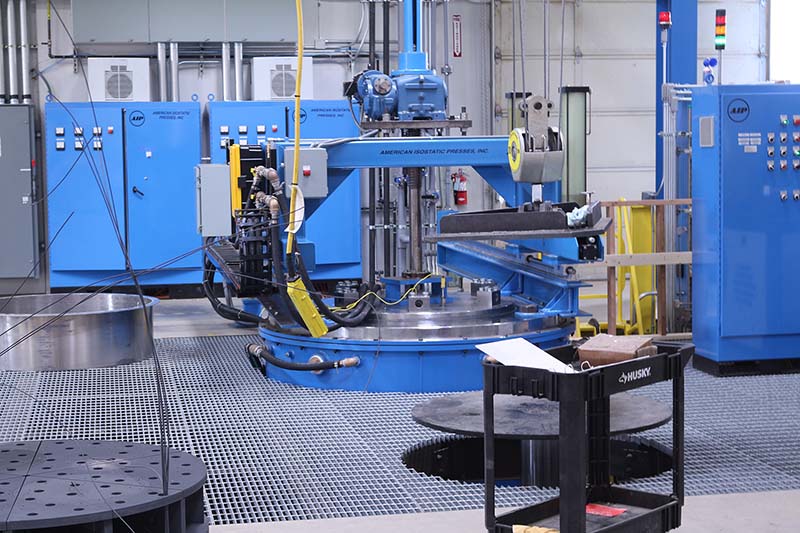
South Africa is setting a new benchmark for industrial engineering on the continent with the launch of Africa’s first hot isostatic press (HIP) facility, which was launched by the Council for Scientific and Industrial Research.
The facility, funded by the country’s Department of Science, Technology, and Innovation’s National Equipment Programme, provides local producers with cutting-edge metal processing technology that was previously only available by transporting components overseas.
Hot isostatic pressing uses high temperatures and uniform pressure to compress metal powders or components into fully dense, high-strength products.
By removing internal voids and lowering dependency on welding or machining, HIP creates metal components that are not only stronger but also significantly more durable, ideal for industries where performance and dependability must not be compromised.
According to Shaik Hoosain, project manager and technical specialist at the CSIR HIP facility, the facility allows manufacturers to produce complicated, high-performance components locally, lowering material prices and cutting lead times.
This opens up new opportunities in industries ranging from aerospace and automotive to rail, mining, medical devices, and energy, where parts must withstand intense mechanical and thermal loads.
The benefits go beyond cost and efficiency. The HIP technique facilitates additive manufacturing and powder metallurgy, allowing engineers to push the design envelope, creating complicated shapes that were previously unattainable or prohibitively expensive.
For South African businesses, this entails developing components that can compete globally while operating from a home plant.
What is a hot isostatic press?
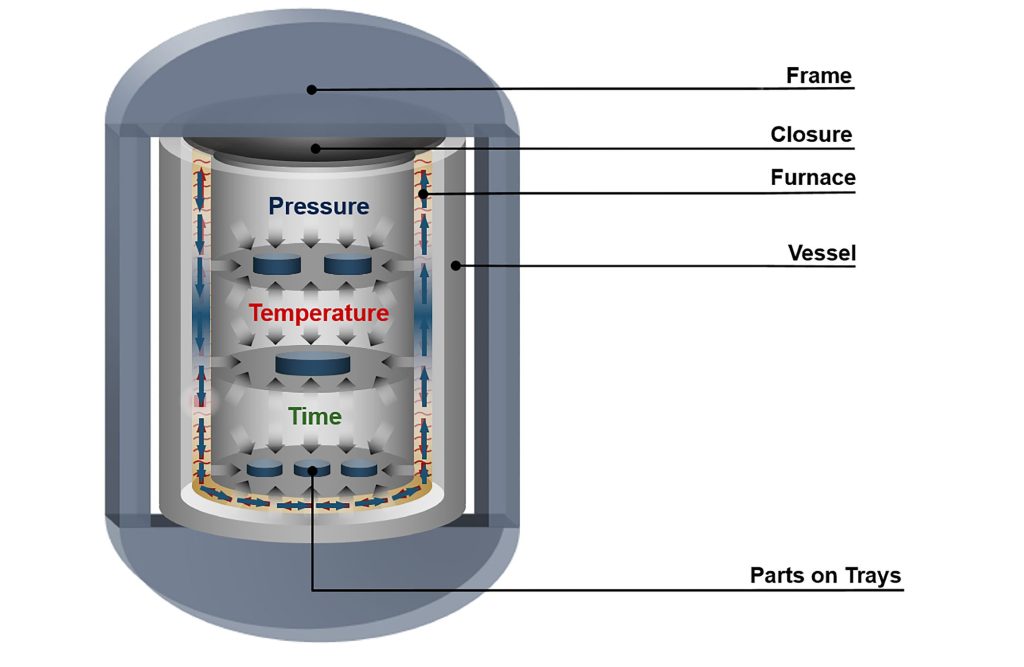
A hot isostatic press (HIP) is a cutting-edge manufacturing technology that strengthens and protects metal or ceramic parts.
It works by heating a component and applying pressure evenly from all directions, typically with an inert gas such as argon.
This compresses the material, eliminates internal holes and weak points, and increases its strength and hardness.
HIP enables engineers to create intricate shapes without relying largely on welding or machining. It’s especially suitable for parts that must take high stress, such as turbine blades, medical implants, and mining and railway components.
In summary, HIP converts metal powders or defective bits into solid, high-strength components, providing the dependability required for essential engineering applications.
