
Close Menu
Makers

    Subscribe to Updates

    Get the latest creative news from FooBar about art, design and business.

    What's Hot

    From byproduct to benchmark: The policy shift redefining African cashew production

    April 15, 2026

    Zimbabwe’s richest man unveils a tech city he is building, designed for industrialists and experts

    April 15, 2026

    Refiant AI: The South African startup that is making powerful AI run without data centres

    April 14, 2026
    Facebook X (Twitter) Instagram
    Makers Thursday, April 16
    • Send us an email
    Facebook X (Twitter) Instagram LinkedIn
    • Homepage
    • About us
    • News

      Zimbabwe’s richest man unveils a tech city he is building, designed for industrialists and experts

      April 15, 2026

      Scientists use AI and fossilized dinosaur collagen to create Lab-Grown “T-Rex leather” for luxury handbag

      April 9, 2026

      Another African country has joined the ranks of gold manufacturers by inaugurating its first gold refinery

      April 8, 2026

      South Africa to host a Chinese automobile company’s EV production for Africa

      April 4, 2026

      Nigerian manufacturers reveal one of its biggest problems, and how some banks add to it

      April 2, 2026
    • Features
    • Contact
    Makers
    Email us
    Home » How Nigeria is building indigenous military production capacity
    News

    How Nigeria is building indigenous military production capacity

    HQBy HQNovember 19, 2025No Comments3 Mins Read12 Views
    Facebook Twitter Pinterest Telegram LinkedIn Tumblr Copy Link Email
    Follow Us
    Google News Flipboard
    Share
    Facebook Twitter LinkedIn Pinterest Email Copy Link

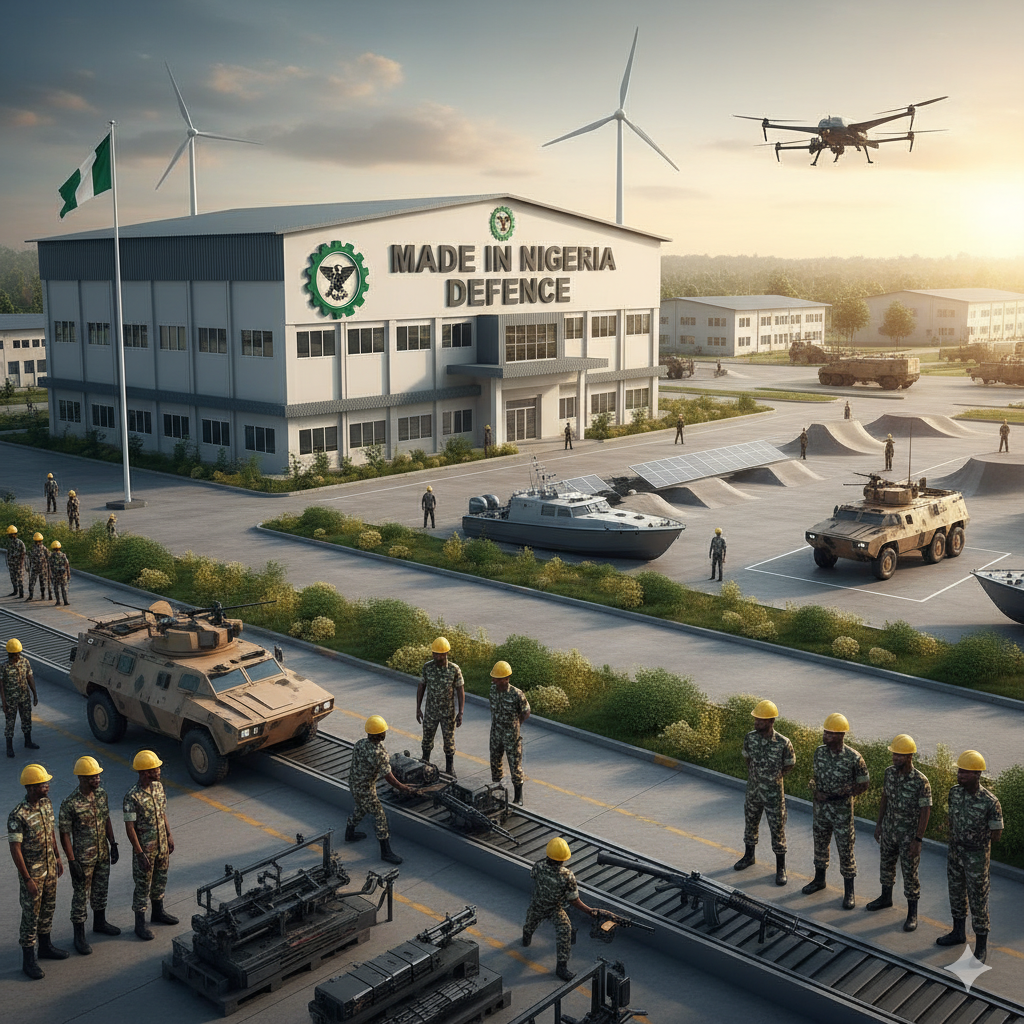
    Nigeria’s defense manufacturing sector moved another step higher this week with the signing of a Memorandum of Understanding between the Defence Industries Corporation of Nigeria (DICON) and Zumach and Associates Limited to commence full-scale local manufacturing of armoured vehicles, weapons, and other military hardware. 

    What the deal delivers

    The DICON-Zumach partnership will produce tanks, Mine-Resistant Ambush Protected (MRAP) vehicles, armoured carriers, and various armaments, vehicles which are very critical for engaging in counter-insurgency operations.

    MRAPs are specifically engineered to withstand roadside bombs and ambush attacks, threats Nigerian troops face daily in combat zones.

    The Managing Director of Zumach and Associates, Mr. Chris Ezumah, said the MoU signalled a major leap toward strengthening Nigeria’s defence autonomy, adding that the company was fully committed to delivering high-quality, locally produced military systems.

    Zumach’s Director of Operations, Mrs. Chrital Ezumah, revealed that the company had previously supplied over 600 armoured capsules under similar global programs, noting that the new vehicles were designed for complete local manufacturing. 

    Speaking at the signing ceremony on Monday in Abuja, DICON’s Director-General, Maj.-Gen. Babatunde Alaya, said the partnership would significantly boost Nigeria’s defence-industrial capacity and accelerate the production of key military platforms, including tanks, Mine-Resistant Ambush Protected (MRAP) vehicles, armoured carriers, and various armaments.

    The milestone was made possible through the DICON Act 2023, signed by President Bola Tinubu, which empowered the corporation to pursue deeper collaborations with both local and international defense manufacturers. 

    Related post: Nigeria is set to manufacture military equipment using 3D technology

    Nigeria’s growing defense-industrial base

    The Zumach deal builds on Nigeria’s existing military production capabilities. 

    The Ezugwu MRAP, locally manufactured by DICON, has already been deployed by the Nigerian Army, with an order for another 52 vehicles to improve operational efficiency of troops fighting terrorism and banditry. The Nigerian Army plans to acquire 130 Ezugwu vehicles in total, demonstrating sustained commitment to locally produced platforms.

    The Ezugwu was unveiled in September 2019 and is manufactured in collaboration with the Nigerian Army’s Command Engineering Depot. 

    Named after Major General Victor Ezugwu, DICON’s Director-General at the time, the vehicle proved that Nigeria could design and manufacture sophisticated military hardware independently. 

    The vehicle can resist bullets ranging from 7.62mm to 12.7mm at short distances and can resist Improvised Explosive Devices and mines with explosive power up to 12kg of TNT.

    DICON has also partnered with Innoson Vehicle Manufacturing for the production of MRAP EZUGWU vehicles, demonstrating successful collaboration between government defense agencies and private sector manufacturers. These partnerships have created a diversified domestic production base, reducing Nigeria’s dependence on any single manufacturer or foreign supplier.

    Strategic implications for Nigerian defense

    The implications of indigenous military production capacity extend into:

    Operational Independence: Nigeria no longer needs to wait for foreign suppliers who may face export restrictions or prioritize other customers. 

    Economic Benefits: Local production creates high-skilled employment for engineers, technicians, and manufacturing specialists.

    Strategic Sovereignty: Local production provides Nigeria with greater control over its security destiny. Foreign governments cannot impose embargoes on equipment Nigeria manufactures itself. 

    Reduced Supply Chain Vulnerability: Local manufacturing can reduce dependence on traditional supply chains by allowing the local production of spare parts and components, enhancing operational resilience. 

    The Path Forward

    Nigeria’s defense manufacturing transformation requires investment, technical expertise, policy enforcement and quality control systems for sustenance.  

    As the country continues to face complex security challenges, the ability to produce, maintain, and rapidly repair military equipment domestically is increasingly necessary.

    Defence manufacturing military Nigeria Technology
    Follow on Google News Follow on Flipboard
    Share. Facebook Twitter Pinterest LinkedIn Telegram Email Copy Link
    HQ

    Related Posts

    Zimbabwe’s richest man unveils a tech city he is building, designed for industrialists and experts

    April 15, 2026

    Nigeria’s ₦1.11 trillion energy problem meets PowerLabs, the startup optimising power for manufacturing

    April 10, 2026

    Scientists use AI and fossilized dinosaur collagen to create Lab-Grown “T-Rex leather” for luxury handbag

    April 9, 2026
    Leave A Reply Cancel Reply


    The reCAPTCHA verification period has expired. Please reload the page.

    Recent Posts

    • From byproduct to benchmark: The policy shift redefining African cashew production
    • Zimbabwe’s richest man unveils a tech city he is building, designed for industrialists and experts
    • Refiant AI: The South African startup that is making powerful AI run without data centres
    • Nigeria’s ₦1.11 trillion energy problem meets PowerLabs, the startup optimising power for manufacturing
    • Ducati unveils extreme street-legal superbike: ultra-light carbon fiber machine weighs just 368lb
    Stay In Touch
    • Facebook
    • Twitter
    • Pinterest
    • Instagram
    • YouTube
    • Vimeo

    Subscribe to Updates

    Get the latest creative news from SmartMag about art & design.

    About Us
    About Us

    Makers is Nigeria’s premier digital platform dedicated to manufacturing related news and content across Africa.

    Facebook X (Twitter) Instagram LinkedIn
    News

    Zimbabwe’s richest man unveils a tech city he is building, designed for industrialists and experts

    April 15, 2026

    Scientists use AI and fossilized dinosaur collagen to create Lab-Grown “T-Rex leather” for luxury handbag

    April 9, 2026

    Another African country has joined the ranks of gold manufacturers by inaugurating its first gold refinery

    April 8, 2026
    Features

    From byproduct to benchmark: The policy shift redefining African cashew production

    April 15, 20263 Views

    Refiant AI: The South African startup that is making powerful AI run without data centres

    April 14, 20267 Views

    Nigeria’s ₦1.11 trillion energy problem meets PowerLabs, the startup optimising power for manufacturing

    April 10, 202614 Views
    • Homepage
    • News
    • Features
    • Get In Touch
    • Privacy Policy
    • Cookie Policy
    Makers © 2026. All right reserved.

    Type above and press Enter to search. Press Esc to cancel.