


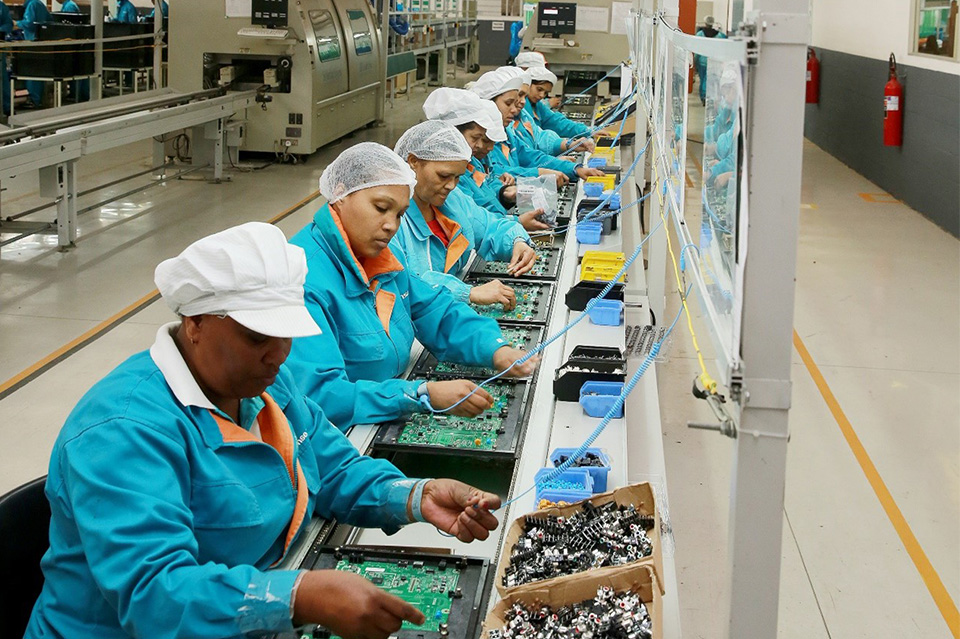
At the recent Buy Local Summit & Expo in Johannesburg, Hisense South Africa reaffirmed its commitment to domestic production, citing it as a key component of its growth plan.
The event, hosted by Proudly South African, brought together policymakers, manufacturers, investors, and entrepreneurs to discuss the future of South Africa’s industrial sector and the importance of locally made goods in boosting economic resilience.
With over 1,600 guests and 200 exhibitors, the summit included business matchmaking sessions aimed at integrating small and medium-sized businesses into established industrial value chains, IOL reports.
Government officials used the occasion to underscore the importance of increasing indigenous industrial capabilities.
Alexandra Abrahams, Deputy Minister of Trade, Industry, and Competition, emphasised the importance of supporting local industry in the face of rising global economic pressures and supply chain disruptions.
Against this environment, Hisense South Africa demonstrated its long-term commitment to local manufacture.
Since entering the South African market in 1996, the company has grown its manufacturing footprint through ongoing capital investment, staff development, and technology transfer activities.
See here: South Africa manufacturing draws fresh interest from global carmakers
A crucial component of this approach is the R350 million manufacturing facility in Atlantis, Western Cape.
The company, which opened in 2013 within the Atlantis Special Economic Zone, has grown into a major hub for electronics production on the continent, producing televisions and household appliances for both domestic and foreign markets.
The plant has an annual production capability of up to one million television sets and 500,000 refrigerators, which it supplies to South Africa as well as regional and international markets.
This establishes the factory as a key contributor to localized supply chains and export-focused manufacturing.
Company officials emphasized that local production is a long-term strategic commitment rather than a short-term operational option.
According to Luna Nortje, Deputy General Manager at Hisense South Africa, the Atlantis site allows the company to combine global technology with local experience, while also promoting industrial development through job creation, supplier ecosystem growth, and talent transfer.
Beyond production, the corporation invests in workforce development through structured training and youth employment initiatives.
These initiatives aim to provide young South Africans with hands-on experience in modern manufacturing environments, thereby enhancing the country’s industrial talent pipeline.
As global supply chains become more unpredictable and competitive pressures increase, Hisense’s localized manufacturing model exemplifies a broader shift toward developing resilient, domestically anchored production systems in South Africa.
