


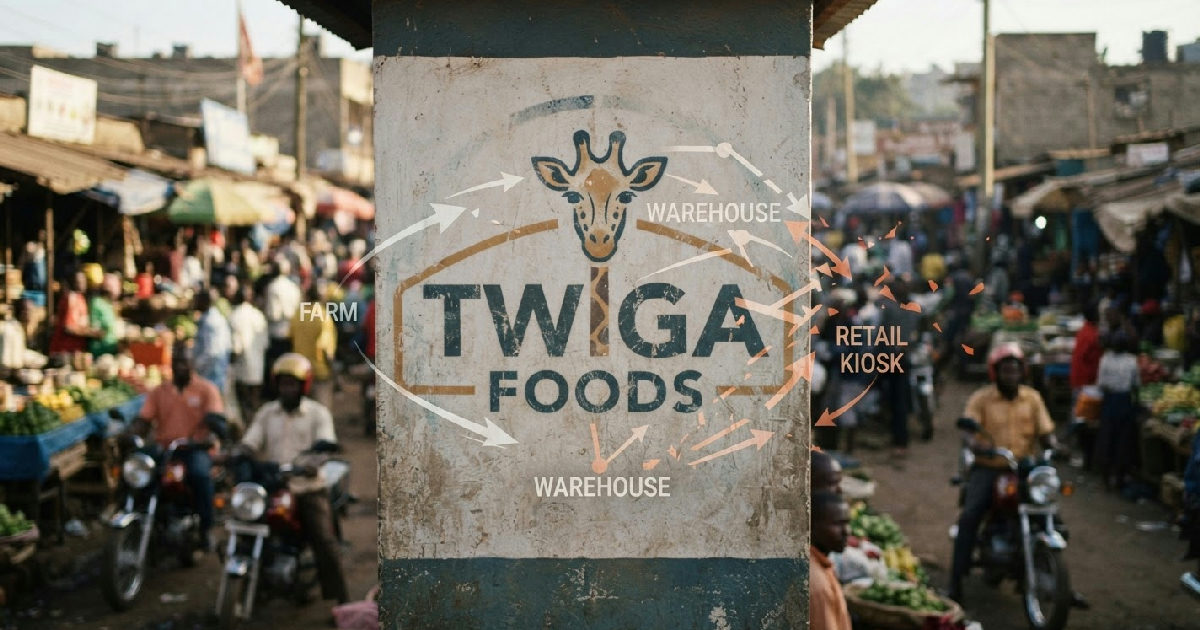
Twiga Foods has entered insolvency proceedings, illustrating the substantial costs that can arise from efforts to streamline supply chains by removing intermediaries.
Many companies pursuing direct-to-consumer models or formalised distribution networks underestimate the intricate value brokers provide, particularly within Africa’s vibrant informal markets. Twiga Foods, despite raising over $185 million, now faces the consequences of attempting to replace an existing, complex ecosystem with a capital-intensive, centralised alternative.
Twiga Foods enters African market intermediaries
Traditional market intermediaries, often labelled as “middlemen,” play critical roles that are far more complex than simple transactional links. Consider Nairobi’s Marikiti, the city’s largest wholesale fresh produce market. Here, from 4 AM, lorries from across Kenya and neighbouring countries converge, and brokers orchestrate the movement of goods with an efficiency that defies simplistic analysis.
These brokers aren’t just facilitators; they set prices, extend credit, connect a diverse array of buyers and sellers, and crucially, manage perishable stock to prevent spoilage. Their relationships are the very infrastructure of these markets. Without extensive overheads, they navigate the time-sensitive nature of fresh produce, adjusting prices dynamically throughout the day to ensure goods find buyers before losing value.
For engineering firms looking to optimise CPG supply chains, understanding these existing mechanisms is crucial. The removal of such embedded functions requires replicating them, often at a far greater operational cost. Academic research even suggests that consumer welfare in Nigerian cities can decline when middlemen are removed, even if trade costs and markups appear lower.
In Nigeria, for instance, a typical supply chain for goods passing through a Lagos trader involves a minimum of three intermediaries between manufacturers and consumers. These multi-intermediary chains arise from internal economies of scale in trade costs, making consumers in developing countries more likely to be served by longer, yet more efficient, distribution networks.
Twiga Foods’ Costly Disintermediation Strategy
Twiga Foods embarked on an ambitious mission to formalise fresh produce distribution in East Africa, aiming to connect farmers directly with vendors. The company attracted significant investment, raising more than $185 million from various sources. This capital was intended to build a technology-driven logistics network capable of bypassing traditional brokers and establishing a more efficient supply chain.
But the capital intensity of this vision proved challenging. In December 2023, Twiga secured a $35 million convertible bond from Creadev and Juven, supplemented by $1 million in personal capital from co-founder Peter Njonjo. This funding was primarily to settle mounting debts, a sign of underlying financial strain despite impressive revenue targets.
The operational burden of direct distribution
A centralised distribution model, unlike the flexible broker network, faces less agility in pricing and accumulates significant fixed costs. Fuel, labour, storage, and inventory management expenses persist regardless of market fluctuations or product damage. These costs eroded Twiga’s margins, making their business model unsustainable in the long run.
The company’s corporate structure expanded further in 2025 with the acquisitions of FMCG distributors Jumra, Sojpar, and Raisons. While these moves increased distribution volumes, they failed to generate sufficient cash to service the accumulated debt.
Ultimately, GT Flow Limited (formerly Twiga Foods One Limited) entered statutory administration in August 2026, with its parent company, Twiga Foods Limited (now Templar Field Limited), following suit in September 2026. Mohamed A. Mohamed of Maawiy Financial Advisory Services was appointed administrator for both entities.
Understanding the Disintermediation Drive
The concept of disintermediation, or cutting out the middleman, didn’t originate with e-commerce startups. It gained popularity in financial services during the 1960s, when consumers bypassed traditional banks to invest directly in securities. The internet revolution of the 1990s amplified this trend, promising direct connections between producers and consumers.
Proponents often highlight potential benefits like reduced costs, greater control over branding, and direct customer insights. They envision a leaner supply chain, free from intermediary markups. However, this perspective frequently overlooks the often-hidden infrastructure and expertise provided by these very intermediaries.
For industrial operations, the strategic decision to adopt or bypass existing channels needs rigorous analysis. Companies are increasingly exploring additive manufacturing insights to streamline production, yet distribution remains a complex challenge. The allure of lower costs must be balanced against the increased operational responsibilities and potential for unforeseen expenditure.
Rising Customer Acquisition Costs and Market Dynamics
The allure of direct-to-consumer (DTC) models often includes the promise of lower costs and greater control. Yet, businesses attempting to cut out intermediaries frequently encounter higher customer acquisition costs (CAC). Without established distribution channels, companies must invest heavily in marketing and advertising to reach end-users.
This challenge is growing. In 2024, the average cost per click (CPC) across digital platforms rose by 10%, while the average conversion rate (CVR) decreased by 1.09%. Building brand awareness in a crowded digital landscape demands substantial investment in content, social media, and public relations, all of which further inflate marketing expenditure. This makes the initial promise of cost savings illusory for many.
The burden of increased operational responsibility
Moving to a direct model shifts significant operational burdens onto the company. Functions previously handled by third parties, such as warehousing, fulfillment, and customer service, must now be managed internally. This demands substantial investment in technology, infrastructure, and staffing, creating new fixed commitments that can quickly become unmanageable.
The direct-to-consumer space itself has become increasingly crowded. Sales grew from $102.1 billion in 2020 to $169.39 billion in 2023, attracting numerous players. This intensifies competition for consumer attention and further drives up advertising costs. Companies must also contend with increased liability for shipping, data security, and managing returns, which previously were shared responsibilities.
The Engineering of Reintermediation
The challenges of disintermediation frequently lead to a phenomenon known as “reintermediation.” Here, new forms of intermediaries or specialised service providers emerge to fill the gaps created by removing traditional middlemen. These new entities often focus on specific pain points, such as logistics, marketing automation, or customer support, which disintermediated businesses struggle to manage.
From an engineering perspective, reintermediation highlights the complex system design inherent in supply chains. Removing a component without accounting for its function often necessitates building a new one, sometimes at greater cost and complexity. This requires a holistic view of the entire operational chain, from raw material to final delivery.
Platforms, too, are adapting their strategies. To combat disintermediation, they are adjusting commission rates and enhancing security, alongside offering value-added services such as dispute resolution. These efforts aim to retain users and underscore the ongoing need for some form of intermediation, even in digitised environments.
For manufacturers and distributors, particularly in dynamic African markets, understanding the true cost of market intermediaries means appreciating their flexibility and adaptability.
The Twiga Foods case serves as a stark warning: while the idea of a direct path from producer to consumer holds appeal, the engineering realities of logistics, finance, and human networks often demand a more nuanced approach. Ignoring these embedded functions can lead to substantial financial distress and operational collapse.
