


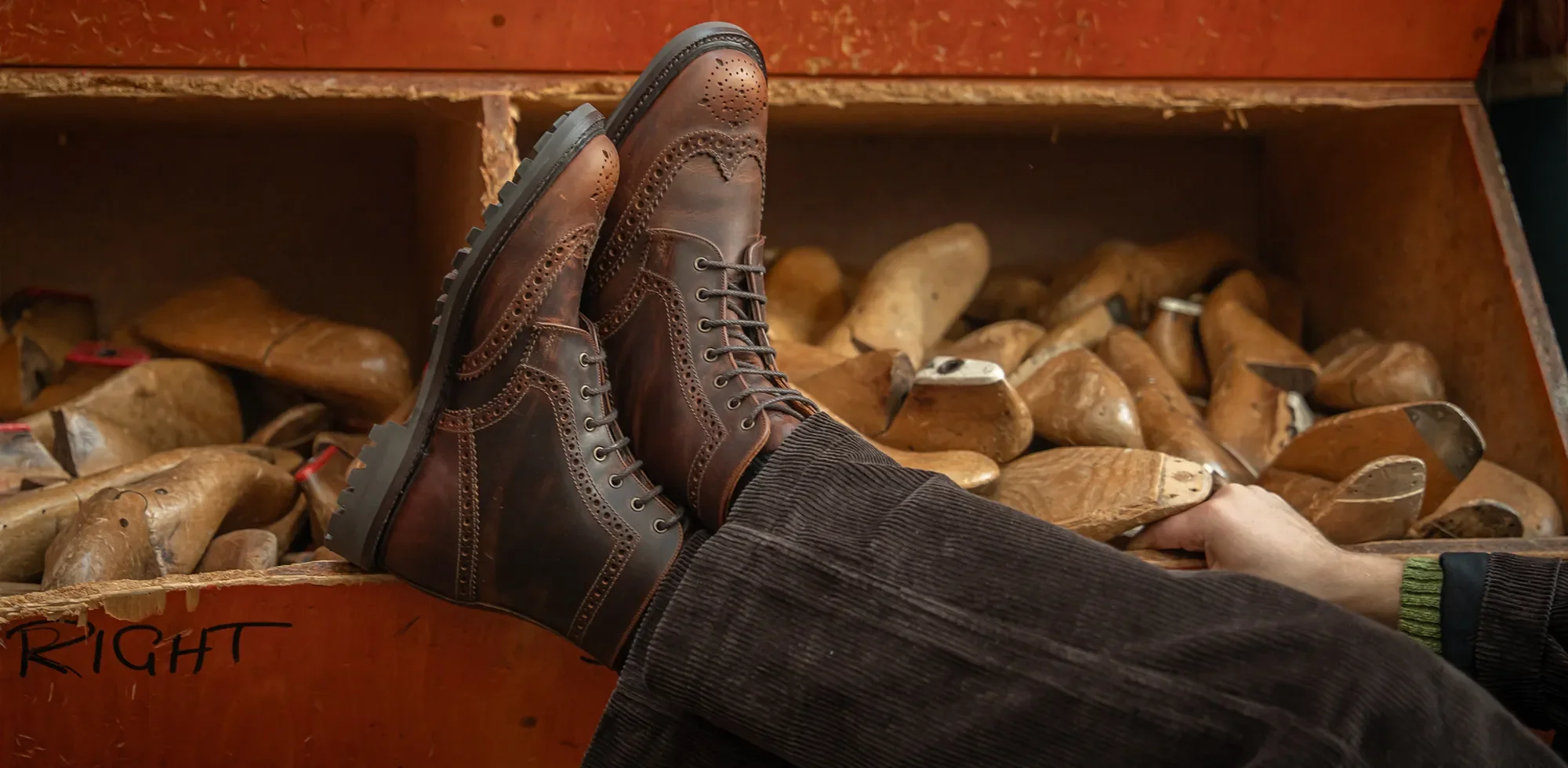
Lancashire-based LANX, founded by Marco ‘Marv’ Vaghetti, has grown into a £10 million-plus business since its launch in 2018, showcasing impressive LANX footwear manufacturing.
Initially selling from market stalls in Lancashire, LANX quickly built a direct understanding of customer needs. This grassroots approach shaped its product development and service offerings, establishing a firm foundation for its continued expansion in the North West of England.
The Journey of LANX Footwear Manufacturing
Marco Vaghetti’s journey began with an extensive 2016 trip across Asia, where he delved into the intricacies of traditional, hand-made shoemaking. This deep dive into skilled techniques informed the vision for LANX, which officially launched its first collection of men’s footwear in 2018.
Instead of immediately moving into a factory setup, LANX adopted a pragmatic sales strategy, showcasing its initial ranges at Lancashire market stalls. This direct engagement proved invaluable. Product Director Matt Yates noted that those early days served as “the perfect playground to understand what consumers actually wanted.”
This customer-centric development has since propelled LANX to become a business valued at over £10 million. Its product range has expanded significantly, now encompassing popular items such as Chelsea boots, boat shoes, trainers, and sneakers, catering to an evenly split male and female customer base. The company also produces accessories like bags, belts, and wallets.
The company’s trajectory underscores a thoughtful approach to growth, prioritising direct market feedback over conventional scaling methods. This has allowed LANX to build a loyal customer base and refine its offerings precisely.
Engineering Durability Through Material Selection
Central to the LANX philosophy is the engineering of footwear for exceptional durability and longevity. The company deliberately chooses high-quality, robust materials designed not just to last, but to develop character over years of wear.
A key example is the leather used in its footwear, which typically measures between 1.6mm and 1.8mm in thickness. This significantly exceeds the industry standard, which usually falls in the range of 1mm to 1.4mm.
This commitment to thicker leather, while potentially increasing material costs, directly translates into a more resilient final product. Matt Yates explains this decision, stating, “This method may be more expensive, but it simply results in a better end product.”
LANX also embraces a “Get ’em worn” ethos, consciously incorporating natural marks and variations within the leather rather than discarding hides for minor imperfections. This approach reduces waste and allows each pair of shoes to tell a unique story as it ages. The company sources its leather exclusively from Leather Working Group (LWG)-rated tanneries, ensuring full transparency and adherence to verified standards regarding restricted substances.
The meticulous selection process extends to the type of leather used. Matt Yates highlighted a recent strategic shift from shoulder leather to side leather for certain ranges. Although side leather is more expensive, it offers a superior appearance and importantly, allows for a reduction in material waste, aligning with their sustainability goals.
This focus on material science and responsible sourcing is a hallmark of the company’s manufacturing excellence.
The RE-LANX Circularity Model
Underpinning LANX’s commitment to durability is its innovative RE-LANX service, a cornerstone of its circularity ethos. Operated from its Whalley factory, this service allows customers to have their worn footwear repaired or to trade in old shoes for credit towards a new pair.
The company meticulously restores suitable footwear using the same materials, machinery, and expertise employed in the original manufacturing process. Feedback gathered from the repairs team is then channelled back into design improvements, creating a closed-loop system that enhances product quality over time.
“RE-LANX is an opportunity to give boots a new lease of life,” Matt Yates remarked, describing the process of restoring shoes to be sold at a “considered price” to new owners. This initiative also supports LANX’s broader ambition to achieve zero landfill status.
Beyond repairs, LANX actively takes back worn products, disassembling them where feasible and collaborating with recycling specialists to ensure materials remain in use for extended periods. This internal focus on extending product life and reducing its direct environmental footprint differentiates LANX from businesses that rely solely on carbon offsetting.
Matt Yates confirmed this strategy, noting, “We’re much more focused on extending the life of our products, and designing them so that they can be repaired in-house.”
British Manufacturing and Global Supply Chain Resilience
British manufacturing and its Lancashire roots are integral to LANX’s brand identity and operational strategy. The majority of the company’s footwear collections and all of its accessories are produced within the UK. This localisation maintains a strong connection to the local community and upholds stringent quality control standards.
However, LANX acknowledges the value of strategic international partnerships. It collaborates with carefully selected factories in countries such as Portugal and India. These partners provide additional manufacturing capacity and specialised expertise, particularly for products requiring specific construction methods not readily available in the UK, such as waterproof boots.
The disruption caused by the COVID-19 pandemic in 2020 underscored the critical need for a resilient and flexible supply chain. LANX’s diversified manufacturing approach, combining domestic production with international partnerships, is a direct response to this lesson.
This strategy allows LANX to maintain a consistent supply of materials and finished products throughout the year. If a single supplier or even an entire region faces unforeseen challenges, the company can quickly adapt by sourcing from alternative partners.
Matt Yates emphasised that this isn’t merely about maintaining production; it is about “protecting the long-term sustainability of the business.” He added that this approach enables LANX to serve its customers consistently, provide stability for its workforce, and support the skilled jobs essential for the future of British footwear manufacturing.
Innovations in Construction and Repairability
The manufacturing techniques employed by LANX are a blend of established methods and evolving engineering innovations. At its Whalley factory, footwear production predominantly utilises cement-lasted construction. This method bonds the upper directly to the outsole with adhesive, resulting in lightweight, flexible, and efficient footwear.
While historically difficult to resole, advancements in technology are making this far more practical for LANX today. The company leverages new research into better binding agents that can be reactivated at specific temperatures, allowing for easier replacement of worn soles.
Beyond its factory, LANX also offers Goodyear welted footwear through its partnership network. This premium construction method involves stitching a strip of leather or rubber, known as the welt, to the upper, lining, and a canvas rib on the insole. The outsole is then stitched directly to the welt, creating a highly durable, water-resistant shoe that is traditionally easy to resole.
Matt Yates noted the broader impact of these developments, stating, “More research has been done in recent years to find better binding agents, where at a certain temperature, the glue can reactivate. This makes it easier to replace worn soles with new ones.” This improved repairability now extends even to LANX’s entry-level products.
These developments signify a forward-thinking approach to footwear engineering, ensuring that even standard production methods can align with their repairability goals. It demonstrates that the industry can evolve to support longer product lifecycles, even for constructions once considered less repair-friendly. This focus on product longevity directly counters the disposable nature often found in consumer goods.
Future Trajectory: Scaling with Sustainable Principles
Looking ahead, LANX is focused on maintaining its growth trajectory and further expanding its manufacturing capabilities within the North West of England. The company aims to strengthen its Lancashire factory operations and continue refining its core product range, reinforcing its commitment to combining British craftsmanship with durability, repairability, and sustainable design principles.
LANX believes that commercial growth and sustainability are not mutually exclusive but can, in fact, be complementary. This belief is reflected in practical steps, including its packaging strategy. Most of the cardboard used for LANX packaging is sourced locally from Cardboard Box Co., reducing transportation footprints and supporting local industry.
The company is also phasing out plastic handles on its boxes entirely, planning to replace them with cotton laces for in-store orders by the end of 2026. For online orders, boxes will be shipped without handles, further minimising waste. By 2027, foam dividers inside shoeboxes will also be replaced with more recyclable materials.
This deliberate move away from carbon offsetting towards direct reductions in manufacturing impact highlights a deep-seated commitment to environmental responsibility. “Running a factory in Lancashire is not an easy thing to do, but it’s something that is important to us,” Matt Yates affirmed, reflecting on the challenges and pride in their local operations.
LANX’s journey from market stalls to a multi-million-pound business illustrates a model where genuine craftsmanship, material integrity, and a circular economy approach drive success.
This Lancashire brand continues to prove that quality and sustainable practices are not trade-offs but essential components of a thriving industrial future, ensuring the long-term sustainability of the business, providing stability for its workforce, and supporting the skilled jobs essential for the future of British footwear manufacturing.
