


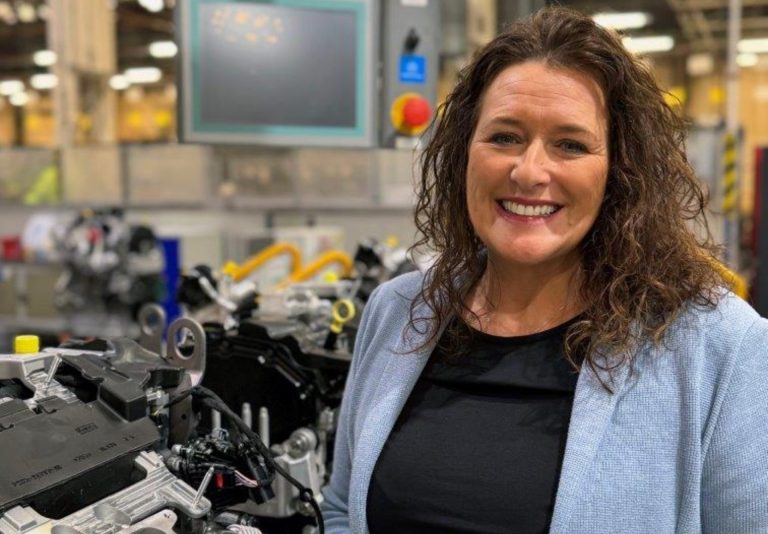
Wendy Graham has been appointed as the first female plant manager in the long history of Ford Dagenham, taking control of the sprawling East London engine facility that serves as a cornerstone of the company’s global commercial vehicle supply chain. Graham, who previously served as the assistant plant manager, now oversees the entirety of the site’s operations, including engineering, manufacturing, logistics, and external partnerships with entities like Thames Freeport.
The appointment marks a symbolic milestone for a site once synonymous with pioneering industrial action for equal pay. Graham’s promotion puts her in charge of a facility that produces a substantial number of diesel engines daily, primarily for the Ford Transit and Ford Ranger models. With a high annual output, the plant remains vital to Ford’s international market, having shipped tens of millions of engines since it began operations decades ago.
Her remit extends beyond the shop floor to include production scheduling and strategic coordination with regional authorities. This leadership shift comes as industrial sectors across the United Kingdom grapple with the transition to electrification and digital manufacturing. For the Dagenham site, maintaining its relevance in a global market requires a delicate balance of mechanical engineering and modern process innovation.
From problem-solving on the farm to the engine line
Graham’s entry into the engineering profession began with a practical upbringing on a farm in Northern Ireland. Early exposure to agricultural machinery maintenance fostered a curiosity for mechanical systems and logic-based problem-solving. This early technical grounding led to a keen interest in large-scale production cycles after she experienced factory environments as a student.
After joining the Dagenham workforce as an apprentice in vehicle operations, she was met with the intense sensory demands of a high-volume assembly line where vehicles moved past at a rapid pace. To manage this steep learning curve, Graham focused on building a deep understanding of the collaborative nature of the shop floor, where individual technical tasks must align perfectly with the broader production schedule.
The engineering landscape has historically seen a lack of female representation in senior management. Graham has previously noted the significant length of time it took to see other women in high-level manufacturing leadership roles. This lack of role models initially influenced her approach to leadership, though she eventually transitioned toward an inclusive style as she gained confidence in her technical expertise. As industrial and engineering stocks rally across various markets, the demand for such technical leadership continues to grow.
Driving technical innovation and process efficiency
At Dagenham, the focus remains on the production of diesel engines, where precision machining and assembly meet the demands of the global commercial vehicle market. Graham has previously managed high-stakes projects, including the implementation of more environmentally sustainable materials in manufacturing processes. Her current role requires overseeing the integration of these refined processes while ensuring the plant meets its daily quotas.
The plant’s success depends largely on its ability to adapt to changing industrial standards. The pressure on facility managers to demonstrate operational efficiency and technological readiness has increased as markets demand more from human and technical resources. Graham is now tasked with fostering a culture of continuous learning to keep the workforce aligned with these evolving technical requirements.
Engineering at this scale is no longer just about the hardware. The site’s integration into the Thames Freeport system highlights the growing complexity of manufacturing logistics. Properly managing these external interactions is essential for maintaining the fluid movement of raw materials and finished goods, especially as supply chains become more data-driven. This shift mirrors developments in other sectors where industrial connectivity is becoming the standard for large-scale operations.
Modernising a legacy site for the future
The transition toward more inclusive leadership at Ford Dagenham mirrors broader trends in the global technology and infrastructure sectors. While the automotive industry faces significant shifts in powertrain technology, the core principles of engineering reliability and process control remain unchanged. Improving the underlying systems of a facility is often as critical as the products they create.
Digital transformation is also playing a larger role in how these plants operate. Just as infrastructure reliability is a prerequisite for digital service expansion in emerging markets, it is the bedrock of automated manufacturing in the UK. Graham’s leadership will likely be defined by her ability to oversee the adoption of these smarter, more connected manufacturing technologies without disrupting high-volume output.
As Ford continues to bridge the gap between internal combustion engine production and its future vehicle goals, the Dagenham plant remains a focal point for the company’s internal investment. Graham’s tenure represents a transition point for the site—one that honors historical progress in the workplace while focusing on the technical demands of a 21st-century factory. Her visibility in this role serves as a blueprint for the next generation of engineers who will manage the facility’s future engine production.
