


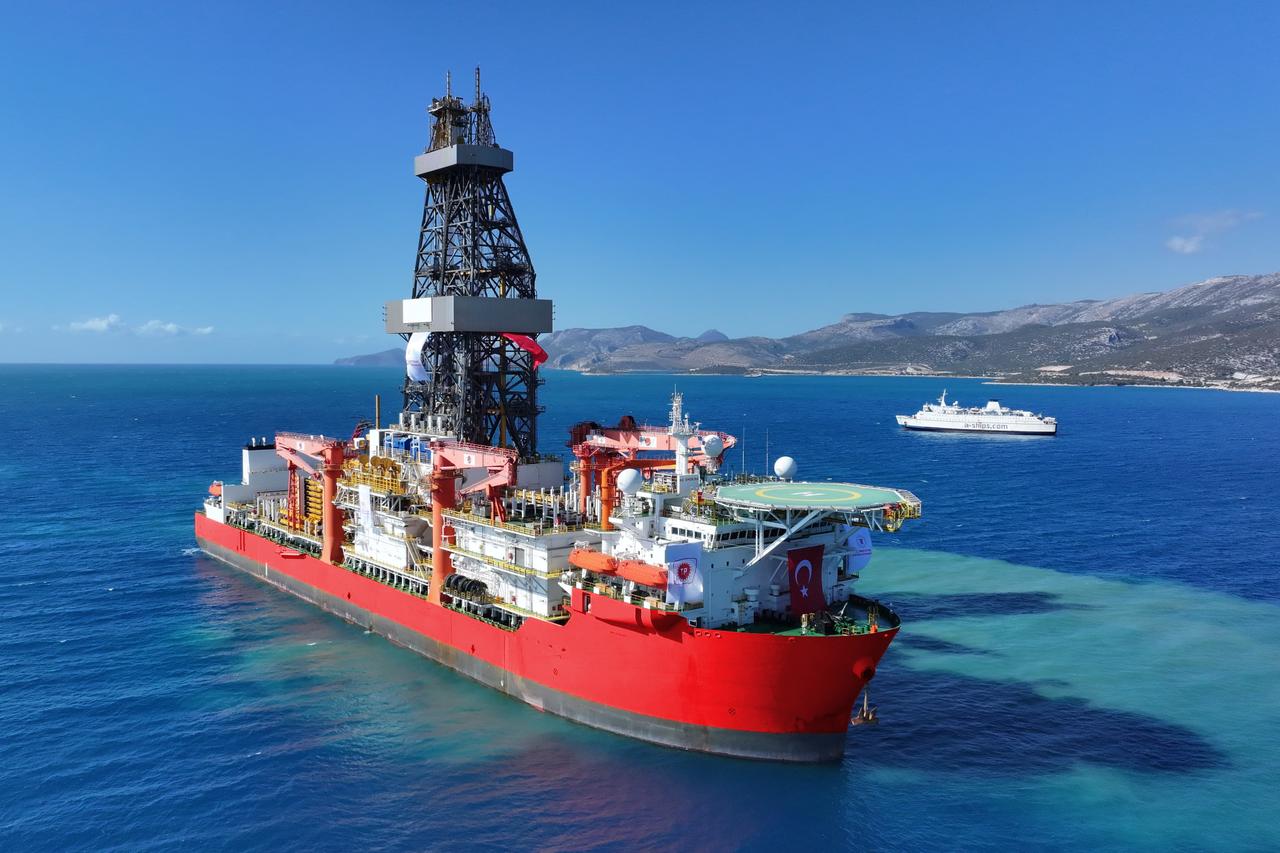
When Turkey sent its deep-sea drilling vessel Cagri Bey to waters around Somalia, it was more than just a diplomatic gesture or an energy investment move.
This represents a significant step forward in Turkey’s offshore capabilities, as it was the country’s first drilling operation outside of its own maritime jurisdiction.
Deep-sea drilling is one of the most complicated technical activities in the energy industry.
See here: India set to lead the expansion of Africa’s largest fuel manufacturing outfit
A vessel like Cagri Bey functions as a floating industrial platform, including modern dynamic positioning systems, subsea robots, high-pressure drilling assembly, and real-time geological data processing.
Modern drillships, unlike stationary offshore rigs, are intended to hold their position above a well using computer-controlled thrusters and satellite guidance, even in adverse sea conditions.
This removes the requirement for seabed anchoring in ultra-deep seas and enables drilling operations at depths of several thousand meters.
The Curad-1 well, where drilling is scheduled to commence in April, is not just a geological test, but also an operational stress test, per CGTN.
Offshore wells require precise wellbore stability, blowout protection systems capable of managing severe pressure gradients, and modern mud circulation technology to avoid collapse or uncontrolled hydrocarbon release.
The engineering margins are thin, and the hazards are high; safety measures, redundancy, and crew knowledge are crucial.
For Turkey, deploying Cagri Bey beyond its maritime zone demonstrates trust in its indigenous offshore engineering ecosystem.
It shows that Ankara has progressed from a regional offshore operator to one capable of exporting sophisticated drilling projects.
The mission also demonstrates integrated marine logistics planning, since the ship will be escorted by navy vessels, emphasizing the convergence of engineering, energy security, and geopolitical strategy.
For Somalia, offshore exploration brings modern subsea surveying, seismic interpretation, and drilling technology to a country seeking economic recovery.
If hydrocarbons are discovered in commercial quantities, the engineering chain reaction will include subsea infrastructure, floating production systems, pipelines, and export terminals, all of which require trained personnel, regulatory control, and long-term technical relationships.
