


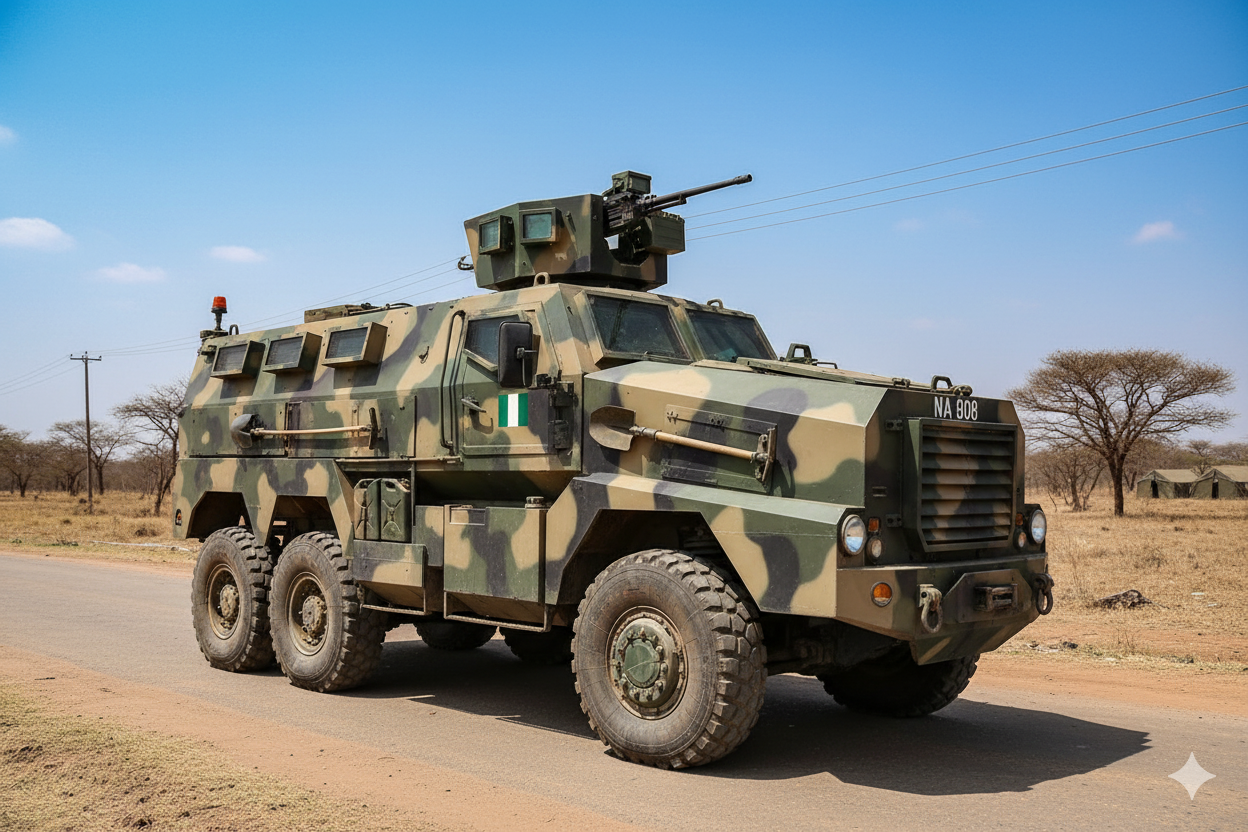
After years of dependence on foreign military assistance, Nigeria is set to begin local production of its defence equipment and components, with the use of advanced 3D manufacturing technology
Nigeria’s official defence production authority, The Defence Industries Corporation of Nigeria (DICON), recently signed a Memorandum of Understanding (MoU) with RusselSmith Nigeria Limited to establish local manufacturing capabilities for military-grade equipment using additive manufacturing, commonly known as industrial 3D printing.
A new era of defence production
The partnership would bring together RusselSmith’s expertise in industrial additive manufacturing and DICON’s established role in defence production. The collaboration will focus on the local development and production of high-performance parts, tools, and assemblies used in military applications.
“This strategic alliance with RusselSmith is a monumental step in the actualisation of the Military Industrial Complex,” said Major General Babatunde Alaya, Director-General of DICON, during the signing ceremony.
He credited the legal framework provided by the DICON Act 2023 for enabling such partnerships, thanking President Bola Tinubu for assenting to the legislation.
The DICON Act 2023 serves as the legal backbone of this initiative, empowering DICON to engage with local expertise and private sector partners to strengthen national security through indigenous production.
How 3D manufacturing will transform defence production
Additive manufacturing technology enables the rapid, on-demand, and localized fabrication of complex components using high-performance materials such as metal alloys and advanced polymers.
Unlike traditional manufacturing methods that require expensive molds and long production timelines, 3D printing can produce intricate military parts within days.
According to Maria Sambo, Public Relations Officer of DICON, the adoption of industrial 3D manufacturing will revolutionize DICON’s production capabilities. The technology allows for precision manufacturing of components that meet the quality standards required for defence and aerospace operations.
The partnership will also develop the local ecosystem for advanced manufacturing materials, including the production of metal powders and filaments specifically designed for defence applications.
Strategic benefits for national security
The move toward local defence manufacturing addresses several critical vulnerabilities in Nigeria’s military supply chain.
By producing equipment locally, Nigeria reduces its exposure to international supply chain disruptions, political tensions, and potential embargoes that could compromise military readiness.
Kayode Adeleke, CEO of RusselSmith, emphasized the broader implications of the partnership: “We are proud to partner with DICON on this forward-looking initiative that strengthens Nigeria’s defence industrial base. This partnership will build local capacity for high-value manufacturing and enhance our ability to deliver quality, precision, and reliability through the use of advanced 3D manufacturing technologies.”
The collaboration promises to reduce supply chain vulnerabilities and enable on-demand fabrication of critical components.
Instead of waiting weeks or months for imported spare parts, Nigerian military forces will be able to manufacture needed components locally, significantly improving operational efficiency and response times.
Economic and industrial impact
Beyond military applications, the partnership is expected to generate significant economic benefits. The initiative will create opportunities for high-skill manufacturing jobs, technology transfer, and local content development in Nigeria’s industrial sector.
RusselSmith Nigeria Limited, an ISO-certified provider of innovative asset integrity and advanced manufacturing solutions, brings proven expertise in serving critical industries across Africa. The company’s involvement ensures that international quality standards will be maintained in local production.
The collaboration also aligns with the Federal Government’s directive to promote indigenous technology and industrial participation in national security infrastructure, supporting broader economic diversification goals.
Implementation and support
The initiative has received strong backing from Nigeria’s defence leadership. Major General Alaya expressed appreciation to the Minister of Defence, the Minister of State for Defence, the Chief of Defence Staff, and the Service Chiefs for their continuous guidance and support, which he said facilitated DICON’s achievements.
“My full support is behind this initiative as it promises to be a game-changer for our national security architecture,” the Director-General stated.
Adeleke noted that the partnership lays the foundation for a new era of indigenous defence innovation and industrial capability, describing it as “a practical step towards sustainable innovation that benefits the country’s broader industrial ecosystem.”
Looking ahead
By integrating 3D manufacturing technology into defence operations, Nigeria is positioning itself to reduce foreign dependence while developing home-grown industrial capabilities.
As implementation progresses, the success of this partnership could serve as a model for other sectors seeking to leverage advanced manufacturing technologies.
