


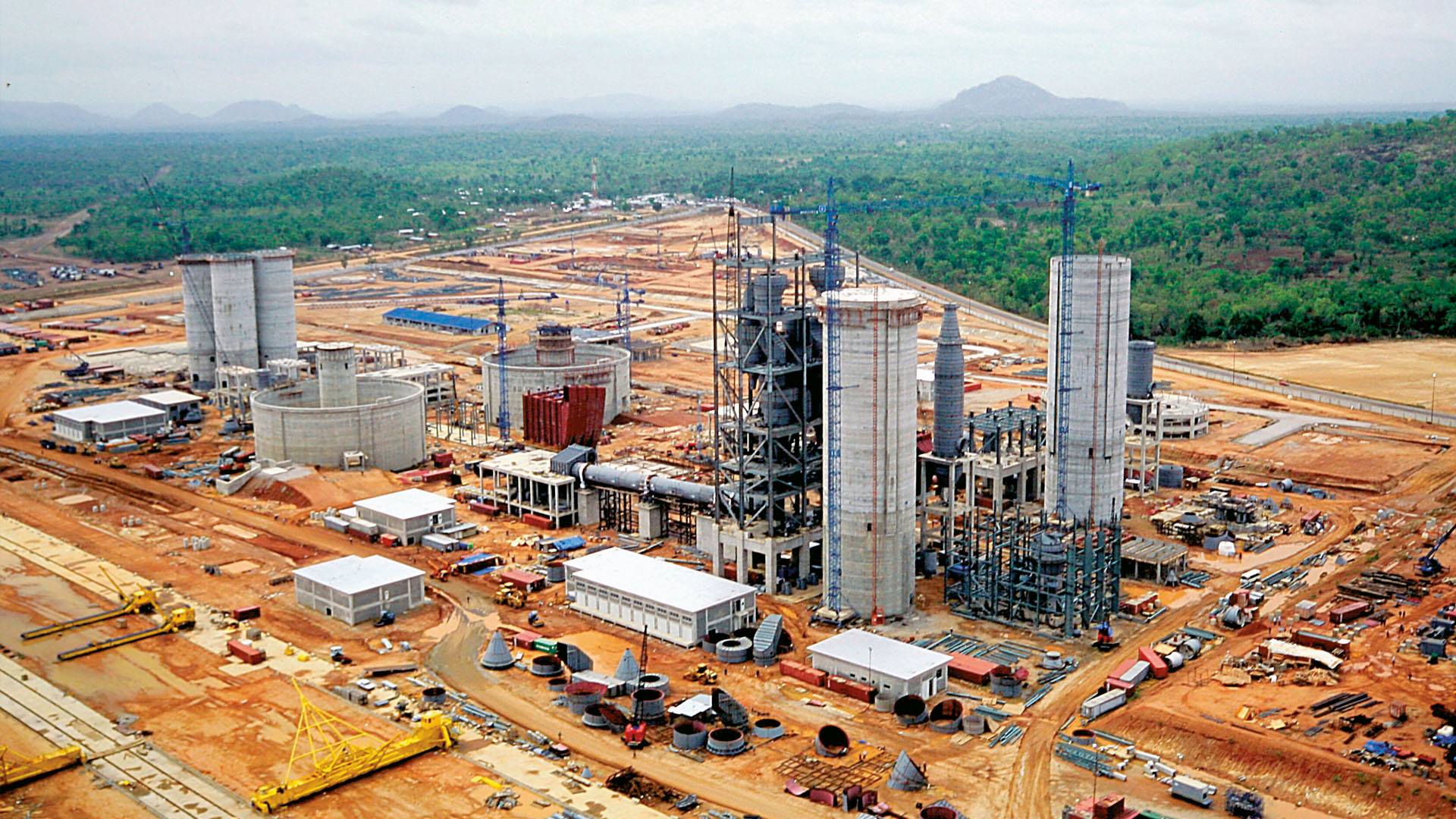
Just two decades ago, Nigeria was heavily dependent on imported cement. Today, the country is not only self-sufficient but has emerged as one of the largest cement producers in Africa, thanks to bold local investments, strategic government policies, and fierce competition among homegrown giants.
This transformation is one of Nigeria’s most remarkable industrial success stories, turning a sector once dominated by imports into a thriving local industry that employs thousands, saves foreign exchange, and supports massive infrastructure development across the country.
The turning point came in the mid-2000s when the Nigerian government began encouraging local manufacturing through backward integration policies.
Companies were incentivized to invest in domestic plants rather than relying on imports.
This policy shift opened the door for two major players who would reshape the industry: Dangote Cement and BUA Cement.
Dangote Cement, founded by Africa’s richest man, Aliko Dangote, is the clear market leader. Starting with a single plant in Obajana, Kogi State, in 2008, the company has grown into the largest cement producer in Africa.
Today, Dangote Cement operates plants in 10 African countries, but its Nigerian operations remain the backbone.
With a current production capacity exceeding 50 million tonnes per annum in Nigeria alone, Dangote has not only met local demand but has also begun exporting to neighbouring countries. Its Obajana plant is one of the largest cement factories in the world.
BUA Cement, the second-largest player, has also grown rapidly. Backed by the BUA Group, the company has invested heavily in modern plants in Sokoto and Edo States.
BUA’s strategy of vertical integration (controlling everything from limestone mining to distribution) has allowed it to compete effectively with Dangote. In recent years, BUA has significantly increased its market share and is now a serious challenger in both northern and southern markets.
Other notable players include Lafarge Africa (part of the global LafargeHolcim group) and smaller producers like Ibeto Cement, but the industry is largely defined by the intense rivalry between Dangote and BUA.
Key Factors Behind the Success
Several elements combined to make this success possible:
- Government Policy: In the early 2000s, the Nigerian government introduced the Backward Integration Policy specifically for the cement sector. This policy was designed to discourage the importation of finished cement while strongly encouraging local production. Import duties on finished cement were significantly increased, making imported cement more expensive, while companies that invested in building local manufacturing plants were offered generous incentives, including tax holidays, duty-free importation of machinery and spare parts, and access to long-term financing through development banks. This clear and consistent policy direction sent a strong signal to investors. It shifted the economics in favour of local manufacturing rather than trading. Aliko Dangote and the BUA Group responded aggressively by committing billions of dollars to build world-class plants across the country. The policy also included a gradual ban on cement imports in certain categories once local capacity reached sufficient levels.
Beyond incentives, the government maintained a relatively stable regulatory environment for the sector for over a decade, which gave investors the confidence to make long-term, capital-intensive commitments. The establishment of the Nigerian Investment Promotion Commission (NIPC) and various export processing zones further supported the industry’s growth.
Critics sometimes argue that the policy favoured a few large players, but its overall impact has been widely acknowledged as positive. It helped Nigeria move from importing over 70% of its cement needs in the early 2000s to becoming largely self-sufficient and even exporting to neighbouring countries today.
This deliberate use of trade policy, fiscal incentives, and regulatory clarity remains one of the best examples of how targeted government intervention can catalyse private sector investment and industrial transformation in Africa.
- Abundant Raw Materials: Nigeria is blessed with vast limestone deposits, especially in the north and south. This natural advantage reduced production costs significantly.
- Massive Infrastructure Demand: Nigeria’s huge population and ongoing infrastructure projects (roads, housing, bridges, power plants) created consistent local demand, making large-scale investment profitable.
- Private Sector Boldness: Both Dangote and BUA invested billions of dollars of their own capital, taking calculated risks that many foreign companies were unwilling to take at the time.
- Technological Upgrades: Modern plants with efficient kilns and low-energy processes helped keep production costs competitive.
Impact on Nigeria and Africa
The success of Nigeria’s cement industry has had far-reaching effects:
- It has saved the country billions of dollars in foreign exchange that would have been spent on imports.
- It has created thousands of direct and indirect jobs, from mining and production to logistics and retail.
- It has supported Nigeria’s massive construction boom, making building materials more affordable and accessible.
- Nigerian companies are now exporting cement to neighbouring countries, contributing to regional trade under the AfCFTA.
Today, Nigeria ranks among the top cement producers in Africa, with total installed capacity exceeding 60 million tonnes per annum. The industry has moved from being a net importer to a net exporter in some categories.
Nigeria’s cement story offers valuable lessons for other industries: bold local investment, supportive government policy, and leveraging natural resources can transform entire sectors. While challenges such as high energy costs, infrastructure gaps, and occasional regulatory issues remain, the progress made in cement manufacturing shows what is possible when local entrepreneurs are given the right environment.
As Nigeria continues to push for industrialization under various economic agendas, the cement industry stands as a powerful case study of what local production can achieve when vision, capital, and policy align.
The journey from heavy import dependence to becoming a regional powerhouse proves that with the right mix of determination and strategy, Nigerian industries can compete and win on the continental stage.
